

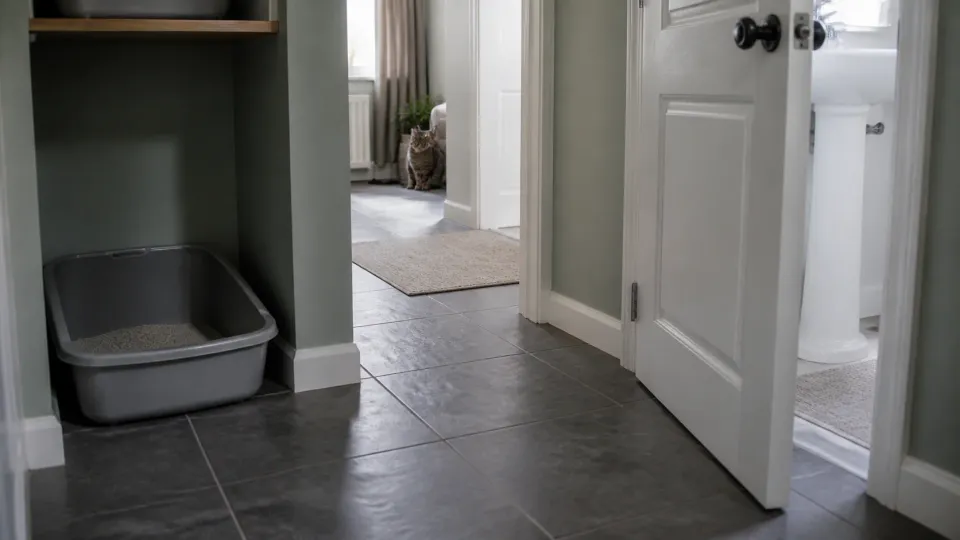
The first empty patch of floor is not necessarily a good cat litter box location. A corner can look discreet to a person and still put a cat beside a banging appliance, behind a closing door, at the end of a narrow route, or close enough to food that the whole setup feels wrong.
A workable location has to serve two users. The cat needs a calm, reachable toilet with a clear way in and out. The person maintaining it needs enough light, storage, and floor access to scoop and reset the box without postponing the job.
Reject the corners that fail at ordinary times
Walk through the home at breakfast, during laundry, when people return from work, and after doors are closed for the night. A location that seems quiet at noon may sit in the busiest route at 7 p.m. A bathroom that is always open during the day may become unavailable when a guest shuts the door.
Remove a location from the shortlist when access depends on someone remembering a door, when a washer or dryer starts beside the box, or when a dog or another cat can wait at the only exit. Cornell's guidance on litter box location and house-soiling emphasizes a quiet, private place that remains easy to reach and is separate from feeding areas.
Basements and upper floors can work for mobile cats, but stairs change the decision for kittens, older cats, and cats with pain or limited mobility. A senior-friendly home route keeps the daily resources on paths the cat can still use comfortably.
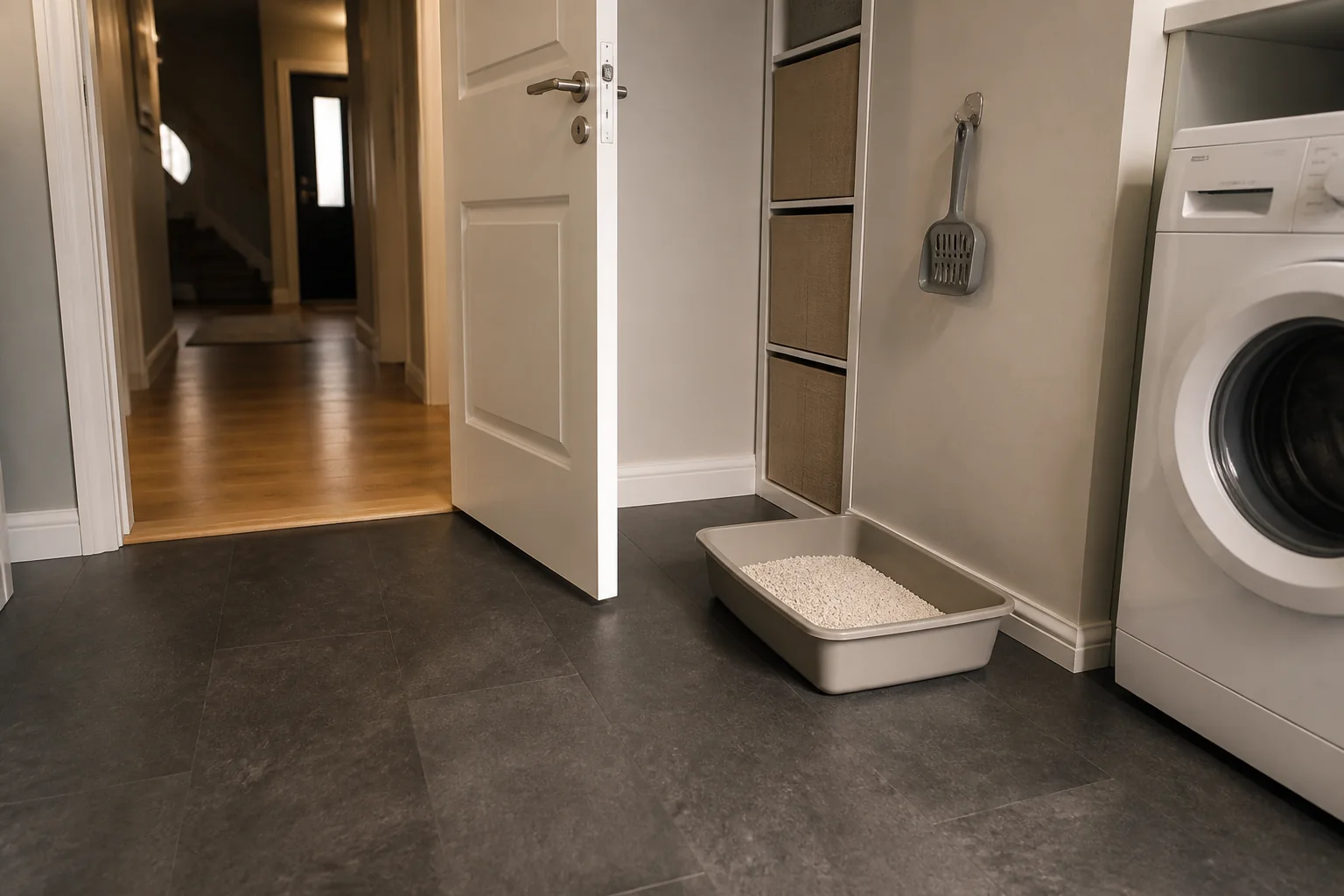
Give the cat a way to leave without passing a guard
Privacy does not mean trapping the box in a dead end. In a multi-cat home, one cat can control a hallway, stair landing, closet opening, or covered-box doorway without an obvious fight. The other cat may pause outside the room, turn away, wait until late, or choose another surface.
Stand where the box would sit and look outward at cat height. Can the cat see someone approaching? Is there a second direction to move after leaving? Does the route pass a favorite bed, food station, dog gate, or narrow furniture gap another animal already controls?
Cat Friendly Homes recommends separated key resources and low-traffic locations with more than one way to enter or leave. That principle is especially useful when mapping boxes across social groups rather than simply putting several trays in one room.
Keep toilet space separate from food and water
Small apartments make separation harder, but the answer is not to place the tray under a feeding shelf or beside a water fountain. Use the room's geometry: opposite walls, a partial partition, a doorway, or separate ends of a long space can create practical distance when a dedicated room is unavailable.
Do not solve the problem with an enclosed cabinet that reduces usable box size, traps air, or gives the cat one tight entrance. An enclosure fit check should account for turning room, ventilation, door clearance, and the owner's ability to remove and wash the tray.
For a large cat, the footprint around the box matters as much as the footprint on a product listing. The usable-space test for a larger tray includes the entry, turn, dig, and exit movements that a narrow alcove can quietly remove.
Plan the cleaning route before the box arrives
A location becomes worse when every scoop requires moving shoes, lifting a heavy lid, carrying waste through the kitchen, or finding supplies in another room. The skipped inconvenience shows up later as odor, tracked litter, or a delayed full reset.
Keep the scoop and a sealed supply container close enough to use without crowding the cat's entrance. Check whether the floor can be vacuumed and wiped, whether a mat can lie flat without blocking the doorway, and whether the box can be carried to a washing area without tipping it through the home.
Ventilation helps remove stale air, but a strong fan, draft, air freshener, or fragrance diffuser beside the tray creates a different problem. Favor normal room airflow and prompt waste removal over a scent intended to overpower the box.
Two boxes in one row may function like one resource
The usual starting point of one box per cat plus one extra only helps when the boxes are available as separate choices. Three trays lined up in the same laundry room share the same doorway, noise, social pressure, and cleaning failure. A cat blocked from the room is blocked from all three.
Use the box-count and social-group check first, then distribute boxes so one event cannot remove every option. Separate floors, rooms, or approach paths are more meaningful than a few inches between trays.
A seven-day location trial reveals the weak point
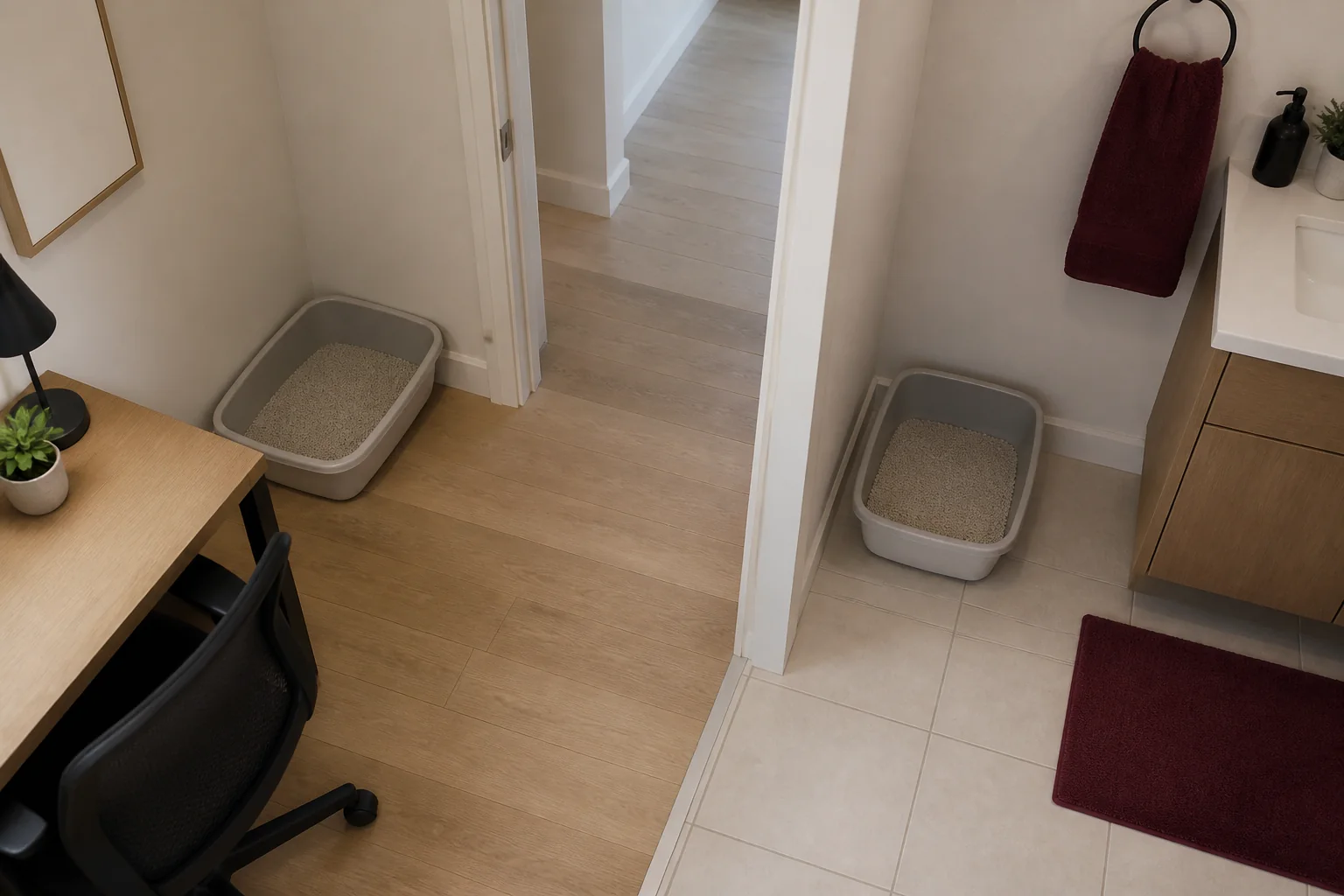
Before building furniture around a box or removing an established option, test the proposed location with a clean familiar tray and familiar litter. Keep the previous box available. A forced move cannot tell you whether the new place is genuinely easier for the cat.
For one week, note approach pauses, interrupted use, door closures, noise events, another animal waiting nearby, tracking direction, scoop access, and whether the new tray is used at different times of day. The notes do not need a scoring system. They need enough detail to explain what happened around the box.
Move the location when the same obstacle appears more than once: the door closes, the appliance startles the cat, the route is guarded, the cat cannot turn comfortably, or maintenance repeatedly gets deferred. Keep the location when access stays predictable and both cat and owner can use it without negotiating the room.
Sudden avoidance needs more than a floor-plan change
Placement can contribute to hesitation, but a sudden change in litter habits can also signal pain or illness. Straining, repeated trips, crying, blood, producing little or no urine, or eliminating outside the box requires prompt veterinary attention. Do not spend several days testing a new corner while a cat is showing urgent urinary signs.
The final placement decision should be ordinary: the box is available all day, away from food, quiet without being isolated, easy to leave, and easy enough to clean that the routine happens. Once a location passes those tests for a normal week, stop moving it for appearance alone.