

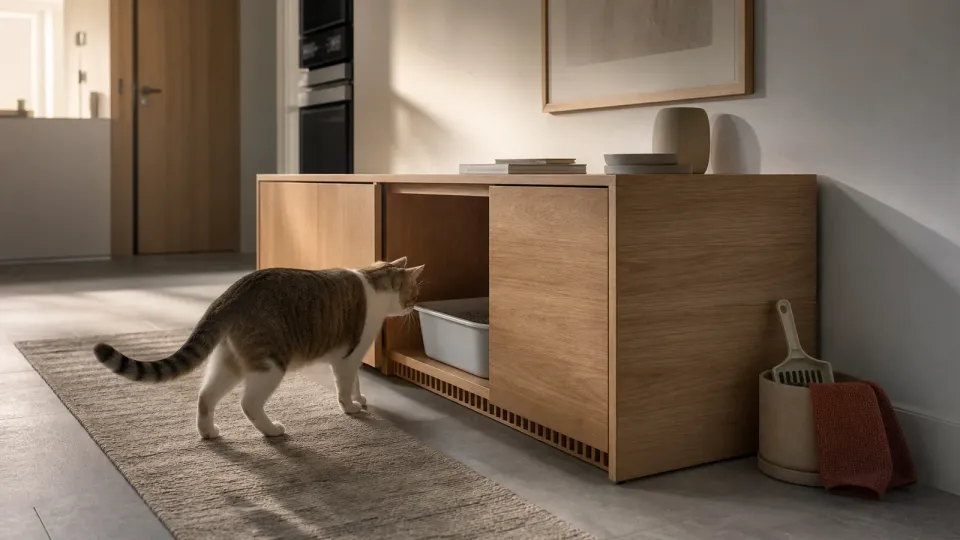
A litter box enclosure can make a room look calmer, but it does not automatically make the litter area work better. The cabinet may hide the tray from guests, keep a hallway neater, or give a small apartment a more finished look. It can also trap odor, shrink the entry, make cleaning harder, and turn a simple litter box into a place a cautious cat would rather avoid.
When I plan a litter box enclosure, I start with the cat's route and the human cleaning routine before I think about furniture style. The best version gives the cat an easy entrance, enough room to turn, air that can move, and a tray that can be pulled out and cleaned without a weekly wrestling match.
The enclosure has to solve a room problem without creating a cat problem
The first question is not whether the enclosure looks better than an open tray. It is what problem the enclosure is supposed to solve. A cabinet can be useful when the litter box needs to live in a shared room, when storage and walking paths are tight, or when a tray looks visually messy even though it is clean.
That benefit has a limit. The Merck Veterinary Manual's litter box guidance keeps the focus on convenient locations, cleanliness, and cat preference. An enclosure that makes the room prettier but makes the tray harder to find, enter, clean, or trust is not an upgrade for the cat.
A good enclosure should pass a plain test: the cat can approach without being cornered, enter without crouching awkwardly, turn inside the tray, cover normally, and leave without rushing. The person cleaning it should be able to pull the tray out, scoop, wipe the inside, and reset the area without skipping steps because the cabinet is annoying.
Odor control starts before the cabinet
Many people buy litter box furniture because they want odor to disappear. That is the wrong promise. A cabinet can block the view of the box, but it can also hold smell close to the plastic, wood seams, mat, and wall behind the tray. When the door shuts on a stale box, the room may smell better for an hour while the cat gets the worse version of the bathroom.
Start with the odor source. Broken clumps, urine residue on the tray wall, a dirty scoop, old litter stuck in corners, poor waste storage, and a box that needs a full wash will follow the tray into any cabinet. If odor returns right after scooping, run the odor source check before asking furniture to hide the problem.
Ventilation matters because litter boxes are used repeatedly in a small space. The ASPCA's litter box problem guidance emphasizes that box cleanliness, location, and preference can affect whether a cat uses the box. A cabinet that makes odor stronger inside the entry is a preference problem waiting to happen.
Airflow and access are not decoration
Decorative cutouts, side vents, slatted backs, and open fronts are not just design details. They decide whether the enclosure breathes and whether the cat sees a believable exit. A tiny side hole may look tidy in a product photo and still feel like a tunnel in a real hallway.
Look for air gaps on more than one side when possible. A rear gap against the wall may not help much if the cabinet is pushed tight to the baseboard. A front opening can help, but only when the cat can enter and leave without a hard turn. Open the door and put your head near the entrance after normal use. A strong trapped smell there is a warning, not a normal furniture scent.
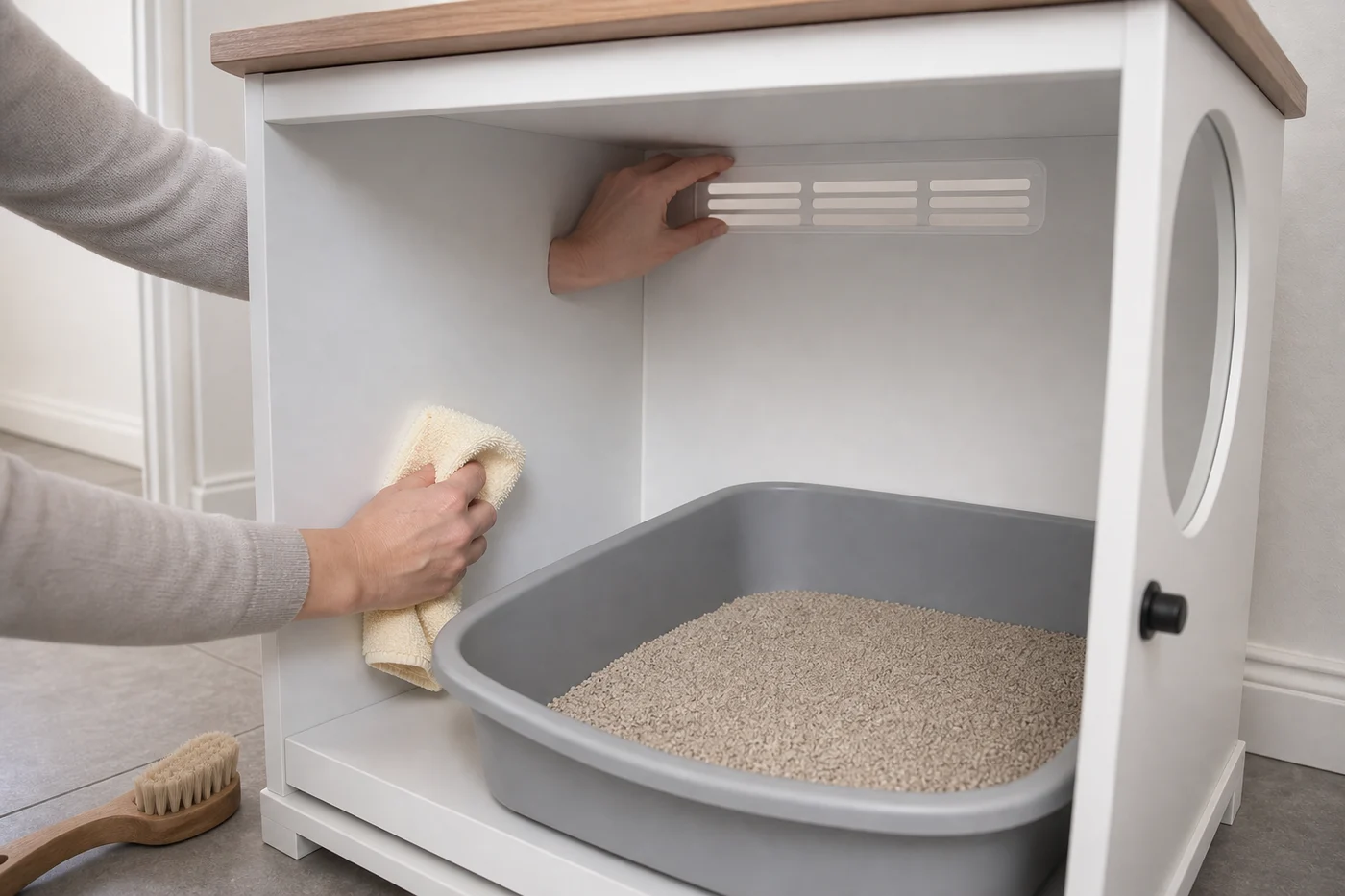
The inside material also matters. Sealed, wipeable surfaces are easier to maintain than unfinished wood, fabric liners, rough baskets, or cabinet seams that collect dust and litter. A furniture piece that absorbs odor can become harder to reset than the plastic box it was meant to hide.
Measure the entrance, then watch the turn
An enclosure can fail even when the tray inside is large enough. The entrance may be too small, the doorway may sit too high, or the cabinet may force the cat to turn sharply before reaching the box. Large cats, senior cats, kittens, and cats with mobility changes are the first to expose those flaws.
The Ohio State Indoor Pet Initiative's litter box guidance treats the box as a key indoor resource that should be easy to find and use. That applies to the route around the box too. The cat is not just using a tray. She is using a doorway, a cabinet floor, a turning space, and an exit path.
Watch one ordinary visit. A cat that pauses at the opening, backs out, keeps paws half outside the tray, hits the cabinet wall with her tail, or bolts after using the box is giving useful feedback. Do not explain that away as stubbornness. The enclosure may be asking for movements the old open tray did not require.
Cleaning friction decides whether the enclosure lasts
The best enclosure is the one that still gets cleaned correctly after the novelty wears off. A front door that only opens halfway, a tray that cannot slide forward, a top that is too heavy, or a cabinet that has to be emptied before every scoop will slowly train the household to do less maintenance.
Plan the cleaning motion before buying or keeping the furniture. Can the tray come out without scraping the wall? Is there room for the scoop hand? Can the mat be lifted and shaken? Can the inside floor be wiped after a spill? Can the waste bin sit nearby without blocking the cat's exit? In a small home, those details are the difference between a neat setup and a hidden chore.
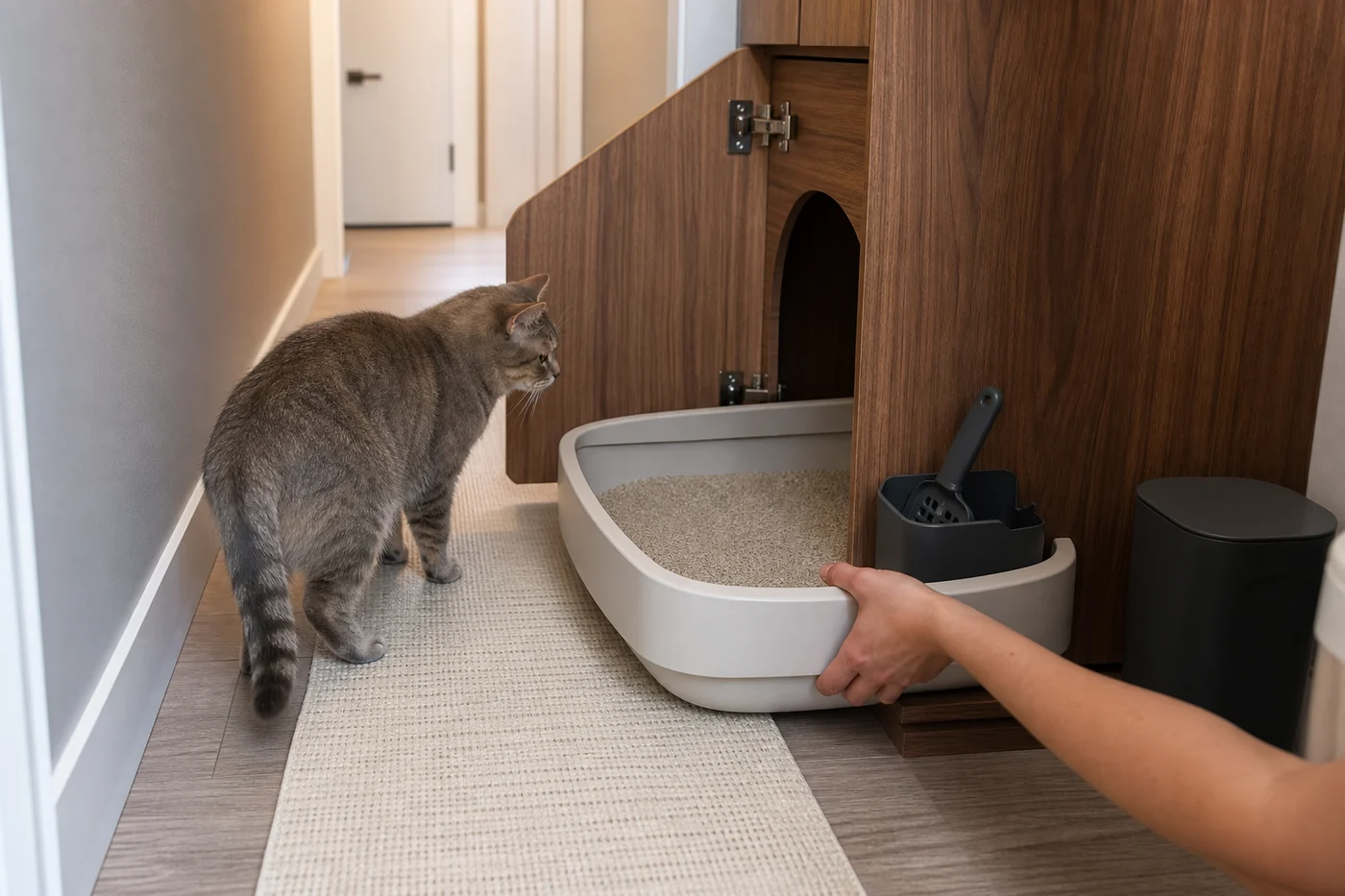
Apartment setups are especially unforgiving. A cabinet that steals the only hallway clearance can make scooping harder and tracking worse. If the box shares space with storage, laundry, or a narrow bathroom route, use the same practical lens as a small-space litter setup: the tray, mat, scoop, waste routine, and walking path have to work together.
Put the enclosure on a route, not in a hidden dead end
People often place litter box furniture where it is least visible. Cats usually care more about safety and access than visual discretion. A cabinet behind a door, in a dark closet, beside a loud washer, or at the end of a narrow hallway may look like clever space use and still feel like a trap.
Choose a route the cat already uses. The cat should not have to pass a dog bed, a guarded doorway, a loud appliance, or a high-traffic shoe area just to reach the box. The first few feet after the enclosure matter too. A mat can catch some litter, but it should not create a lip, slide under the paws, or block the exit. For tracking, adjust the mat and exit path without turning the cabinet into an obstacle course.
Cat-proofing also belongs in the decision. Hinges, cords, loose doors, heavy lids, sharp corners, and tipping risk should be checked the same way you would check other apartment safety routes. A tall cabinet should not wobble when a cat jumps nearby or when a person pulls the tray forward.
Multi-cat homes need an escape plan
In a multi-cat home, a litter box enclosure can make passive blocking easier. One cat can sit near the entrance and control the only opening without hissing or swatting. The cat inside may have fewer exit choices than with an open tray.
The San Francisco SPCA's litter box problem guidance frames litter box issues around access, stress, and health context rather than treating accidents as simple misbehavior. That is useful for enclosures: the most cautious cat gets the deciding vote. A confident cat may use the cabinet happily while another cat waits for the room to empty.
Do not make an enclosure the only option during a trial. Keep at least one open, easy box available in a separate location. A two-box comparison tells you whether the furniture is accepted or merely tolerated when there is no alternative.
Who should skip a litter box enclosure
Some homes are better served by a clean open tray, a better mat, or a less visible but accessible location. Skip or delay an enclosure when a cat already misses the box, strains, cries, urinates outside the box, or suddenly changes elimination behavior. Those signs need veterinary attention before furniture decisions.
Senior cats and painful cats also deserve caution. VCA's arthritis resource notes that cats may hide pain and show changes in jumping, climbing, mobility, grooming, or litter box behavior. A cabinet doorway, step-in platform, or tight turn can become harder before people notice obvious limping.
Large cats, kittens, bullied cats, and cats who dislike covered boxes may also do better with an open layout. If the real goal is odor or airflow, compare the enclosure idea against the covered vs open litter box tradeoff before adding furniture around the same problem.
A one-week enclosure trial keeps the decision honest
Set up the enclosure without removing the old box. Keep both boxes clean for one week. Watch which box the cat chooses after meals, overnight, after scooping, and when the home is busy. A curious sniff on day one does not prove the cabinet works.
The enclosure is working when the cat enters without hesitation, uses the tray normally, leaves calmly, and the household keeps the inside clean. It is not working when the cat avoids it, uses it only when the open tray is dirty, rushes out, paws at the entrance, or starts leaving clues elsewhere.
A litter box enclosure is worth keeping when it improves the room without making the bathroom worse. The outside should disappear into the home. The inside should stay easy, clean, breathable, and boring enough that the cat keeps using it.