

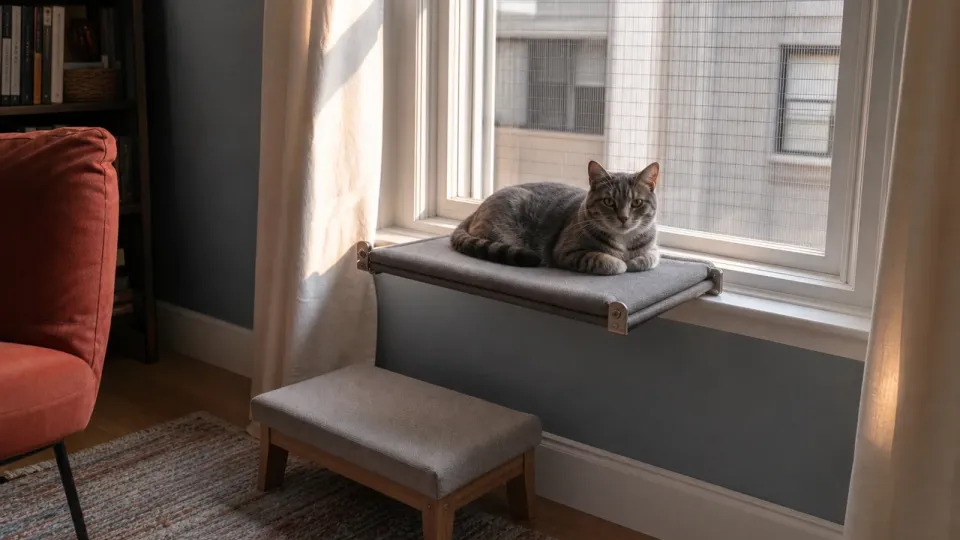
A cat window perch can be the best seat in the home, or it can become a risky shelf that only looks peaceful from across the room. The difference is not the view. It is the window, the mount, the landing route, the sun exposure, and the way your cat reacts to what happens outside.
When I plan a window spot for an indoor cat, I check the boring parts first: closed window, secure screen, stable support, a place to step down, and a shaded alternative nearby. A perch that passes those checks gives a cat choice. A perch that ignores them turns enrichment into a gamble.
Start with the window before choosing the perch
The first safety check is the window itself. A perch should not depend on an open sash, a loose screen, or a window that someone forgets to lock after airing out the room. Screens can slow insects and debris, but they should not be treated as fall protection for a determined or startled cat.
The Ohio State Indoor Pet Initiative frames indoor cat care around resources, territory, resting places, play, and safe access. That matters here because a window perch is not just furniture. It becomes part of the cat's daily territory, so the surrounding structure has to be safe during ordinary use.
Check the latch, screen frame, blind cord, curtain tie, sill depth, and nearby objects before the perch is installed. Remove fragile items, keep cords out of the landing path, and avoid placing the perch where a door, dog, child, or busy hallway can surprise the cat from behind.
Weight ratings are not the whole support story
A listed weight rating is useful, but it does not prove that the perch works on your exact window. Suction cups, brackets, clamps, and sill-mounted supports behave differently on textured trim, old paint, shallow sills, cold glass, or a window that gets direct heat.
Press the perch before the cat does. Check whether the cushion shifts, the bracket flexes, the glass contact loosens, or the sill edge carries pressure unevenly. Then check again after a day of normal sun and temperature change. A mount that feels solid at night may feel different after several hours of heat on the window.
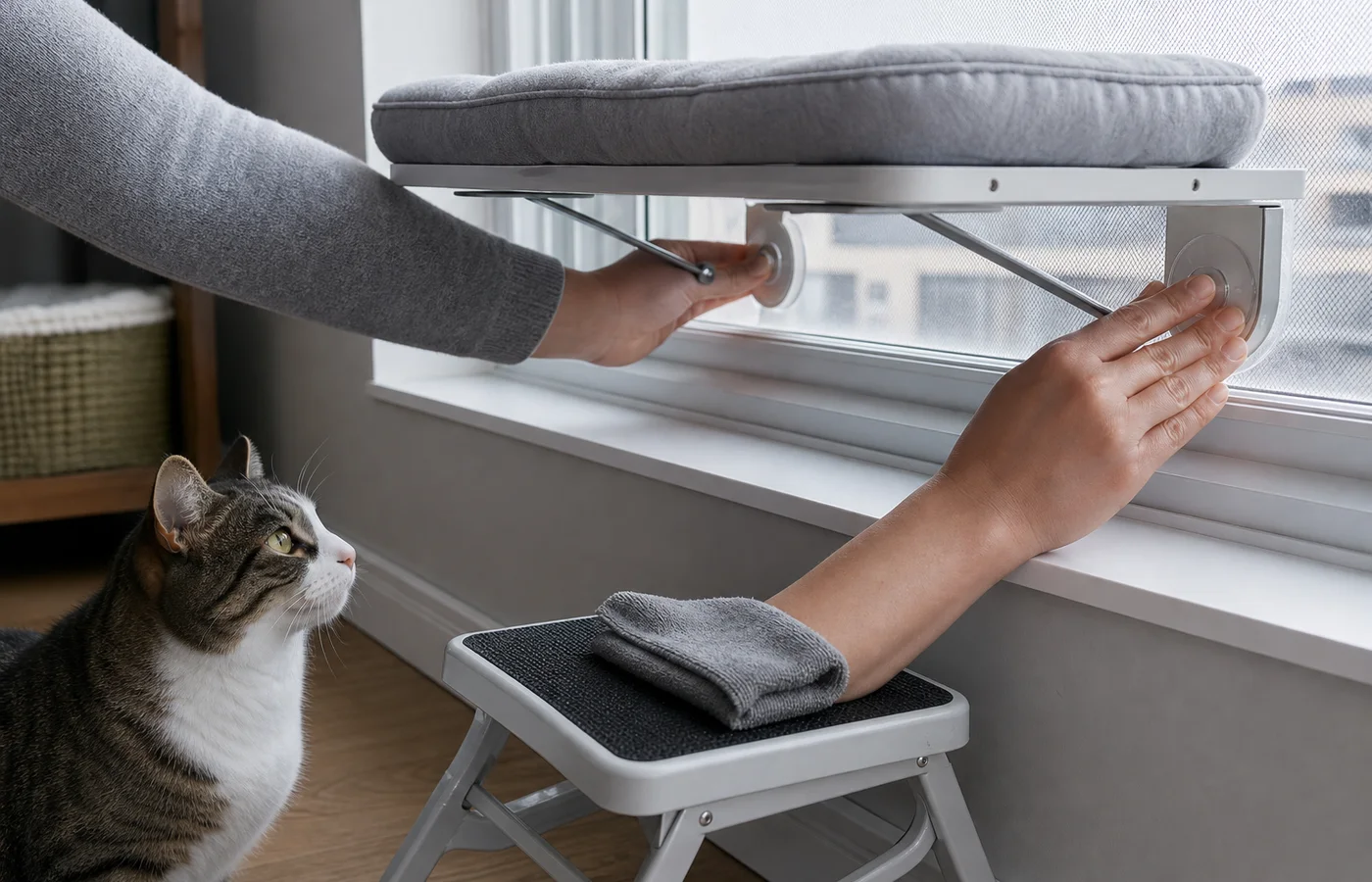
Do not test by loading the perch dramatically or forcing the cat onto it. The practical test is gentler: press, wait, recheck, then watch the first few uses while the cat chooses. If the perch shifts, creaks, tilts, or needs frequent readjustment, move to a different style or a lower resting station.
The landing route matters as much as the view
Cats can jump, but a good setup should not make every use depend on a hard launch or a narrow landing. The route up and down should include a steady step, ottoman, chair, low shelf, or cat tree level that does not slide. The landing surface should be wider than the cat's body and free of slippery clutter.
VCA's guidance on making vertical space for cats emphasizes sturdy, safe access to elevated spaces. That same principle applies to window perches. Height is less valuable when the only way down is a risky jump to a slick floor.
I like a route that works when the cat is sleepy. Can she get down at night without knocking over a lamp? Can an older cat use the step without twisting? Does the perch face into the room enough that the cat can turn and leave? If the answer is no, the setup needs one more landing before it is fair.
Sun should be a choice, not a trap
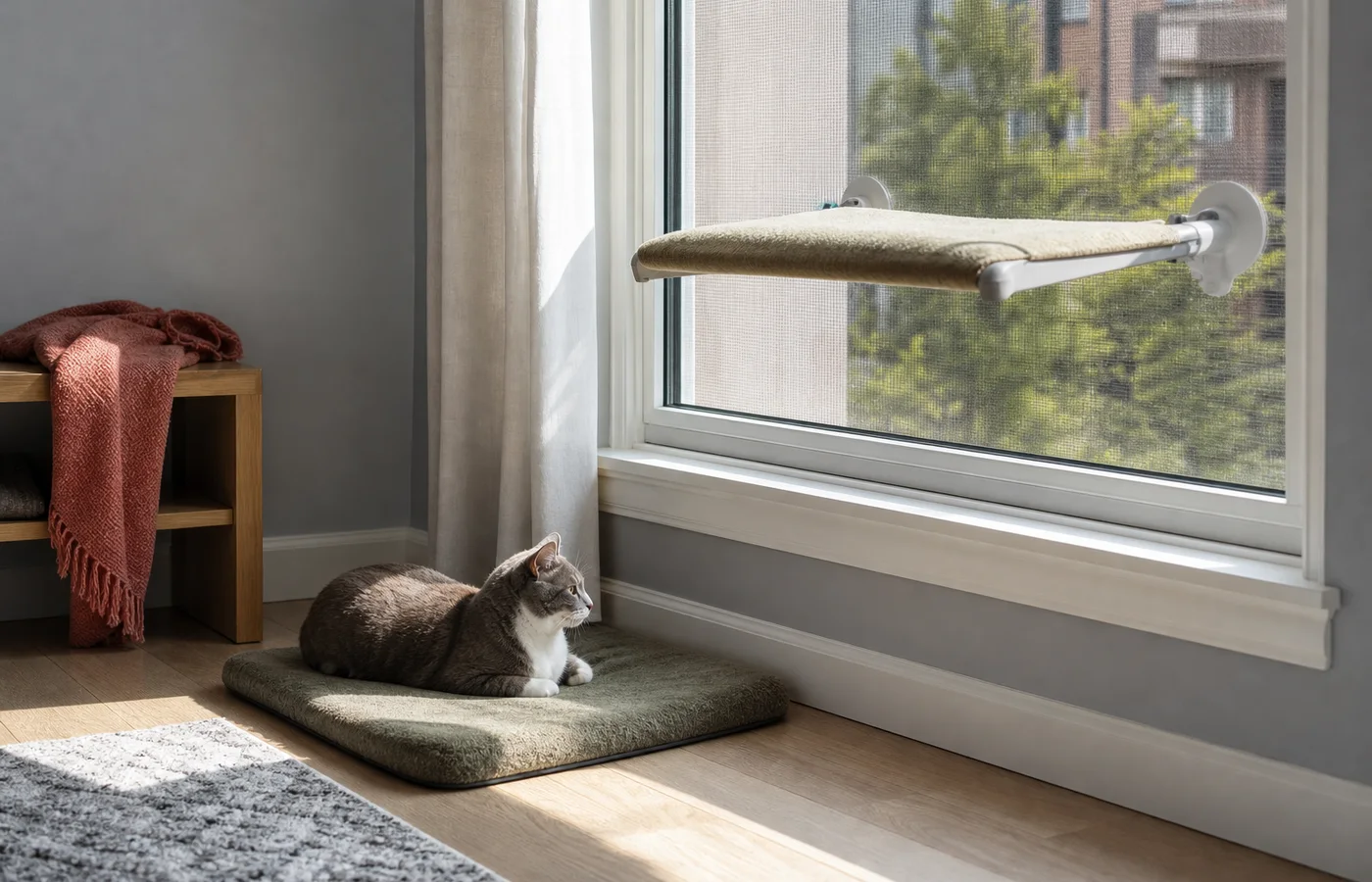
Window warmth is part of the appeal, but a sun patch can get uncomfortable fast. A cat may start in the light and later need shade, water, or a cooler surface. The perch is better when it gives the cat a warm option without making the whole resting spot hot.
Watch the window across the day. Morning sun, afternoon heat, and reflected glare can change the perch completely. A curtain, shade, or lower resting pad gives the cat a way to stay near the window without staying in the hottest part of it.
For summer apartments, connect the perch decision to the rest of the room. The same checks that shape a cat-proof apartment setup apply here: closed windows, safe cords, stable surfaces, washable materials, and a route away from heat.
The outside view can enrich or frustrate
Some cats use a window perch as calm entertainment. They watch traffic, leaves, people, light changes, or distant birds, then nap. Other cats become tense at the same view. Tail flicking, hard staring, repeated pacing, chattering that escalates, redirected swats, or sudden conflict with another pet can mean the window is too intense.
CatVets' home setup resource encourages owners to provide safe places and predictable home resources rather than assuming every stimulus is helpful. That is the right lens for window watching. Enrichment should give a cat something to do, not keep the nervous system stuck on alert.
If the view is too much, adjust the perch before removing it. Move it to a quieter window, block the lower half of the glass, shorten access during high-traffic times, or add a retreat behind the perch. The goal is choice: observe, step away, or settle somewhere else.
Stress and mobility signs should override the setup
A perch that used to work can become wrong when a cat ages, gains weight, loses confidence, develops pain, or starts sharing the home with another animal. Watch for hesitation before jumping, missed landings, choosing the floor instead, overgrooming after window sessions, or defensive behavior when another cat approaches the route.
Falls need more caution than people sometimes give them. The ASPCA's high-rise syndrome safety tips are a reminder that cats are not immune to injury just because they are agile. A lower perch with a better route is usually more useful than a dramatic high window shelf.
Senior cats, kittens, large cats, and cats recovering from illness need extra margin. Keep the window station lower, add a broad step, and choose a perch with a cushion that does not slide. If jumping, climbing, appetite, litter box use, or behavior changes suddenly, treat that as a health question before treating it as a perch preference.
A window perch should not crowd other resources
The perch also has to fit the room. Do not block a litter route, feeding path, sleeping hideout, doorway, or human walking path just to give the cat a window seat. A crowded perch area can make the cat feel cornered, especially in a multi-cat home where one cat can control the only exit.
Small homes need tighter choices. If the perch shares space with food, a litter area, or a narrow hallway, use the same practical lens as a small-space litter setup: access, cleaning, traffic, and escape routes matter more than how compact the object looks.
For behavior follow-up, the broader cat behavior path is also relevant. A cat who leaves the perch calmer, uses it briefly, and returns to normal routines is giving a different signal from a cat who becomes fixed on the window and tense afterward.
Run a two-day perch trial before trusting it
Set the perch up while you are home. Check the mount, let the cat discover it, and watch the first few entries and exits. Recheck the support after the first nap, after the sun hits the window, and after the room cools down again.
During the trial, keep a lower resting option available. Do not move the cat's only favorite bed to force perch use. The best sign is voluntary use without hesitation: the cat climbs up, rests, turns, leaves calmly, and still chooses other spots when she wants.
A cat window perch is worth keeping when the cat gets a safe view and the room still gives her exits, shade, and stability. If the perch only works when everything goes perfectly, it is not finished. Lower it, support it, move it, or choose a quieter window.