
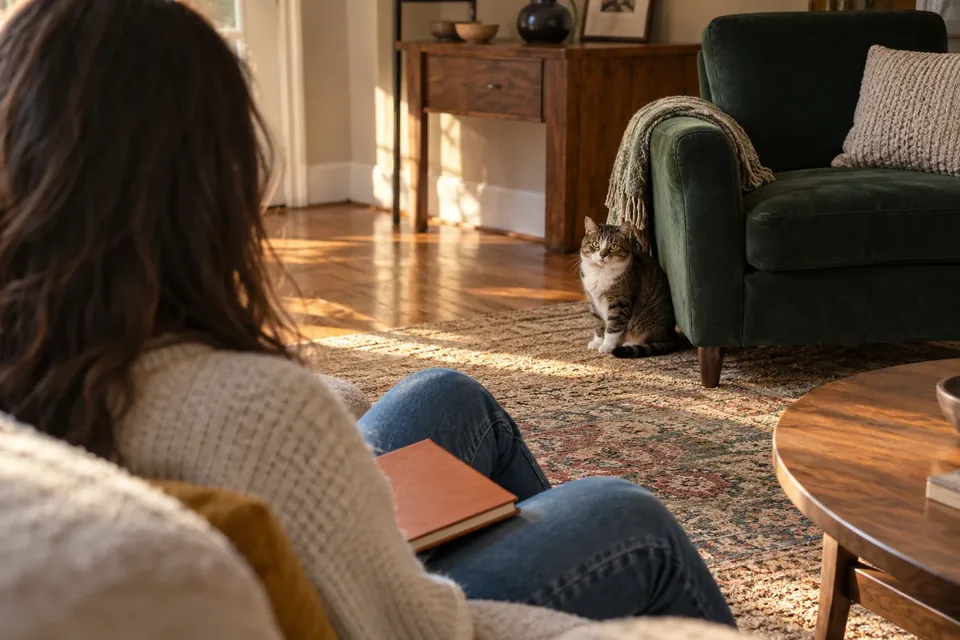
Cat sitter instructions have to work when you cannot answer a message. The sitter needs to know which cat they have seen, what that cat should receive, what to check before leaving, and who can authorize help. A page of food preferences is only part of that handoff.
Prepare the notes before the final departure rush. Walk through a normal visit together, with the sitter finding the supplies and explaining the sequence back to you. That rehearsal often exposes the missing detail: two similar food containers, a carrier behind a locked door, or a shy cat whose usual retreat nobody has identified.
Walk through one complete visit
Begin outside the entrance. Show how the door stays controlled while bags come in, where keys belong, and which internal doors must remain closed. Explain any alarm or access process privately; do not put codes in a publicly shared checklist.
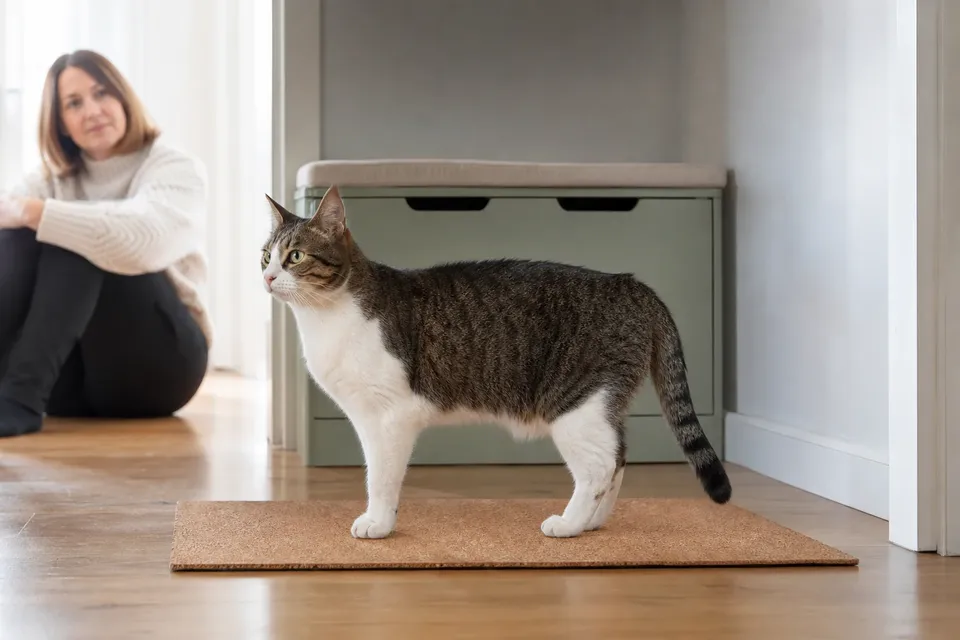
Inside, identify each cat using a current photo and distinguishing features. Show the sitter where a quiet cat normally rests and what observation is possible without pulling the cat out. A hidden cat and a confirmed visual sighting should not be reported as the same thing.
Continue through meals, fresh water, litter care, and the final door check. Ask the sitter to find the spare supplies rather than simply pointing at a cupboard. If the instructions depend on equipment, demonstrate both normal operation and the agreed response when it fails.
A cat sitting instructions template you can fill in
Keep the current version in an agreed place and give the sitter a copy they can use without your phone. The fields below are a blank planning aid, not a completed care plan. Put each cat's individual needs in its own row or separate sheet where necessary.
| Area | Write the actual instruction |
|---|---|
| Each cat | Name, current photo, identifying features, usual resting places, and relevant mobility or handling limits. |
| Visits | Agreed visit times, tasks for each visit, expected observation, and backup person if the sitter cannot attend. |
| Meals | Food name, measured amount, timing, feeding place, and how to confirm which cat ate. |
| Water and litter | All resource locations, cleaning tasks, spare supplies, waste collection, and equipment failure instructions. |
| Special care | Veterinarian-provided directions and the trained, authorized person responsible; keep medication details current and separate where appropriate. |
| Help | Your contact, backup decision-maker, regular vet, emergency clinic, transport arrangements, and agreed care authorization. |
| Before leaving | Cat sightings or unresolved checks, equipment and door checks, and where to send the visit update. |
The useful version is specific enough for another person to follow. Replace “the usual scoop” with the actual measure and amount you already use. Replace “call if something is wrong” with named contacts and a clear route when the first person does not answer.
Make meals identifiable, especially with more than one cat
Label the food and serving equipment so similar packages cannot be confused. Keep prescription or individual diets distinct. If one cat finishes quickly and moves toward another bowl, describe how the sitter will supervise the planned meal without improvising a new feeding arrangement.
A total amount missing from two bowls does not tell the sitter that both cats ate. Ask for observations that are possible within the agreed visit: which cat approached, which cat was seen eating, and what remained. Our feeding-station setup covers the physical arrangement; the handoff should explain how your existing arrangement is used.
Show how opened food is identified and refrigerated, and how used bowls are replaced or washed. Do not leave the sitter to guess whether a container is fresh or yesterday's serving. For the stored remainder, use the product's instructions and the opened wet-food storage routine.
Agree who acts when you are unreachable
The AAHA guide to essential pet-sitter instructions emphasizes veterinary contacts, medical information, and emergency arrangements. Discuss those arrangements with the sitter and clinic before leaving, including who can consent to care and how payment will be handled. A note at home does not guarantee that a clinic can accept every proposed authorization.
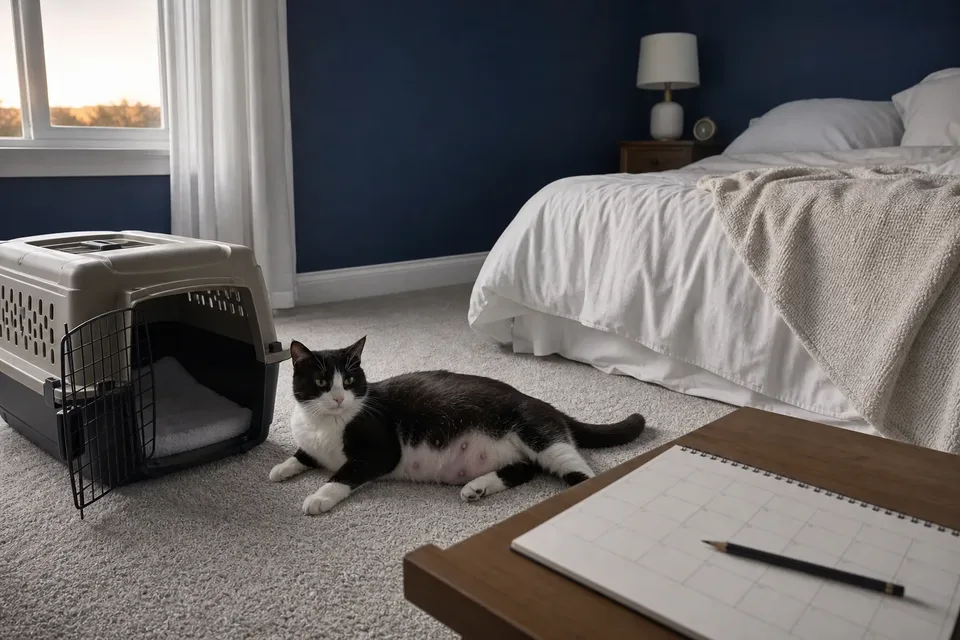
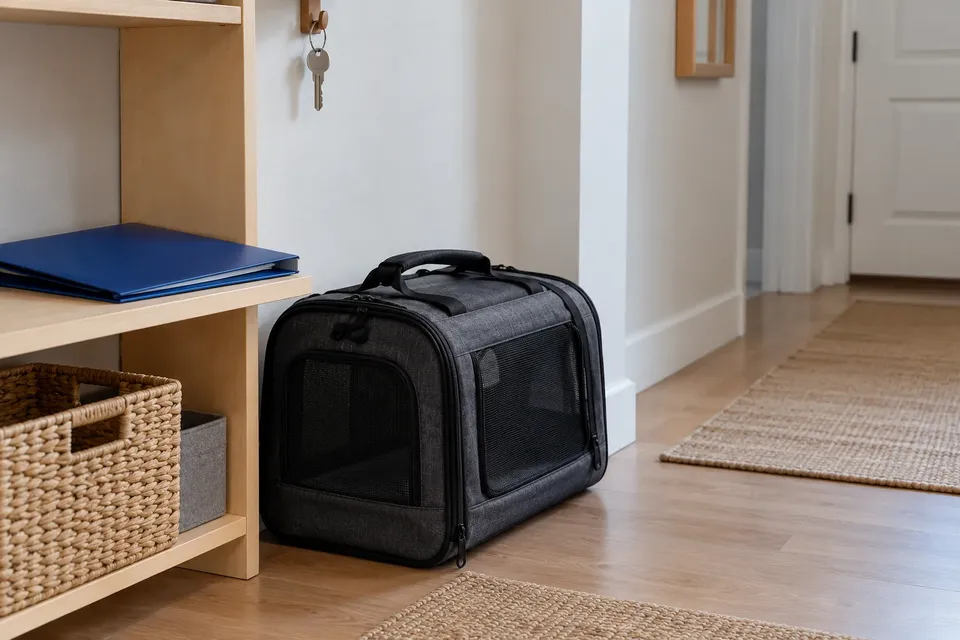
Give the sitter the carrier's location and a workable transport plan. Explain handling limits honestly. Someone who cannot safely give prescribed treatment or transport the cat needs an agreed alternative, not a last-minute message saying to try harder. This template does not supply medication doses or replace the veterinarian's directions.
Set an escalation route for missed visits, inability to locate a cat, equipment failure, and a change from the cat's usual eating or behavior. If a cat appears seriously ill, the sitter should seek urgent veterinary guidance rather than wait indefinitely for an owner reply. Repeated straining with little or no urine is an emergency; Cornell's urinary-disease advice explains why.
Check that the visit plan covers the cat you have
Cats Protection recommends at least twice-daily sitter visits for cats staying at home during a holiday. That general recommendation does not establish adequate coverage for every kitten, ill cat, or individual treatment schedule. Arrange the level of care your cat needs before using a template to document it.
Automatic feeders and cameras can support the plan, but a successful app notification does not confirm the cat ate or the litter area was checked. The separate guide to arranging care while you are away addresses coverage; this handoff records what the chosen caregiver will actually do.
Ask for an update that closes the visit
A concise message can state the visit time, cats seen, meals observed, water and litter tasks completed, and anything unresolved. For example, a sitter could write: “Both cats seen. One ate while I was present; I could not confirm the other's intake. Fresh water provided and trays scooped. I have contacted the agreed backup about the missed meal.” That is more actionable than calling the whole visit fine.
Agree in advance which uncertainties require a call rather than a routine message. Before the sitter leaves, they should know what remains their responsibility and who has acknowledged any handoff. The owner should not have to reconstruct an incomplete visit from photographs alone.