

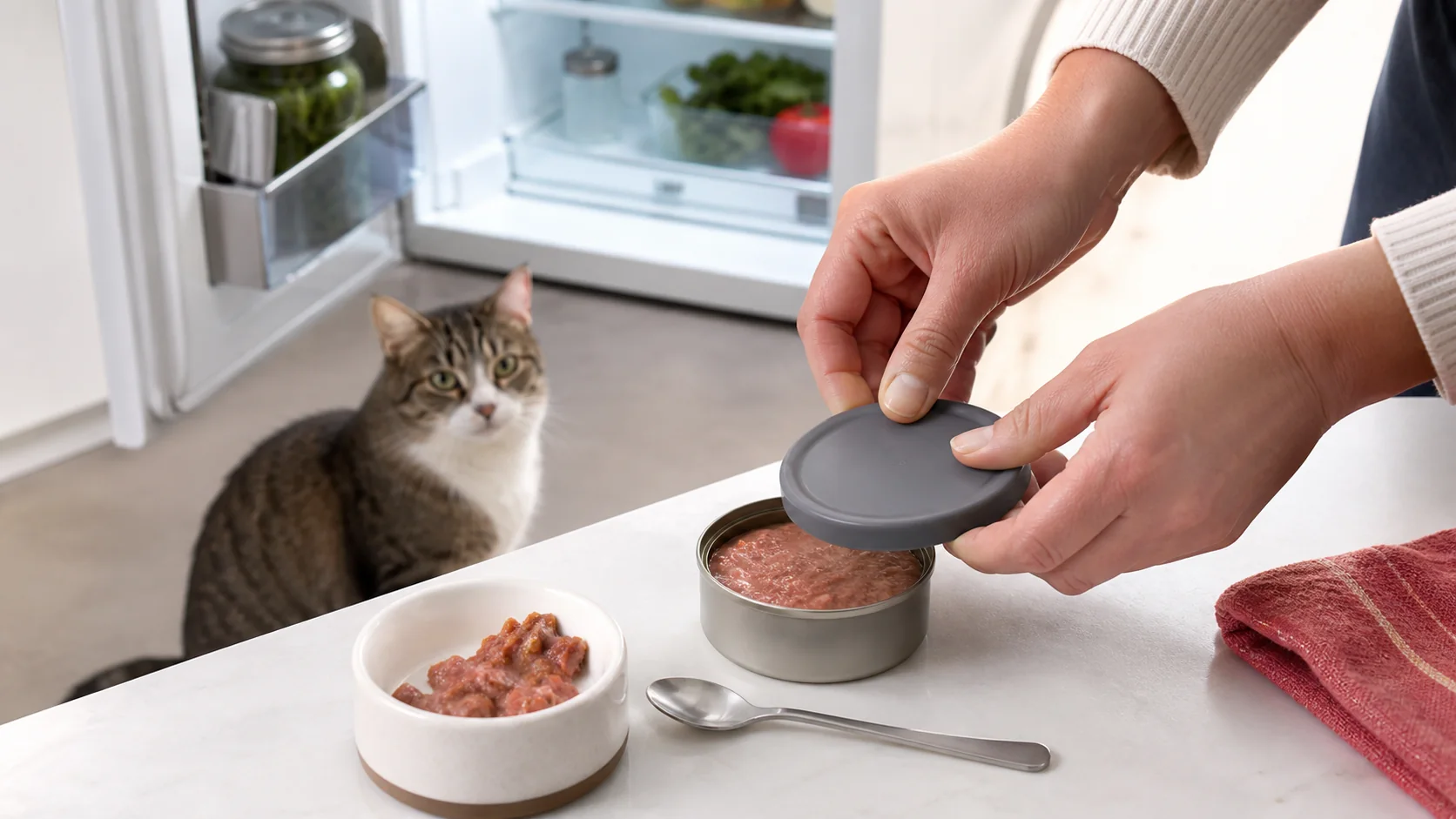
An opened can of wet cat food creates two different leftovers. One portion is still clean in the container. The other has been sitting in a dish where it has warmed, dried, and come into contact with the cat's mouth. Treating those portions as if they have the same storage history is where an otherwise careful feeding routine becomes vague.
The safest wet cat food storage routine after opening is straightforward: follow the product label, cover and refrigerate unused food promptly, use clean utensils, keep the refrigerator cold, and discard food that has been left out or contaminated beyond the manufacturer's directions. The exact time limit is not universal, because formulations, packaging, room temperature, and label instructions differ.
Start with the package, not a remembered number
Read the storage statement before throwing away a lid, carton, or outer sleeve. Look for instructions about refrigeration after opening, how long the opened product should be kept, and any serving guidance. If the label is unclear, use the manufacturer's contact information rather than substituting a time limit from a different food.
The U.S. Food and Drug Administration advises refrigerating or discarding unused or leftover canned and pouched pet food promptly. Its guidance on proper storage of pet food and treats also recommends keeping dry pet food in a cool, dry place and washing pet-food bowls and scooping utensils regularly. Those principles are more dependable than a single internet rule applied to every kitchen.
The first two minutes after opening
A simple workflow removes most of the guesswork:
- Wash your hands and start with a clean dish and utensil.
- Inspect the package. Do not use a swollen, leaking, badly damaged, or foul-smelling container.
- Serve the planned portion with the clean utensil.
- Cover the unused food without letting the used bowl or licking utensil contact it.
- Refrigerate the unused portion immediately and retain the product name, lot information, and storage directions.
I used to put the half-can beside the sink while finishing the rest of the feeding routine. That made storage depend on remembering one more task after water, dishes, and medication. Now the lid sits beside the clean spoon before I open the food. The improvement is organizational rather than nutritional, but it means the food is covered before I walk away.
Set up a refrigerator zone you can actually monitor
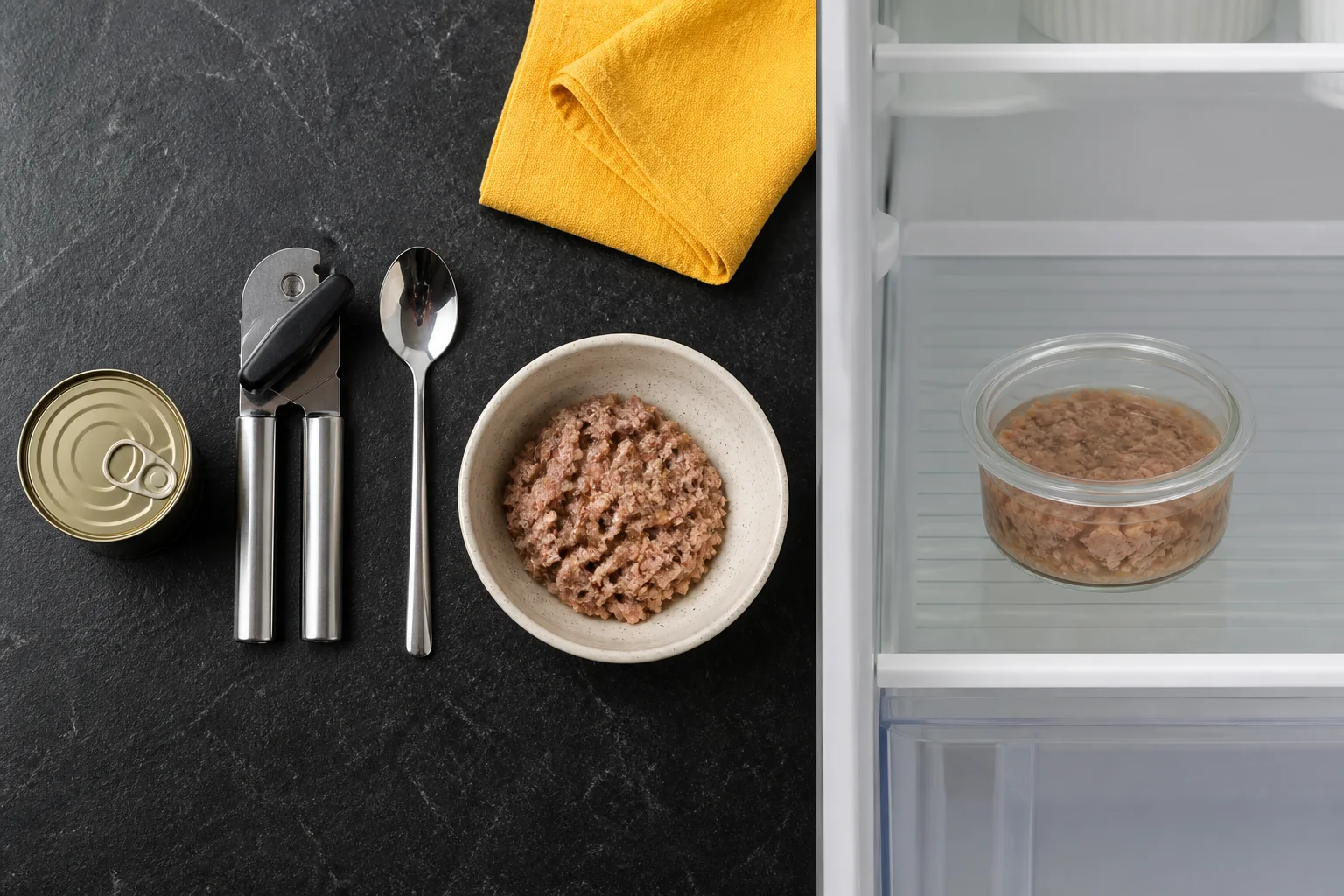
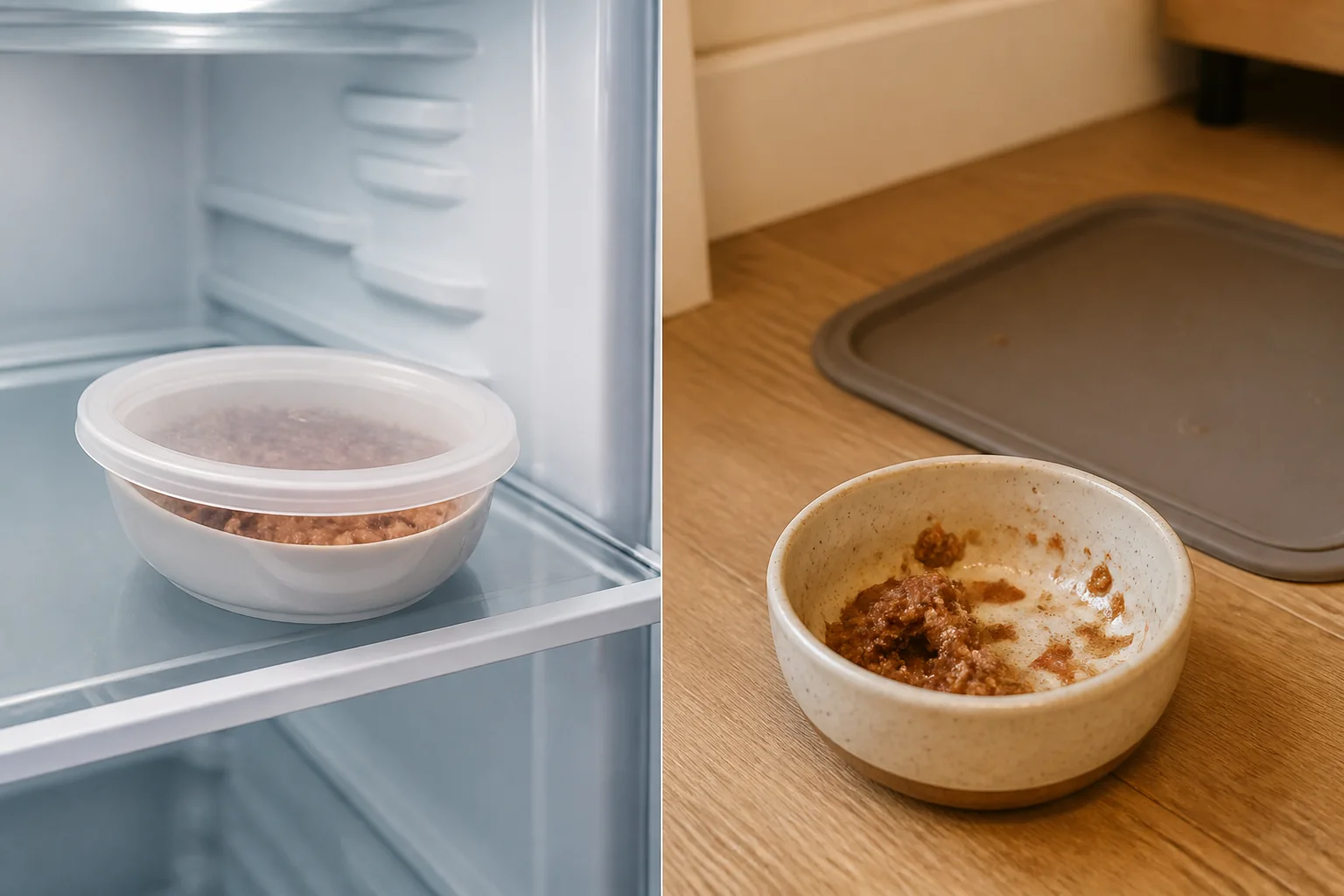
Store opened wet food in a reliably cold part of the refrigerator, not in a warm spot that is repeatedly exposed when the door opens. Keep it covered to limit drying, odor transfer, and contact with other foods. Your refrigerator should operate at a safe food-storage temperature; if its performance is uncertain, verify it with a refrigerator thermometer and address the appliance issue.
If you transfer food to another container, keep enough information to identify it. A small piece of the original label, the package itself, or a simple dated note can preserve the product name and opening time. This becomes especially useful in a multi-cat home where two formulas look similar.
Do not combine a newly opened portion with an older refrigerated remainder. Empty and wash the storage container before using it again. Rotation is easier when the oldest safe portion is visible at the front rather than hidden behind new food.
At the next meal, check history before texture
Cold wet food may become firmer or less aromatic. Some cats accept it immediately; others prefer a portion allowed to lose some of its chill. Follow the label, use a clean dish, and serve only what the cat is expected to eat. Do not repeatedly warm and re-chill the same batch.
A food can look normal and still have an unsafe storage history. Appearance and smell are useful reasons to reject food, but they cannot prove that mishandled food is safe. Discard the portion when:
- it is beyond the opened-storage period on the package;
- you cannot remember when it was opened;
- the refrigerator lost power or the food did not remain cold;
- a used utensil or bowl contaminated the stored portion;
- the container is leaking, swollen, damaged, or unusually pressurized;
- the color, odor, or texture has changed unexpectedly.
How long can wet cat food sit out?
Use the manufacturer's instructions for that food. Heat, direct sun, humidity, the food's formulation, and contact with the cat all affect the real situation. A bowl in an air-conditioned room is not equivalent to one beside a sunny window in summer.
Instead of stretching the limit, offer smaller portions and replenish the dish when needed. This is particularly helpful for cats who prefer several small meals. If you use an automated feeder for wet food, verify how it controls temperature and clean every food-contact part; a covered compartment is not automatically refrigeration.
Wash the dish before refilling it rather than placing fresh food on dried residue. Our cat feeding station setup covers dish spacing and a cleaning-friendly layout. The question of wet versus dry cat food is separate: either format needs correct handling and a complete, appropriate diet.
Plan portions without turning storage into calorie guesswork
Serving less at once can reduce bowl waste, but the day's total still matters. Start with the food's calorie statement and your veterinarian's feeding recommendation. Our guide to how much to feed a cat explains how to translate a daily target into meals, while the wet and dry cat food calculator can help divide a mixed plan without pretending that every cat has the same energy needs.
If several people feed the cat, keep one simple record of what was opened and served. That prevents two half-used containers from accumulating and makes a sudden change in intake easier to notice.
Storage questions can reveal an appetite problem
A cat refusing one cold portion may prefer a different serving temperature or texture. Repeated refusal, however, should not be explained away as pickiness without looking at the whole cat. Note how much was offered, how much was eaten, when the change began, and whether there is vomiting, diarrhea, drooling, hiding, weight change, or difficulty chewing.
Contact a veterinarian promptly when a cat is eating markedly less or not eating, especially if the cat is unwell, very young, older, or has an existing condition. Do not keep presenting questionable food to test whether hunger will overcome reluctance.
A routine that resets after every meal
The most reliable system does not require reconstructing yesterday's timeline. Keep the cover and clean utensil where food is prepared. Serve the planned portion. Refrigerate the untouched remainder while the package is still in your hand. Wash the used bowl after the meal, and discard food when its history is unclear.
That short loop protects the next meal and makes changes in appetite easier to see. The label provides the limit; your routine makes it likely that the food reaches that limit under the conditions the manufacturer intended.