

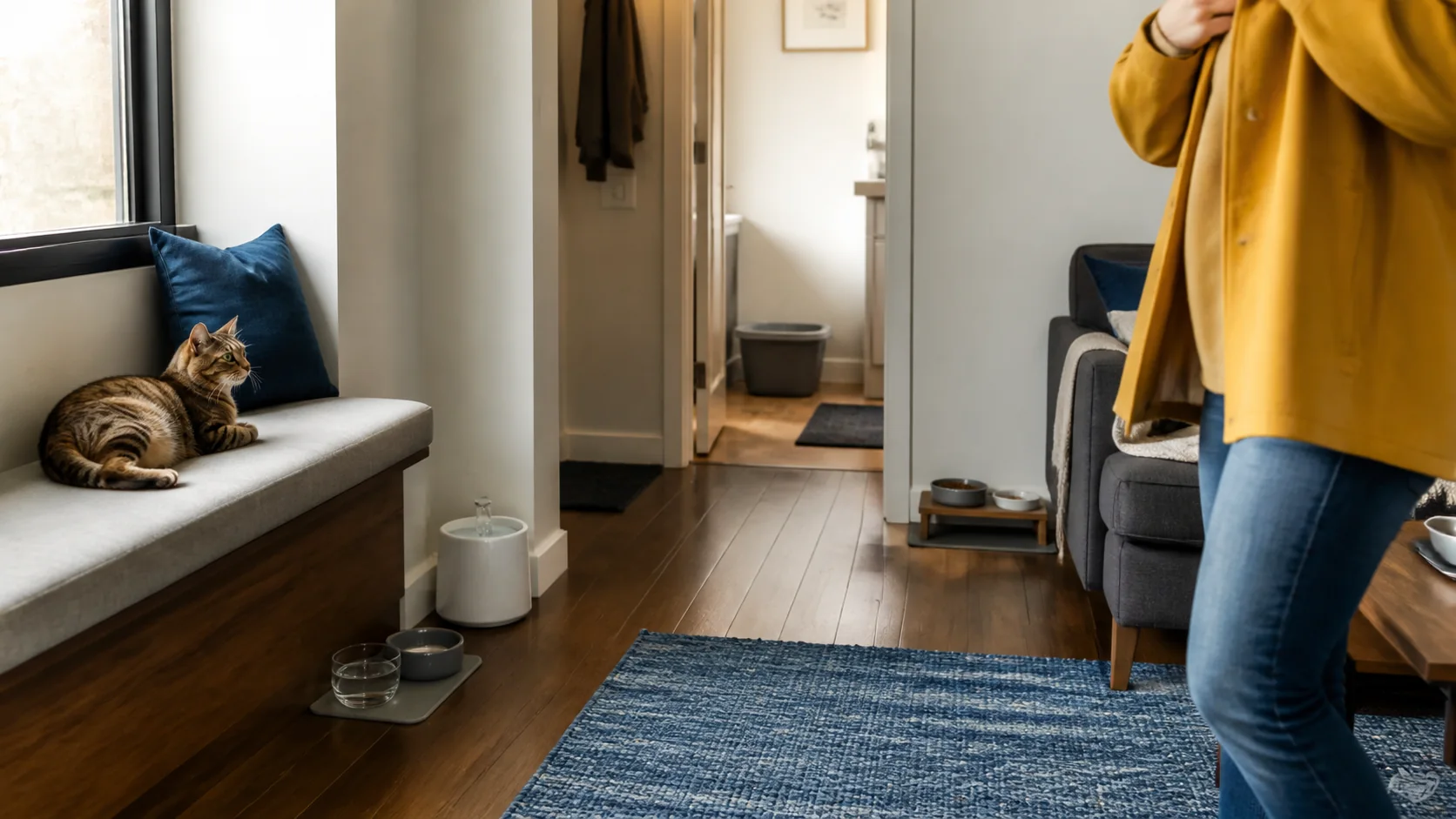
A cat asleep on the sofa can make departure feel simple. The bowls are full, the litter box is clean, and the cat does not follow you to the door. But the real question is not how independent the cat looks at that moment. It is what will happen before a person checks the home again.
There is no responsible universal answer for how long every cat can be left alone. A healthy adult cat may manage a normal workday in a prepared home, while a kitten, an older cat, a cat taking medication, or a cat with recent appetite or urinary changes may need much closer supervision. For overnight or multi-day absences, arrange reliable in-person care rather than scaling up bowls and hoping the routine holds.
Count forward to the next care event
Instead of starting with a number of hours, list what your cat normally needs between departure and return:
- the next meal and any food that cannot safely remain out;
- fresh water and a backup if a bowl spills or a fountain stops;
- litter box scooping and a chance to notice abnormal urine or stool;
- medication given at a prescribed time;
- temperature, ventilation, and a safe place to rest;
- human observation of appetite, breathing, movement, and behavior.
Your safe interval ends before the first essential need cannot be met. A timed feeder can release a meal, but it cannot confirm that the cat ate, clean vomit, refill a spilled bowl, notice repeated litter box visits, or respond to a power failure.
Four factors that change the answer
1. Age and health
Young kittens need frequent meals, social contact, and a tightly controlled environment. Older cats may have mobility changes, reduced temperature tolerance, or medical routines. Any cat with diabetes, kidney disease, urinary problems, seizures, recent surgery, medication, or a sudden behavior change needs a plan made with the veterinary team.
A cat who has not been eating normally should not be left simply because food is available. The same applies to straining in the litter box, producing little or no urine, open-mouth breathing, repeated vomiting, collapse, or marked lethargy. Seek urgent veterinary guidance.
2. The cat's ordinary routine
A cat accustomed to several measured wet-food meals has a different care schedule from one eating an appropriate dry-food plan. A cat who uses a fountain exclusively needs another familiar water source in case the pump stops. A social cat who becomes distressed when routines change may need a longer, calmer visit than a quick bowl refill.
3. The home itself
Temperature can turn an ordinary absence into a hazard. Direct sun moves across rooms, air conditioners fail, and closed apartments can heat quickly. Our summer apartment setup for cats covers shade, airflow, water redundancy, and room checks without relying on one cooling device.
Also look for doors that can swing shut, cords that become accessible, appliances that may start, and windows or balconies that are not securely screened. Remove toys that require supervision.
4. The backup plan
Someone must be able to enter the home if your return is delayed. That person needs a working key, the correct address, clear permission, and a way to contact both you and the veterinary clinic. A camera can add information, but it cannot replace a person capable of responding.
Cats Protection's advice on leaving a cat alone emphasizes arranging a sitter for longer absences. Its holiday guidance recommends visits at least twice a day, with more frequent care for cats with additional needs.
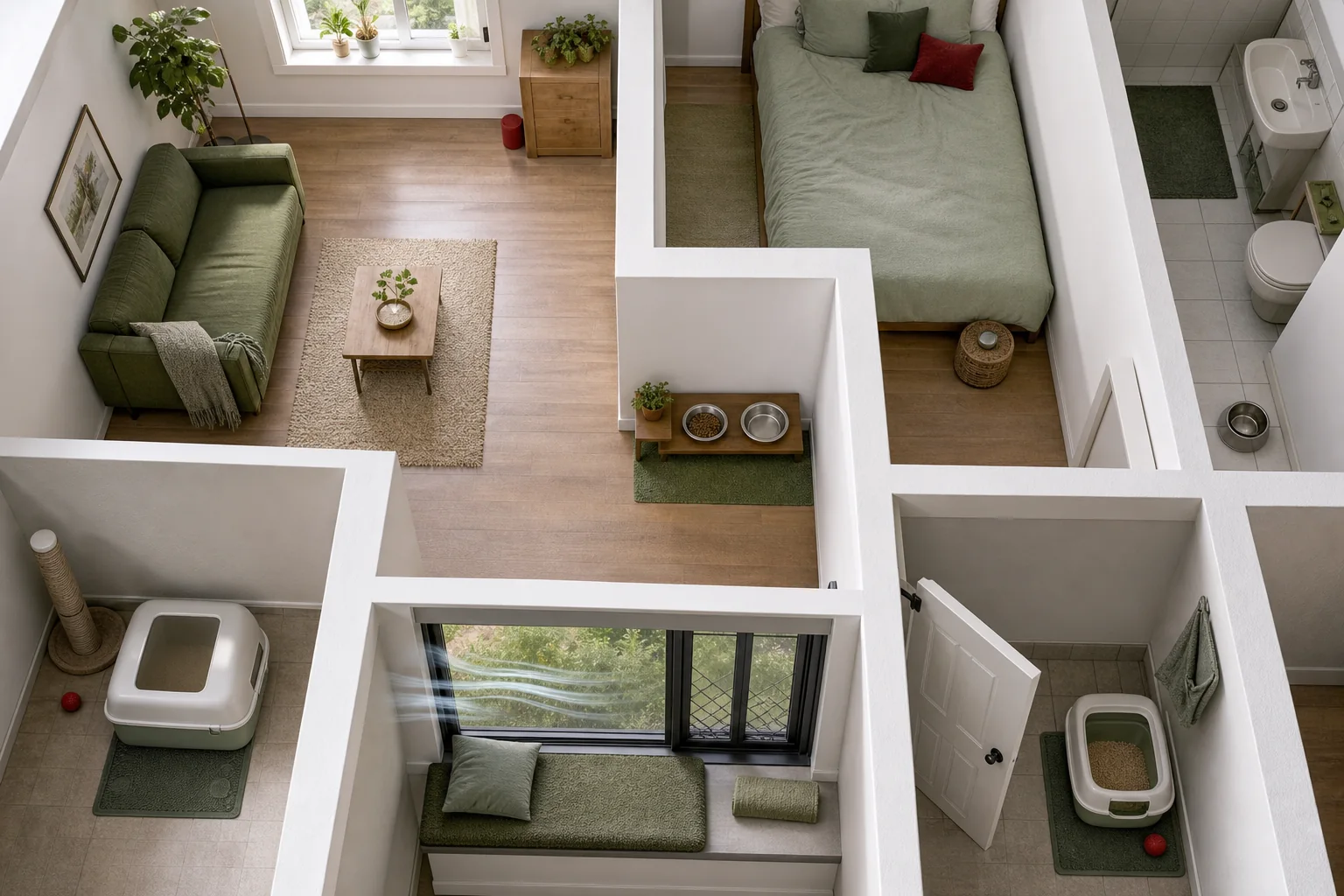
Prepare the home by zone
Food
Provide the planned amount in a format that stays safe for the interval. Test any feeder on ordinary days and verify portion release, battery backup, stability, and whether one cat can block another. Our automatic cat feeder checks focus on those failure points.
Water
Set out more than one familiar water source in separate locations. Clean and refill them before leaving. If a fountain is part of the routine, maintain it rather than assuming visible circulation means clean internal surfaces; use the steps in our cat water fountain cleaning guide.
Litter boxes
Scoop immediately before departure and provide enough accessible boxes. In a multi-cat home, boxes placed side by side can function like one guarded resource. See how many litter boxes per cat for a layout that accounts for access as well as count.
Rest, movement, and stimulation
Leave familiar hiding and resting places available. Put away strings, wand toys, and damaged toys that could entangle or be swallowed without supervision. Food puzzles and safe solo activities should be tested while you are home. Our indoor cat enrichment ideas distinguish independent options from activities that need a person present.
Write the sitter handoff for a real visit
A useful handoff tells the sitter what normal looks like and what action to take when it changes. Include:
- meal amounts, locations, and times;
- medication instructions exactly as provided by the veterinarian;
- where the cat usually hides and how to confirm the cat is present;
- litter box locations and what should be reported;
- carrier location, veterinary contact, emergency clinic, and transport plan;
- your contact details and a second authorized decision-maker.
Ask for a concrete update: a photo or direct visual confirmation of each cat, how much was eaten, whether water and litter use looked normal, and whether there was vomit or damage. "Everything is fine" is hard to interpret.
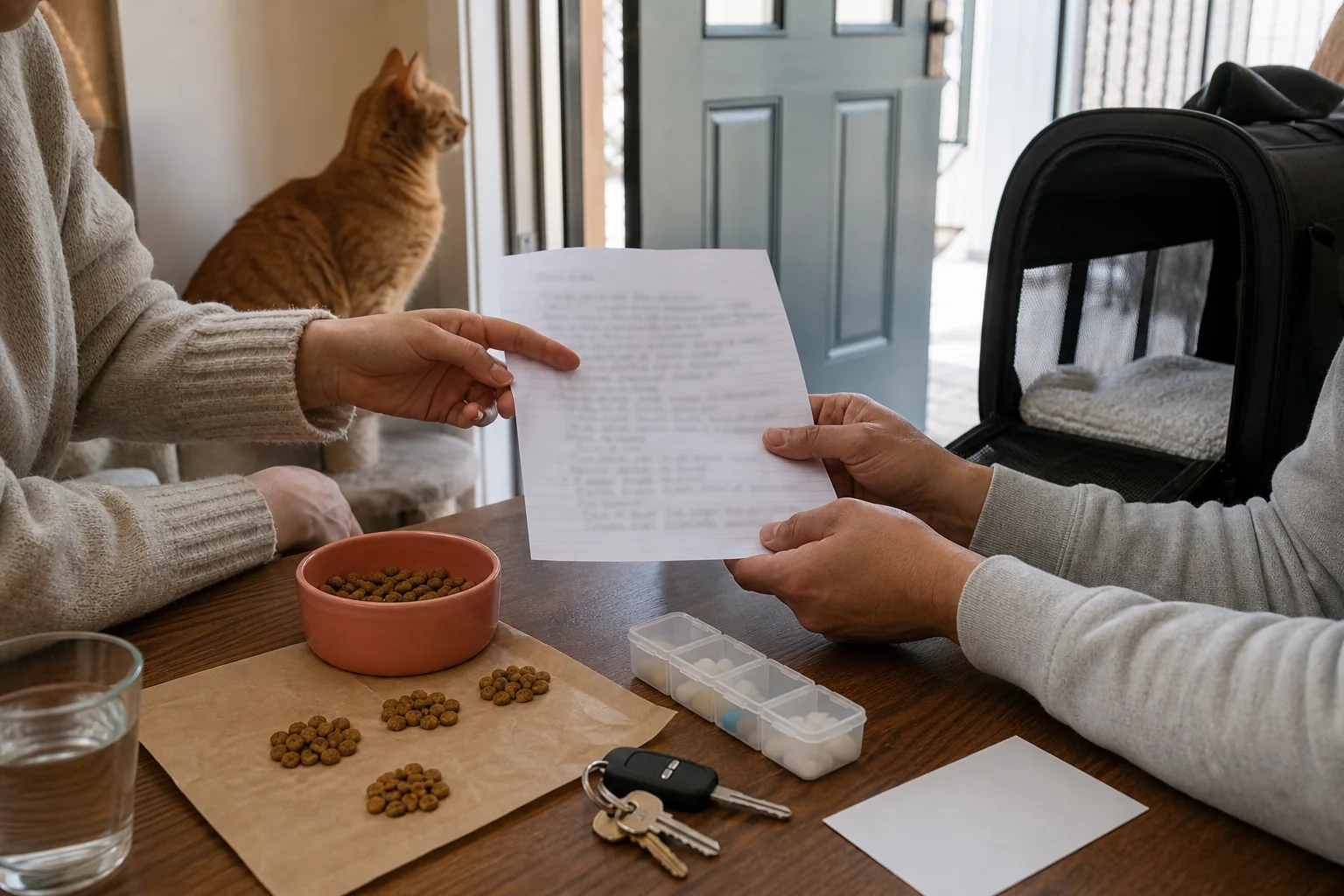
I learned to add the phrase "see the cat, not just the empty bowl" after a sitter once assumed a shy cat had eaten because food was missing. The other cat had finished both servings. Separate feeding areas and individual confirmation fixed the ambiguity on later trips.
Can a cat be left alone overnight?
An occasional overnight absence may be manageable for some healthy adult cats in a carefully prepared home, but it is not automatically equivalent to a long workday. It spans more feeding and litter events, removes a period when you would normally observe the cat, and increases the impact of a spill, feeder failure, or temperature change.
If you cannot confidently cover those events, arrange a sitter visit. For a kitten, a cat needing medication or monitoring, a cat recently ill, or an absence extending into another day, obtain individualized advice and closer care. Boarding or veterinary-supervised arrangements may be more appropriate for some medical needs.
Check the cat before returning to routine
When you get home, do more than refill bowls. Confirm that the cat is moving and breathing normally, note appetite, inspect water sources, and scoop the litter boxes so urine and stool changes are visible. Look for vomit, diarrhea, damaged objects, or a closed door that changed access.
The most honest answer to "how long" is the time until the next need, failure, or health change requires a person. Plan to that moment, then place reliable care before it.