

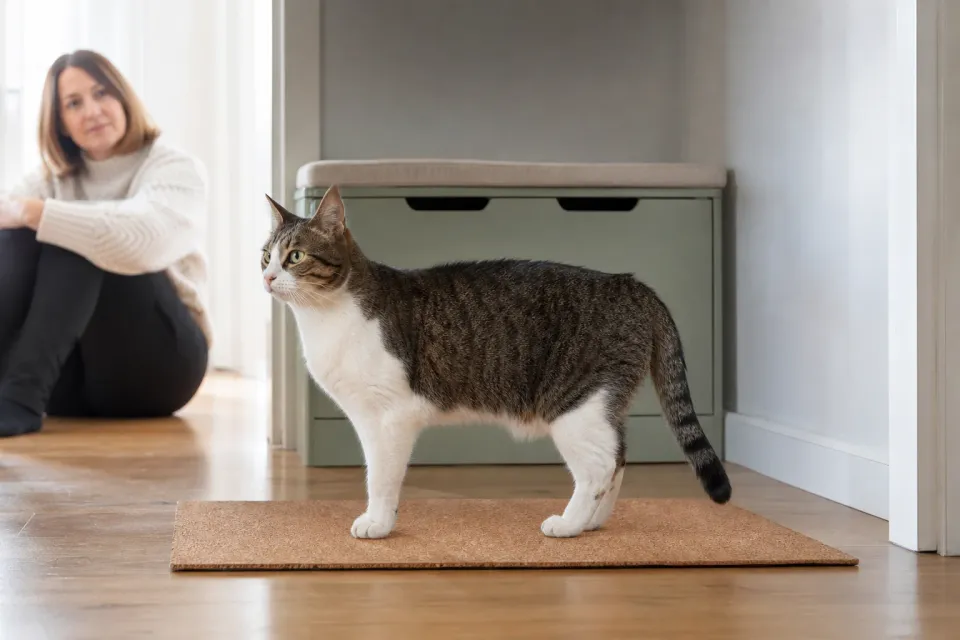
A bathroom scale can tell you that your cat weighs 11 pounds. It cannot tell you how much of that number is frame, fat, or muscle, and it cannot show whether the same weight looks different than it did six months ago. That is why a body condition score belongs beside the weight record.
Body condition scoring is a structured look-and-feel check. At home, its value is not producing a perfect number. Its value is noticing the same three areas in the same way, recording what changed, and bringing a clearer question to your veterinarian.
Write the scale beside the score
Two scoring systems are commonly used for cats: five points and nine points. Always write the denominator, such as 5/9, because a score of 3 means something different on a five-point scale. The nine-point system gives more room to describe gradual change, with the middle of the scale representing an ideal range.
The AAHA nutrition and weight guidelines recommend recording body weight together with body condition and muscle condition. That combination matters. A cat can lose muscle while still carrying excess fat, especially as age or illness changes activity and appetite.
Use our cat weight calculator to organize the number, then add a dated note such as “ribs easier to feel than last month” or “waist less visible from above.” The note is often more useful than pretending a home score is exact.
Use three views, in the same order
Wait until your cat is standing naturally on a level floor. Do not stretch the body, press the abdomen, or hold the cat in a show pose. Then check three places:
- Ribs by touch: glide flat fingertips over the rib cage. You are checking how much pressure is needed before the ribs are distinct.
- Waist from above: look for a gentle narrowing behind the ribs. Fur may blur it, so compare the outline with your hands as well as your eyes.
- Belly profile from the side: notice whether the underside rises behind the rib cage, stays level, or rounds downward.
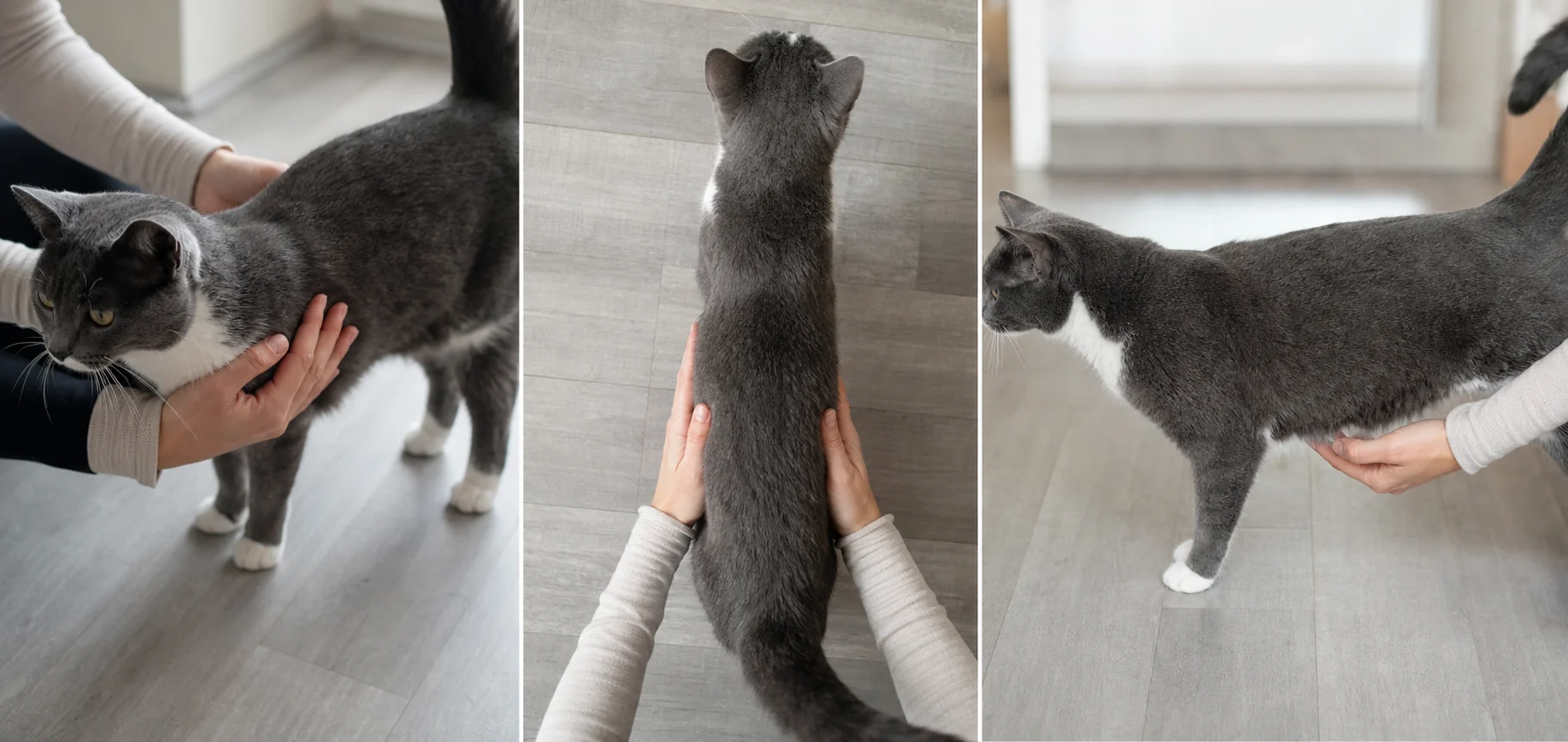
The VCA body condition scoring overview also separates looking from feeling. This is especially important for long-haired cats, whose coat can create a waist or hide one depending on how the fur lies.
What the middle of a nine-point scale feels like
Near the middle of a nine-point scale, the ribs should usually be easy to feel under a light fat covering. From above, there is a visible waist behind the ribs. From the side, there is an abdominal tuck rather than a continuous rounded line.
Those descriptions are reference points, not a diagnosis. Breed, frame, coat, posture, and the primordial pouch can make one view misleading. A loose pouch of skin and fat along the lower abdomen is not the same thing as having no waist or having a thick covering over the ribs. Give the three observations equal attention.
Cornell's feline feeding resource illustrates the nine-point scale and describes the middle score using proportion, rib feel, waist, and abdominal fat pad. Use the source as a visual reference, while leaving a final clinical assessment to your veterinary team.
The ends of the scale need less certainty, not more
At the low end, ribs, spine, or pelvic bones may be prominent, with little padding and a sharp waist or abdominal tuck. At the high end, ribs can be difficult to feel, the waist may disappear, and fat deposits may be obvious around the abdomen or back.
Do not turn those signs into a home weight-loss or weight-gain prescription. Sudden weight loss, reduced appetite, vomiting, diarrhea, increased thirst, weakness, or a change in litter habits can have medical causes. A cat who is not eating needs prompt veterinary advice rather than a lower or higher score written in a notebook.
Long hair changes the method
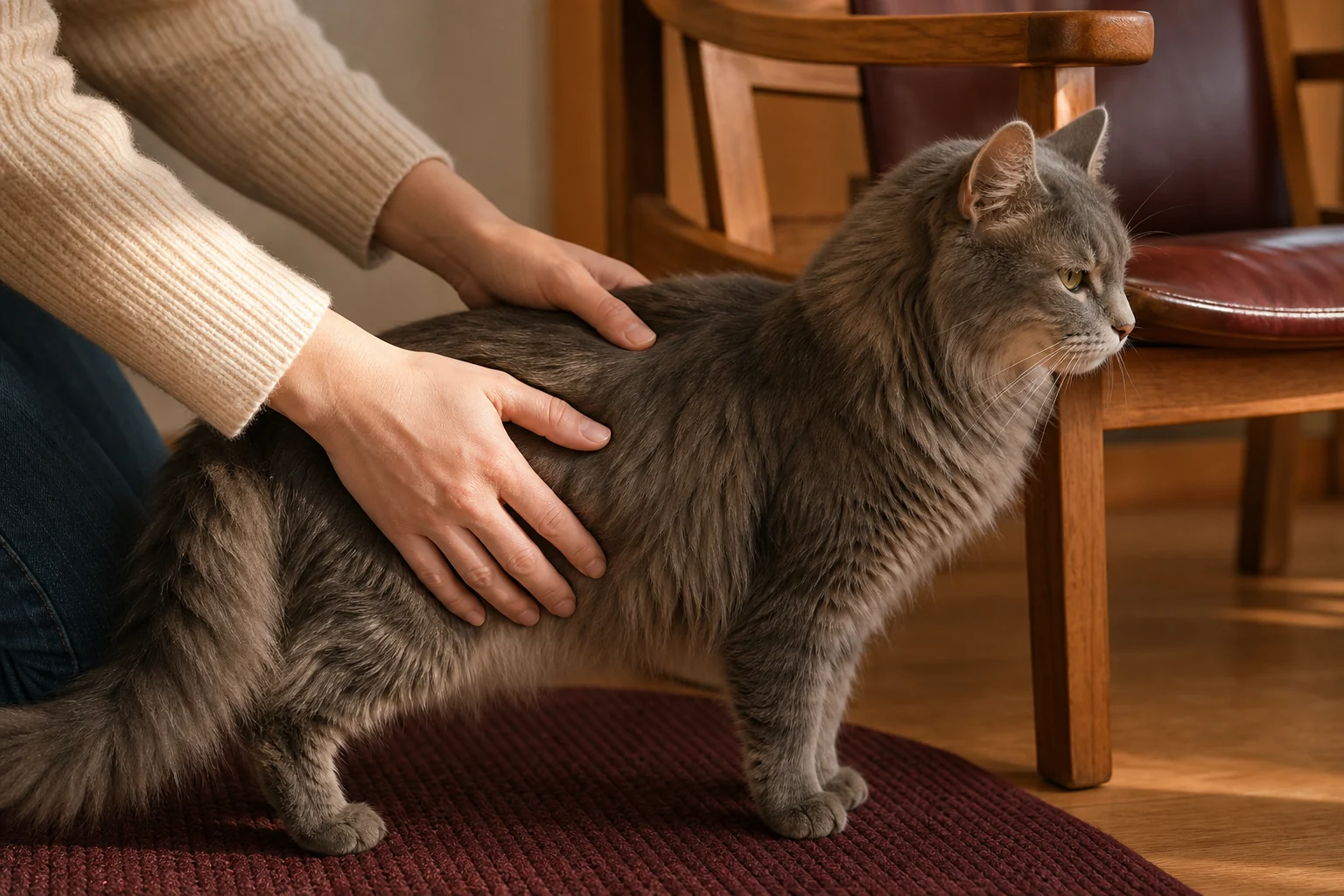
A full coat can make a lean cat look broad and a rounded cat look rectangular. Part the fur with your hands and rely more on gentle palpation. Run flat fingers over the ribs, then along the spine and pelvis without digging in. The question is how clearly the structures can be felt, not whether you can force your fingers through the coat.
Photographs can help when they are consistent. Take an overhead and side image on the same floor, from roughly the same distance, while the cat is standing. Avoid wide-angle close-ups that distort the middle. Save the date and current weight with the images.
One score is a snapshot; a pattern is useful
Monthly checks are often easier to interpret than frequent checking that magnifies normal scale noise. Use the same scale, similar time of day, and the same body-condition sequence. Record the weight, your estimated score as a fraction, and one short observation.
A simple record might read:
- August 4: 11.2 lb, about 6/9, ribs need moderate pressure, waist faint.
- September 3: 11.0 lb, about 6/9, rib feel unchanged, waist similar.
- October 2: 10.4 lb, score uncertain, spine feels more distinct, appetite lower.
The third entry is not a reason to calculate a new feeding target. It is a reason to call the veterinarian with specific information. If a home measurement changes unexpectedly, confirm it on another day and compare it with a clinic scale when possible.
Keep food math downstream of the assessment
Calories, portions, treats, life stage, and activity all affect weight, but body condition should not be used as a shortcut to prescribe a diet. Once your veterinarian has helped define an appropriate condition and weight goal, the cat calorie calculator can organize a starting estimate. It should not override a plan for a kitten, pregnant or nursing cat, senior cat with muscle loss, or cat with a medical condition.
Similarly, the packaging number is only one input. Changes should be gradual and monitored. A rapid food reduction can be dangerous for cats, and refusing food is never a routine dieting problem.
Bring a better question to the appointment
Your notes do not need to declare “overweight” or “underweight.” They can say what your hands and eyes found: ribs became harder to distinguish, a waist disappeared, the spine feels sharper, or the scale moved while the body outline did not.
Bring the dates, photos, scale readings, food label, treat estimate, and any change in appetite, activity, grooming, thirst, or litter habits. The useful outcome of an at-home body condition check is a clearer conversation, not a confident home diagnosis.