


To clean cat food bowls, empty the leftovers, wash the dish with detergent and water, rinse thoroughly, and let it dry before using it again. Work around the rim and underside as well as the visible eating surface. A quick swish under the tap can leave food and greasy residue behind.
Keep a second clean bowl available while the first one dries. That small change makes a complete wash easier to finish between meals, without turning the next feeding into a search for a usable dish.
Empty, wash, rinse, then dry
Remove leftover food into the appropriate household waste collection before washing. Avoid tipping food into the sink drain. An old serving should not go back into the container holding the unserved remainder.
- Wash with a suitable detergent and a clean brush or sponge. Loosen dried food with water and detergent, then scrub the base, walls, and rim.
- Rinse away the detergent, including beneath the lip.
- Drain and dry the bowl away from dirty dishes. Wash your hands and clean the work area and washing tool.
The FDA's pet-food handling guidance advises washing bowls and scooping utensils with soap and hot water after each use. It also advises using a dedicated scoop rather than using the pet's eating bowl to scoop food from a bag. That keeps the bowl's previous contact history out of the stored supply.
The rim and base need their own look
Run a finger or brush carefully around the rim while washing. Rolled edges, molded seams, and the recess beneath a removable non-slip ring can be less obvious than the center of the dish. Take apart only the components the manufacturer says are removable; do not force a bonded base off a bowl.
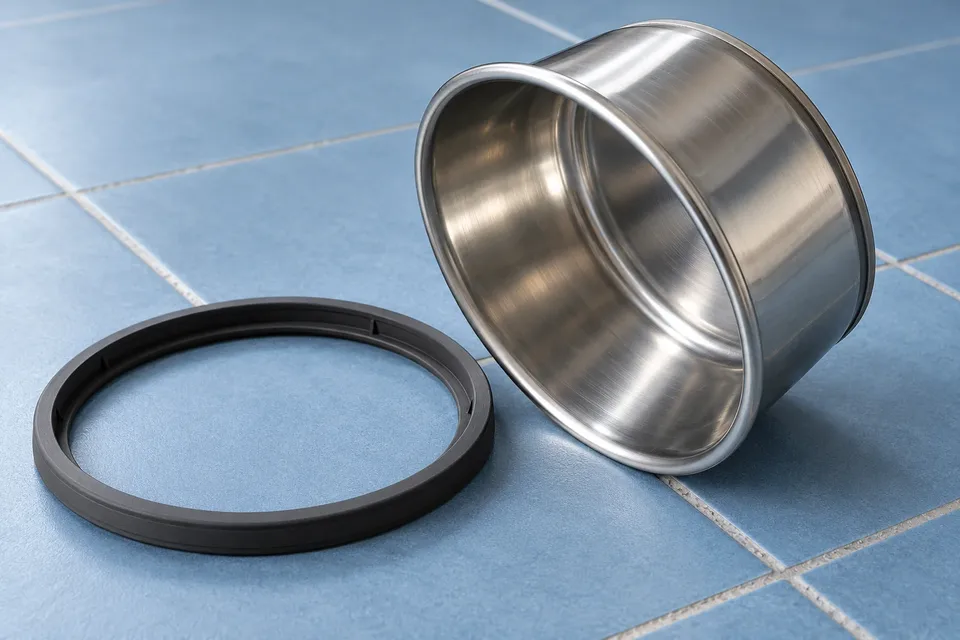
Wash compatible removable parts separately, then rinse and dry them before reassembly. Check beneath the ring or foot for trapped water.
Notice damage during this check. Chips, cracks, rust, a rough edge, or material that no longer cleans properly are reasons to take a bowl out of use and check its replacement options. A damaged coating does not become a sound food-contact surface because the dish went through a hot wash.
Can cat bowls go in the dishwasher?
Only use a dishwasher when the bowl and each attached part are labeled suitable. Check placement and cycle restrictions. A metal-looking finish, ceramic appearance, or silicone base does not tell you how the whole assembled product will tolerate a machine.
Remove debris and load the dish so water can reach it; do not nest bowls tightly together. Afterward, inspect for food residue and dry the parts fully. Keep hand-wash-only items out of the machine.
The CDC's pet-supply guidance discusses both hand washing and dishwasher cleaning, with attention to whether an item is dishwasher-safe. A compatible machine process can be useful, but ordinary household use should not be described as sterilizing every dish.
How often should you wash cat food bowls?
For wet-food bowls, CDC guidance says to clean after every use; for dry-food and water bowls, it lists daily cleaning. FDA's food-handling advice uses the broader after-each-use instruction for pet-food bowls and utensils. These are different scopes, so keep the source clear rather than presenting them as one identical rule.
A straightforward household routine is to put a clean food bowl down for each meal and wash the used one afterward. If you leave dry food available under an existing feeding plan, do not keep topping up the same unwashed bowl indefinitely. Make the daily wash part of that plan, and clean sooner when the dish becomes dirty.
Water dishes also need attention even when no food is visible. For a fountain, the reservoir and pump introduce additional parts; follow the separate fountain-cleaning routine and the equipment instructions rather than treating it like an open bowl.
Cleaning and disinfection are different jobs
Cleaning removes food and dirt. Disinfection involves a suitable product and its specified use, including contact time and any rinsing required for food-contact items. More chemical or more heat is not automatically appropriate for the bowl you own.
CDC guidance covers circumstances where disinfection may be needed, including illness-related concerns. Ask your veterinarian about the cleaning plan if a cat is ill or has special risks, and follow the product label. Do not mix cleaning chemicals or improvise a stronger recipe. A household wash routine is not a substitute for infection-control instructions.
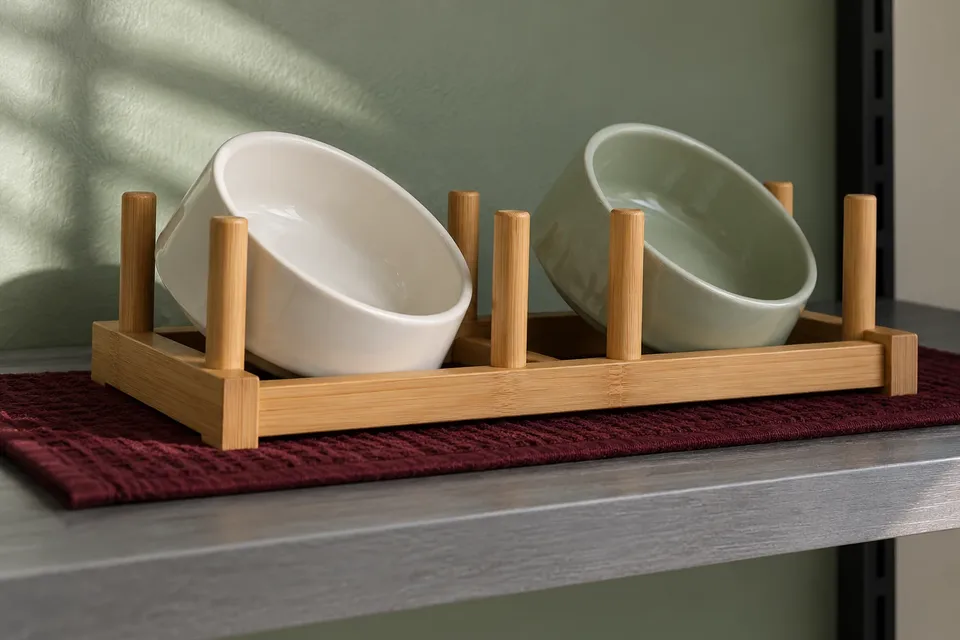
A washed dish cannot reset food's handling history. Use the separate advice for an exposed serving and a refrigerated remainder. Keep the cat away from the cleaning area, finish rinsing and drying, and leave a second clean dish ready for the next feeder.


