

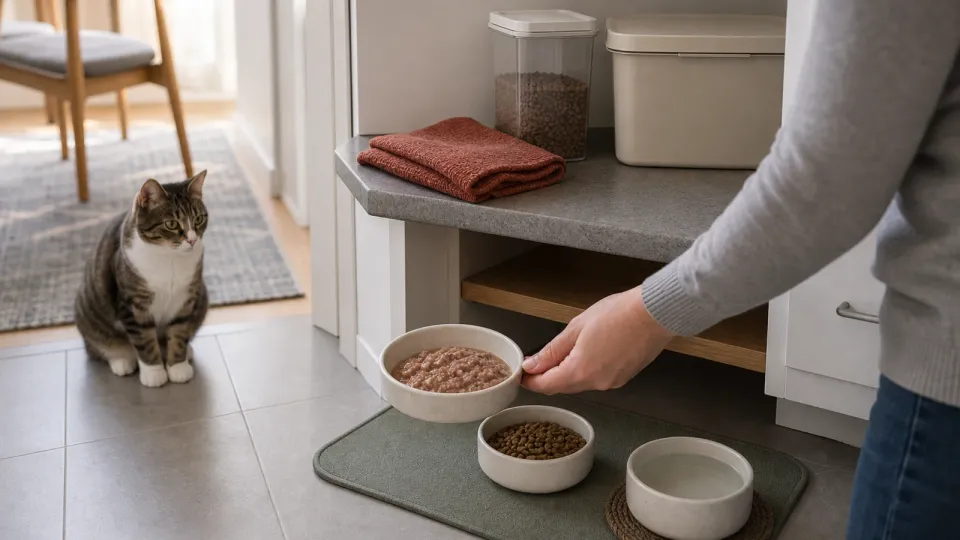
Wet vs dry cat food is often framed like a winner-takes-all decision. In a real home, it is usually a routine decision with tradeoffs: moisture, storage, cleanup, cost, portion control, cat preference, and any medical advice already given by a veterinarian.
I do not treat one format as automatically better for every cat. I look at what the household can repeat without waste, what the cat will actually eat, how water intake is supported, and whether any health condition changes the decision. A food plan that sounds ideal but fails on Tuesday night is not a useful plan.
Start with the cat and the routine, not the format
Some cats eat wet food enthusiastically and leave dry food behind. Some graze dry food calmly and refuse most textures of wet food. Some do best with a mix because it fits appetite, schedule, and budget. The first job is to watch the cat in the home you have, not the feeding debate in the abstract.
The Cornell Feline Health Center's feeding overview keeps feeding tied to age, health, weight, and veterinary guidance. That is the right boundary for wet vs dry cat food. The format can support a routine, but it does not replace a nutrition plan when a cat has a medical need.
Before changing formats, write down what is actually happening: how much is served, how much is left, when the cat eats, whether water is used, who feeds the cat, and what gets wasted. That small audit is more useful than starting with a brand shelf.
Wet food helps with moisture but adds handling rules
Wet food brings more moisture into the meal, which can be helpful for cats who do not drink much on their own. It can also be more aromatic and easier for some cats to accept. That does not make it a cure, and it does not mean every cat needs an all-wet routine.
Wet food changes the household workflow. Open food needs timely serving, leftover handling, bowl washing, odor control, and a plan for partial portions. If nobody is home to pick up leftovers or wash bowls, the routine may break even if the idea is good.
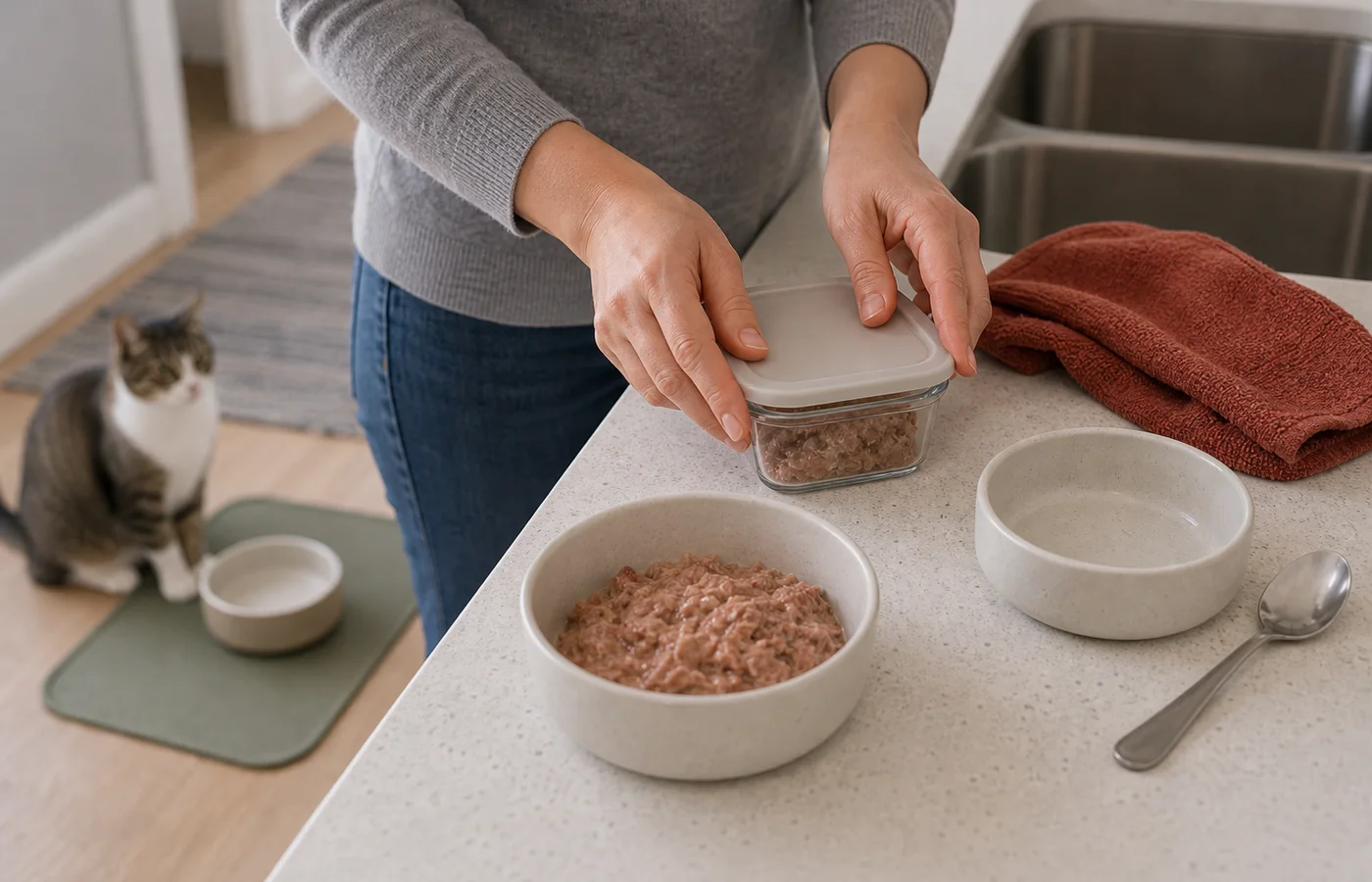
The CDC's pet food safety guidance is a useful reminder that storage and cleaning are part of feeding. For wet food, that means the bowl, spoon, storage container, and surface all belong in the plan.
Dry food is convenient, but convenience can hide overfeeding
Dry food is easier to store, easier to portion in advance, and easier for some households to use with scheduled routines. It can be useful when a cat eats small amounts throughout the day or when a caregiver needs a simple backup plan.
The risk is that dry food is easy to over-pour. A little extra in the scoop may not look like much. Over many meals, it can quietly change the daily intake. Dry food also makes it easy to forget the water side of the routine, especially when the bowl sits full and looks finished.
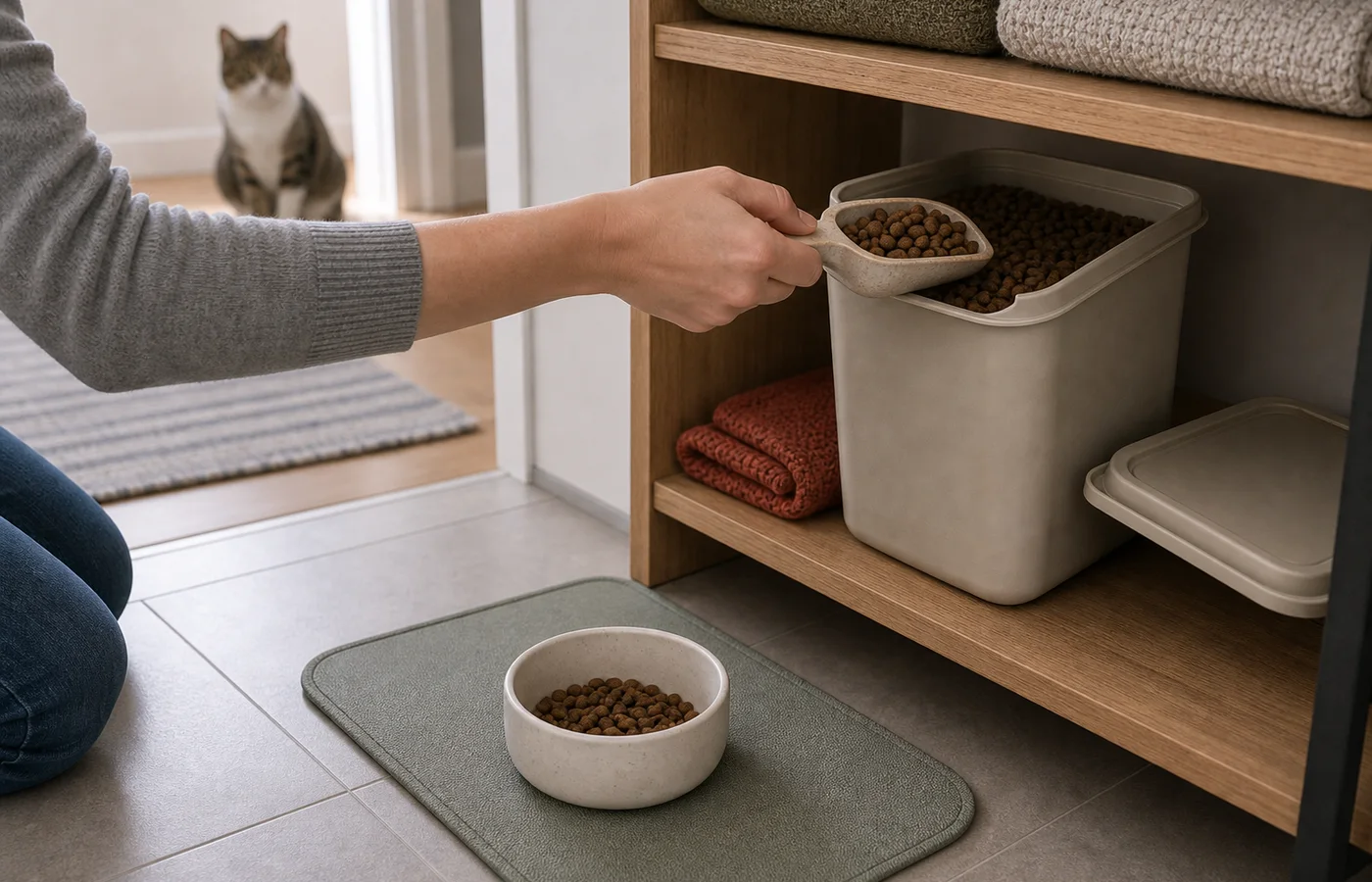
Storage matters here too. Keep the food closed, dry, and away from heat. Keep identifying information available, especially if food is moved into a bin. A tidy container is not worth losing the details you may need for a recall, sensitivity question, or vet discussion.
Moisture is one variable, not the whole decision
Moisture is real, but it should not be turned into a universal medical promise. Cats with urinary, kidney, diabetes, dental, weight, gastrointestinal, or appetite concerns may need individualized advice. If a veterinarian has recommended a therapeutic diet, texture, calorie plan, or monitoring routine, that plan takes priority over a general comparison.
Texas A&M's cat food selection guidance emphasizes considering a cat's life stage and needs when selecting food. That same idea applies to format. Wet, dry, or mixed feeding should be judged against the cat's needs, not against a blanket internet rule.
If hydration is the main concern, do not let wet food become the only water strategy. Keep fresh water available, watch drinking patterns, and talk with a veterinary team about sudden thirst, reduced urination, straining, appetite change, or weight change.
Budget includes waste and cleanup
Wet food often costs more per day, especially if the cat leaves portions behind or needs smaller cans or trays to reduce waste. Dry food may cost less per serving, but it can become expensive if the cat overeats, refuses a large bag, or the household has to add toppers to keep interest.
Compare the real month, not the package price. Count what gets served, what gets thrown out, what storage you need, how often bowls are washed, and whether the routine creates extra shopping trips. A slightly more expensive format may be reasonable if it reduces waste and fits the cat. A cheaper format may be reasonable if it stays consistent and does not create hidden problems.
This is where the broader cat food path should stay practical. A budget decision still needs the cat to eat reliably, maintain an appropriate body condition, and have a feeding routine people can actually maintain.
Mixed feeding needs rules or it becomes guessing
Many homes use both wet and dry food. That can work well when each format has a job: wet food at set meals, measured dry food for a puzzle or small daytime portion, or dry food as a backup when a sitter needs a simpler routine.
The weak version of mixed feeding is unmeasured overlap. A full wet meal plus a full dry bowl can quietly become two meals. If you mix formats, decide what each portion replaces. Keep a simple note for the household so one person does not add dry food after someone else already served wet food.
The setup matters too. A clean bowl area, water route, storage location, and clear scoop habit can prevent mixed feeding from becoming scattered. The same station logic used in a cat-proof apartment setup applies: make the routine visible, reachable, and easy to reset.
Texture and timing can matter as much as ingredients
Some cats refuse a food format because of texture, temperature, smell, or timing rather than the nutrition profile on the label. A pate may be accepted when chunks are ignored. A refrigerated wet food may be refused until it is no longer cold. A dry food may be eaten from a puzzle but ignored in a crowded bowl.
That is why I prefer one change at a time. Change the format, or change the bowl, or change the serving time. Do not change all three and then try to guess why the cat walked away. A good comparison is not wet versus dry in theory. It is wet served in this routine versus dry served in that routine.
For picky cats, the household's patience matters. Repeatedly opening new foods, mixing too many toppers, or replacing every refused meal can make the routine harder to read. A veterinarian should be involved quickly when appetite drops, but normal preference testing still benefits from calm, consistent conditions.
Multi-cat homes make format tracking harder
Wet and dry tradeoffs become less clear when more than one cat shares bowls. Dry food left out may be eaten by the wrong cat. Wet food may be finished by the faster eater before a cautious cat gets comfortable. A mixed routine can work, but it needs enough separation to show who ate what.
Use separate stations, short meal windows, or supervised starts when needed. If one cat is on a weight plan, medication schedule, prescription diet, or appetite watch, do not rely on a shared dry bowl to tell the truth. The best food format is the one you can monitor for the cat who needs monitoring.
Change formats slowly enough to see the signal
A sudden switch can blur the decision. If stool, vomiting, appetite, or behavior changes, you need to know whether the issue was the food, the amount, the schedule, the texture, or the speed of transition. Gradual changes are easier to evaluate and usually easier for the cat to accept.
Keep notes plain: what was served, how much was left, water use, stool quality, and whether the cat seemed eager or hesitant. If the cat stops eating, loses weight, vomits repeatedly, strains, or shows other concerning signs, stop treating the format debate as a home experiment and call a veterinary team.
Choose the format you can monitor
The best routine is the one that lets you see what is changing. Wet food makes leftovers visible. Dry food makes grazing easier but can hide who ate what in a multi-cat home. Mixed feeding can offer flexibility but requires clearer notes.
Run a two-week routine test. Keep the food itself stable unless a veterinarian is guiding a diet change. Track appetite, leftovers, water use, stool changes, vomiting, weight trend if you already monitor it, and whether the household can keep the routine clean. Do not change format, bowl, schedule, and treat pattern all at once.
Wet vs dry cat food is not a moral choice. It is a care routine. Choose the format, or combination, that your cat accepts, your household can measure, your budget can repeat, and your veterinarian would not object to for the cat in front of you.