

Cat water fountain cleaning is not just a quick rinse of a bowl with a cord. A fountain can help a home offer moving water, but once the basin feels slick, the pump slows down, or the filter turns into a mystery part, it may be less inviting than the plain bowl it replaced.
The cleaning plan has to fit the real fountain in front of you: the basin material, the pump shape, the filter type, the water hardness, the number of cats, and where the fountain sits. A useful routine starts with the parts people are most likely to skip, then works back to filter timing and placement.
Fresh water still depends on access and routine
The Cornell Feline Health Center notes that cats can increase water intake with fresh, accessible water and that some cats drink more from fountains, though individual preferences vary. That is the practical boundary: a fountain is useful only if the cat likes it and the household keeps it clean enough to be worth using.
A fountain that runs low, smells stale, hums loudly, or develops a slippery film can train a cautious cat to walk past it. Some cats return to a backup bowl. Others simply drink less than expected. The point of cleaning is not making the unit look nice for people; it is keeping the water station predictable for the cat.
Keep a plain backup bowl available while you clean or test the fountain. A cat should not lose access to water because a pump is soaking, a filter is missing, or the unit is drying on the counter.
The backup bowl also gives you a preference signal. A cat that uses the plain bowl while the fountain is dirty, noisy, or newly cleaned may be responding to smell, sound, location, or flow. That is home information, not a product failure by itself.
The basin and lid need a real wash, not a rinse
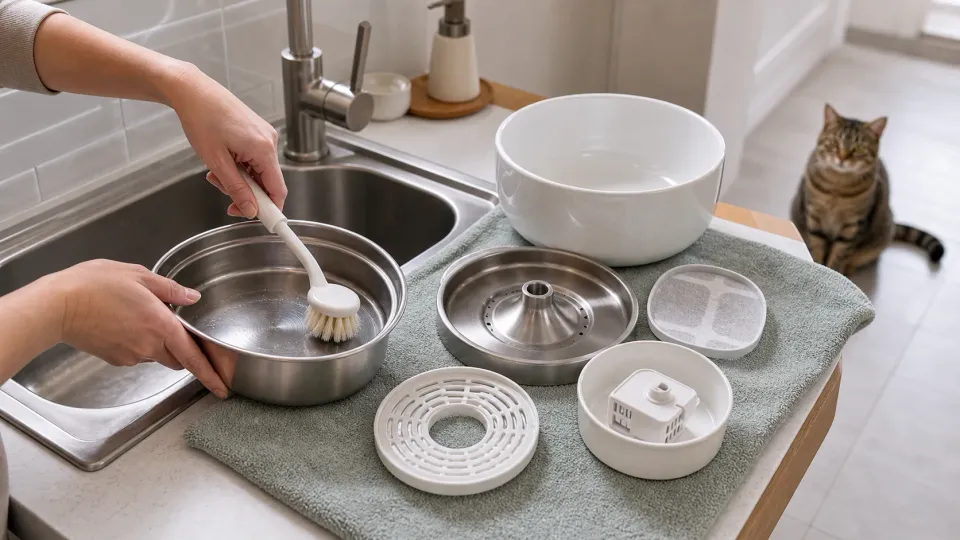
Rinsing visible fur out of the bowl is not the same as washing the water path. Remove the top, tray, basin, spout, and any removable splash pieces. Wash surfaces with warm water and a mild dish soap if the manufacturer's instructions allow it, then rinse thoroughly so no soap smell remains.
The CDC's pet supplies cleaning guidance recommends cleaning food bowls, water bowls, and scoops daily, and it gives a stronger wash-and-rinse routine for regular cleaning. A fountain has more seams than a bowl, so the parts that touch water deserve regular, physical cleaning rather than a quick refill.
Pay attention to corners, underside lips, spout holes, filter trays, and anywhere the lid overlaps the basin. If the surface feels slick after rinsing, it is not clean yet. A soft bottle brush, straw brush, or toothbrush-sized cleaning brush usually reaches places a sponge misses.
Drying matters too. Reassembling a damp fountain is normal, but storing parts in a closed cabinet while still wet can keep odor and residue around. Let washable parts air long enough that the next refill does not start with stale smell.
Slime usually hides in the water path
The CDC's background on water biofilms explains that microorganisms can attach to surfaces and form biofilms, especially where water and surfaces meet. In a household fountain, the reader-facing version is the slippery film that returns around seams, inside tubing, under the lid, and near the pump intake.
Do not wait for a dramatic smell. The early signal is texture. Run a clean finger along the inside wall, under the top lip, and around the pump compartment. If it feels slick, schedule a full clean. If the same area gets slick quickly after cleaning, check water level, pump flow, filter fit, and whether the unit sits in a warm sunny spot.
Mineral scale is a different problem. Hard-water marks may feel rough or chalky rather than slippery. Follow the fountain manual before using vinegar, descaling products, dishwasher cycles, or replacement parts, because seals, pump components, and filters vary by model.
Keep those two problems separate in your head. Slick film means physical washing is overdue. Rough scale means the water and model may need a different maintenance rhythm. Treating both as "the filter is old" is how fountains stay technically running while becoming less appealing to the cat.
The pump is a separate cleaning job
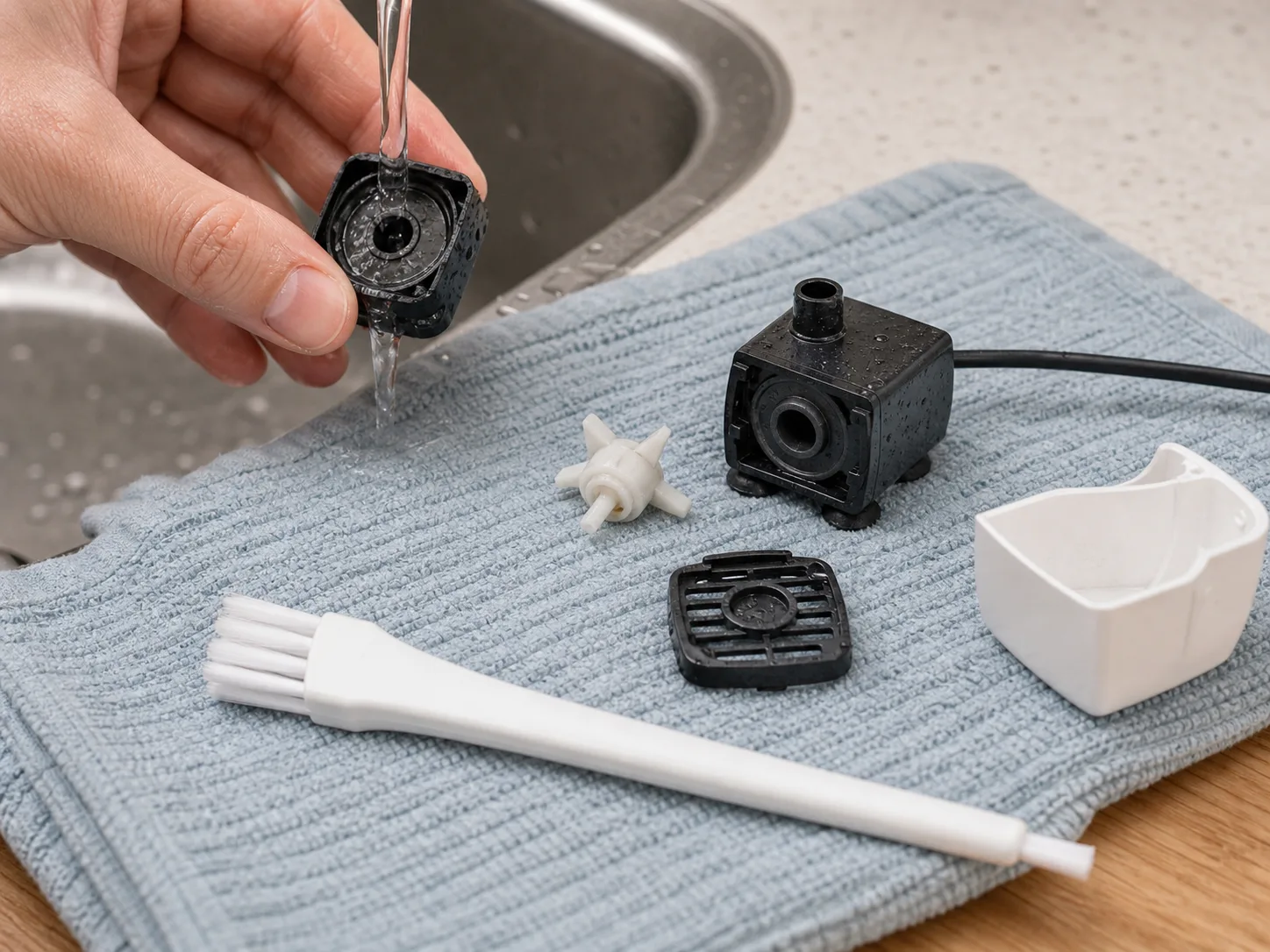
A slowing fountain is often blamed on the filter, but the pump may be carrying hair, scale, or film around the intake and impeller. Unplug the unit before removing the pump. Open only the covers that the manual says are removable. Rinse the intake, cover, and impeller area, then use a small brush where buildup gathers.
Do not scrub a pump while it is plugged in, run it dry, or force parts that do not release. If the pump rattles after cleaning, check that the impeller, cover, suction cups, and water level are seated correctly. If it still sounds wrong, replacing a worn pump may be safer than trying to keep a weak one alive.
Filters are not cleaning tools for dirty hardware. A fresh filter does not make a slimy basin clean, and a clean basin does not rescue an overdue filter. Treat them as separate tasks: wash the parts, then replace or rinse the filter only as the manufacturer directs.
Filter timing depends on the home, not just the box
Most fountain filters come with a suggested replacement interval, but the real schedule can shift. More cats, long hair, dry food dust, hard water, warm rooms, and frequent low-water days can shorten the useful life. A one-cat home with soft water may not look the same as a multi-cat apartment with mineral-heavy tap water.
Use the printed interval as the outer boundary, then watch the fountain. Replace sooner if the water smells off, flow drops after the pump is cleaned, the filter looks clogged, the cat avoids the station, or residue returns unusually fast. Avoid stretching a filter because the package still has one date left in your head.
International Cat Care's drinking guidance emphasizes that cats have individual preferences. A cat who dislikes charcoal smell, new water noise, or a changed fountain location may need a slower transition after filter or setup changes.
Placement can make a clean fountain fail
A spotless fountain can still lose if it sits in the wrong place. Cats may avoid water next to food, in a busy doorway, beside a loud appliance, near a litter area, or in a corner where another pet can block access. Keep the unit stable, easy to approach, and simple to unplug for cleaning.
Think about the cord as part of placement. Route it along the wall, away from water spill zones and walking paths. A waterproof mat can protect the floor, but it should not become a tripping edge or a soggy towel. If the fountain is part of a larger small-space setup, fold the outlet and route check into the cat-proof apartment setup rather than treating it as only a water decision.
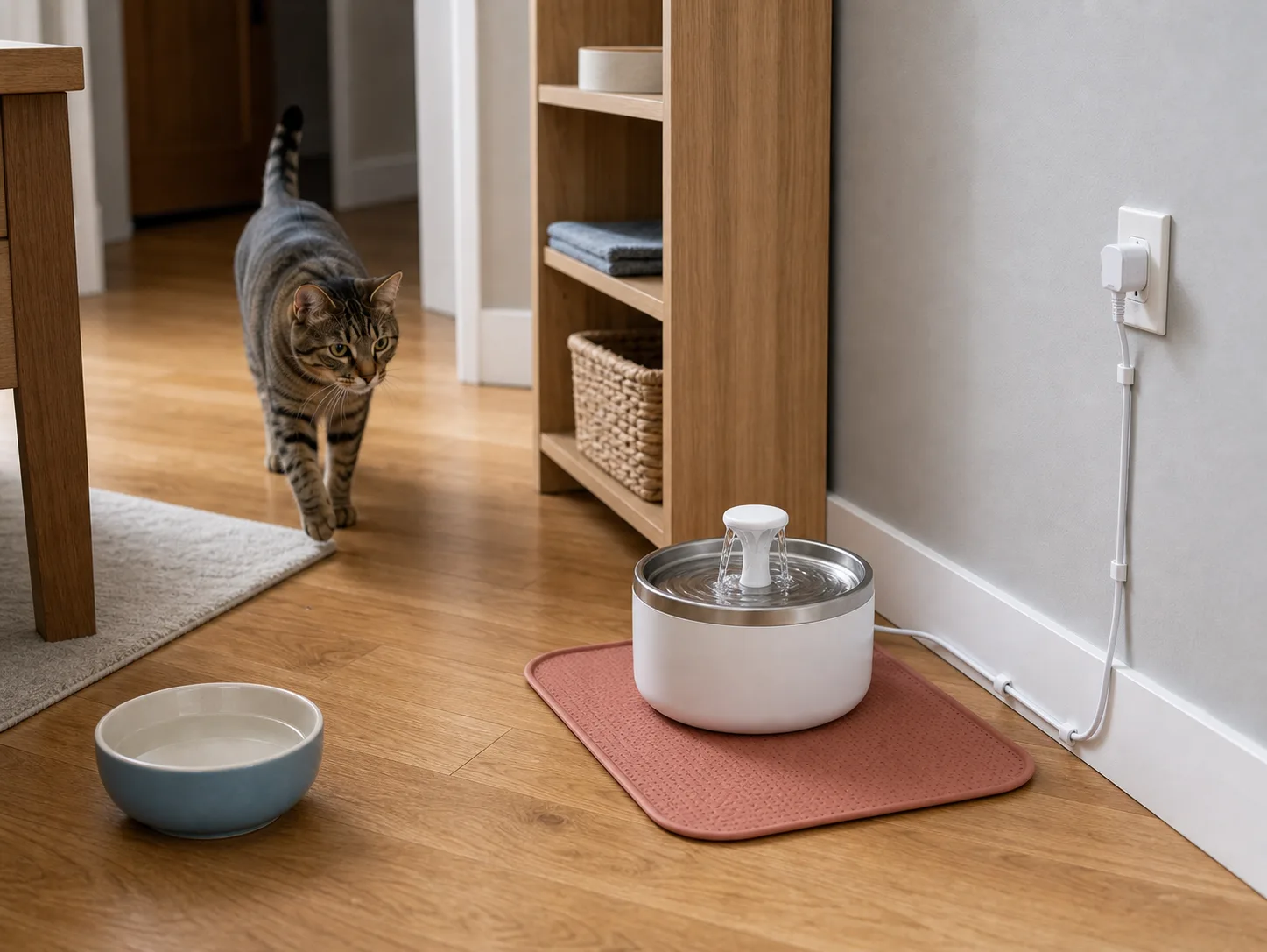
Keep a backup bowl in a separate spot, especially if the pump can fail while you are away. A fountain is an addition to water access, not a reason to remove every other water option.
Make the cleaning route easy for the human too
Many fountains fail because cleaning is awkward. The unit is too close to furniture, the cord is hard to reach, the sink is far away, the brush lives in another cabinet, or the mat stays damp under the base. A better home setup makes the right maintenance action obvious.
Keep the small brush, spare filter, and drying towel near the place where the fountain is actually cleaned. Leave enough slack to unplug safely without dragging water across the floor. Choose a mat that can be lifted and washed, not a fabric pad that quietly stays wet. These details sound minor until the routine becomes weekly work.
For broader water-station placement, use the same logic as other cat home setup decisions: the station has to work for the cat and for the person maintaining it. A perfect fountain in an impossible cleaning spot is not a perfect fountain.
A simple rhythm beats a perfect schedule
The best cleaning schedule is the one you can repeat before the fountain turns into a rescue project. Top off fresh water daily. Check the water level and sound each time you pass it. Wash the basin and lid on a predictable weekly rhythm, or sooner if the surface feels slick. Clean the pump on a regular cycle that matches your unit, water hardness, and cat hair load.
Write the filter date on the package, a note app, or the inside of a supply cabinet. Keep the small brush where the fountain is cleaned, not in a place you have to hunt for it. If cleaning the current model feels too complicated, that is useful information. A simpler fountain that gets cleaned is better than a clever one that becomes a chore.
Call a veterinarian promptly if a cat suddenly stops drinking, shows dehydration signs, vomits repeatedly, seems weak or lethargic, or changes urination behavior. Cleaning the fountain is home maintenance. Sudden water avoidance or illness is a health question.