

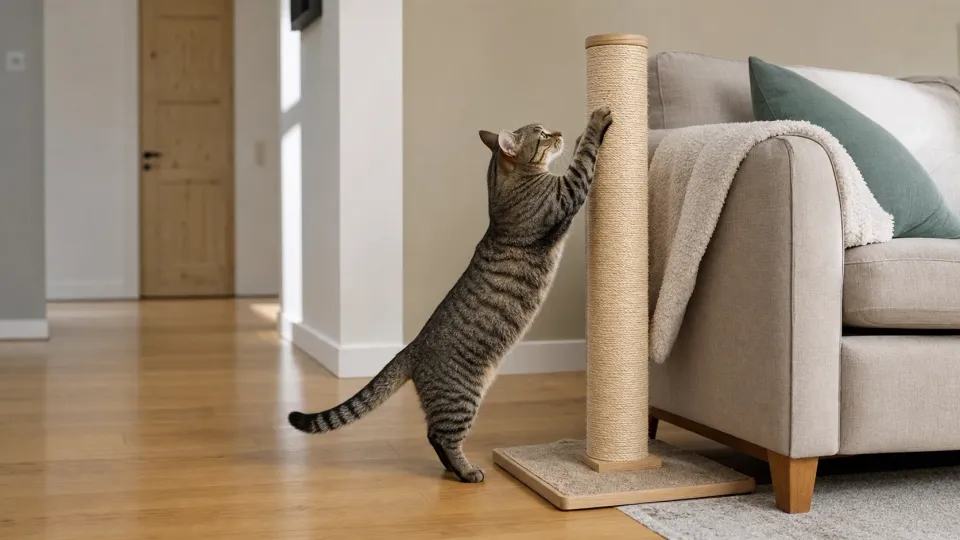
A cat scratching furniture can feel personal because the damage happens where people see it: the sofa arm, bed corner, hallway rug, or chair back. It is usually not revenge. It is a normal cat behavior landing on the most useful object in the room.
The fix starts when you stop asking only, "How do I stop this?" and ask, "What job is the furniture doing for the cat?" The useful first pass looks at three things before blaming stubbornness: the surface, the location, and whether the household has built a repeatable routine around the replacement.
Scratching is a message, not a grudge
The Cornell Feline Health Center describes destructive scratching as a behavior problem that often comes from normal feline needs meeting the wrong household object. Cats scratch to condition claws, stretch, leave scent, leave visible marks, and manage excitement or tension.
That is why a cat often chooses the sofa after waking, after a meal, after play, when greeting a person, or when another cat passes through the room. The furniture is not random. It is stable, tall enough to stretch against, covered in interesting fabric, and placed where the cat already moves.
A useful plan respects that message. You are not trying to remove scratching from the cat's life. You are trying to move the behavior to a surface and place that can handle it.
This distinction changes the tone of the whole repair. A punishment-first plan treats the cat as the problem. A better plan treats the furniture as information: the cat has already shown the height, grip, timing, and route that matter. The replacement has to compete with that real object, not with an imaginary version of what a scratcher should be.
Your cat is choosing texture, angle, and resistance
A flimsy scratching post in a forgotten corner may fail even if it is new. The Ohio State Indoor Pet Initiative emphasizes that cats need appropriate scratching objects, and many cats have strong preferences for vertical, horizontal, or angled surfaces. The object also needs enough resistance that the cat can dig in and pull without it sliding.
Look at the damaged item as a clue. A sofa arm points to height, fabric grip, and stability. A carpet edge points to horizontal pressure and texture. A door frame points to a vertical stretch on a traffic route. A bed corner may be part stretch, part scent mark, and part "I start my day here."
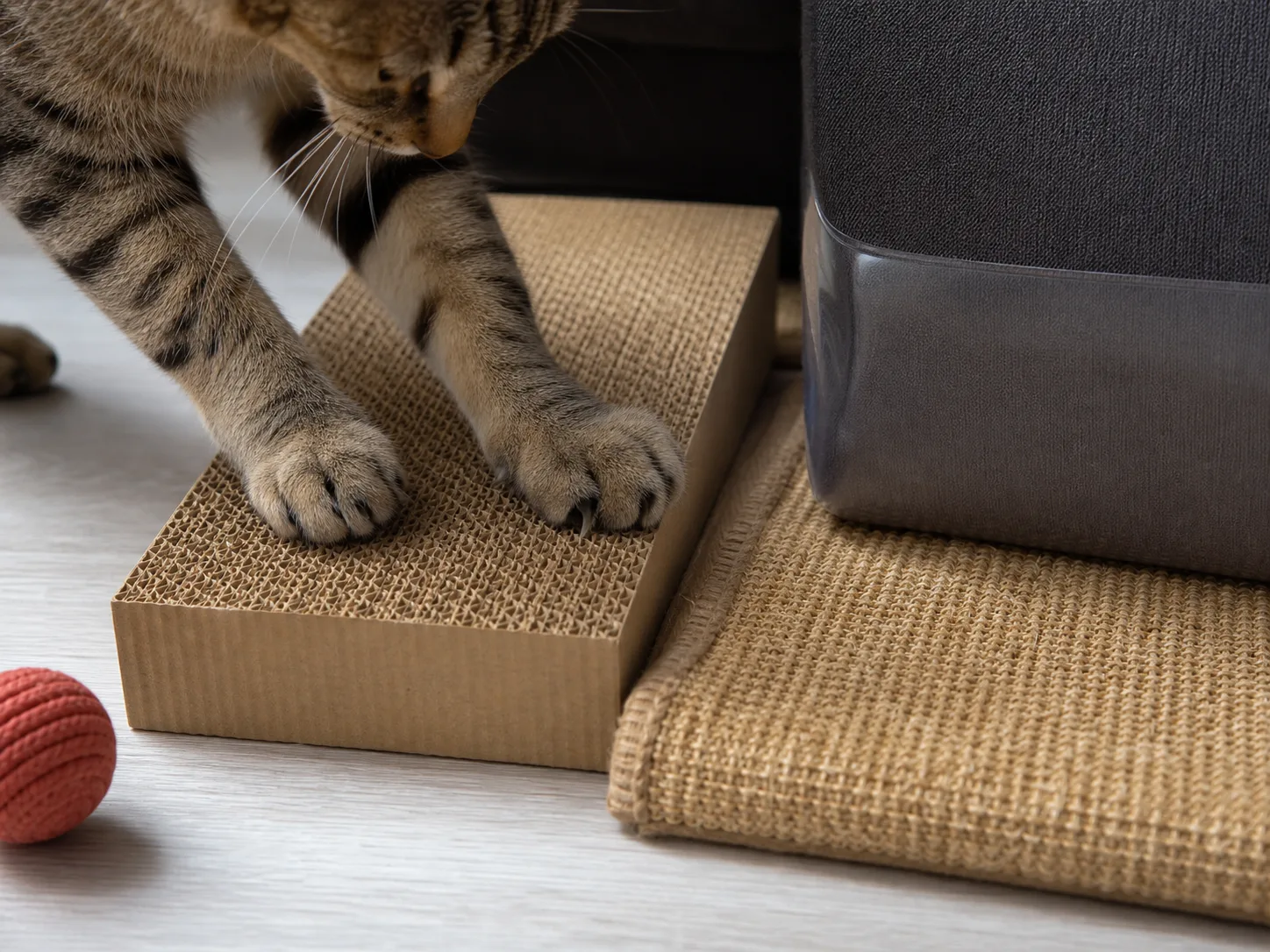
The Cat Friendly Homes scratching post guidance also points owners toward sturdy, appealing scratchers. In practice, I would rather test two very different surfaces than buy three versions of the same post. Try one tall sisal post, one horizontal cardboard scratcher, or one angled scratcher before deciding the cat "does not like scratching posts."
Stability is the detail people underestimate. If the scratcher shifts, tips, rattles, or feels too short for a full stretch, the sofa still wins. A heavier base, a wall-mounted panel, or a horizontal scratcher that does not skate across the floor can change the result without changing the cat's preference.
Location matters more than the receipt
Many replacement scratchers fail because they are placed where people want them, not where the cat uses them. If the cat scratches the sofa arm every morning, a post in the spare bedroom is not a fair alternative. It is a different room, a different route, and a different moment.
Cornell Feline Health Center's guidance on destructive scratching recommends directing cats toward acceptable scratching objects in the places they already use. That placement advice matters because scratching is often tied to transitions. Cats stretch after waking, mark high-value routes, and use familiar anchors when excited.
Put the replacement next to the target first. If the cat uses it reliably, you can move it a few inches at a time to a more acceptable spot. Moving it across the room on day two usually restarts the problem.
In a small home, the best spot may be visually inconvenient for a while. That is usually worth it. A post that sits beside the sofa for two weeks and actually changes the habit is more useful than a prettier post hidden where the cat never transitions, stretches, or greets people.
Build a replacement routine before you block the couch
Blocking the couch can help, but only after the cat has a better option. If you cover the sofa arm, trim the fabric appeal, and remove access without adding a satisfying scratcher, the cat may choose the next best object: another chair, the rug, the mattress, or the wall corner.
Make the replacement obvious. Place the post at the old target. Add a short play session that ends beside it. Let the cat discover treats or praise near the scratcher, but do not force paws onto it. Forced handling can make the new object feel suspicious instead of useful.
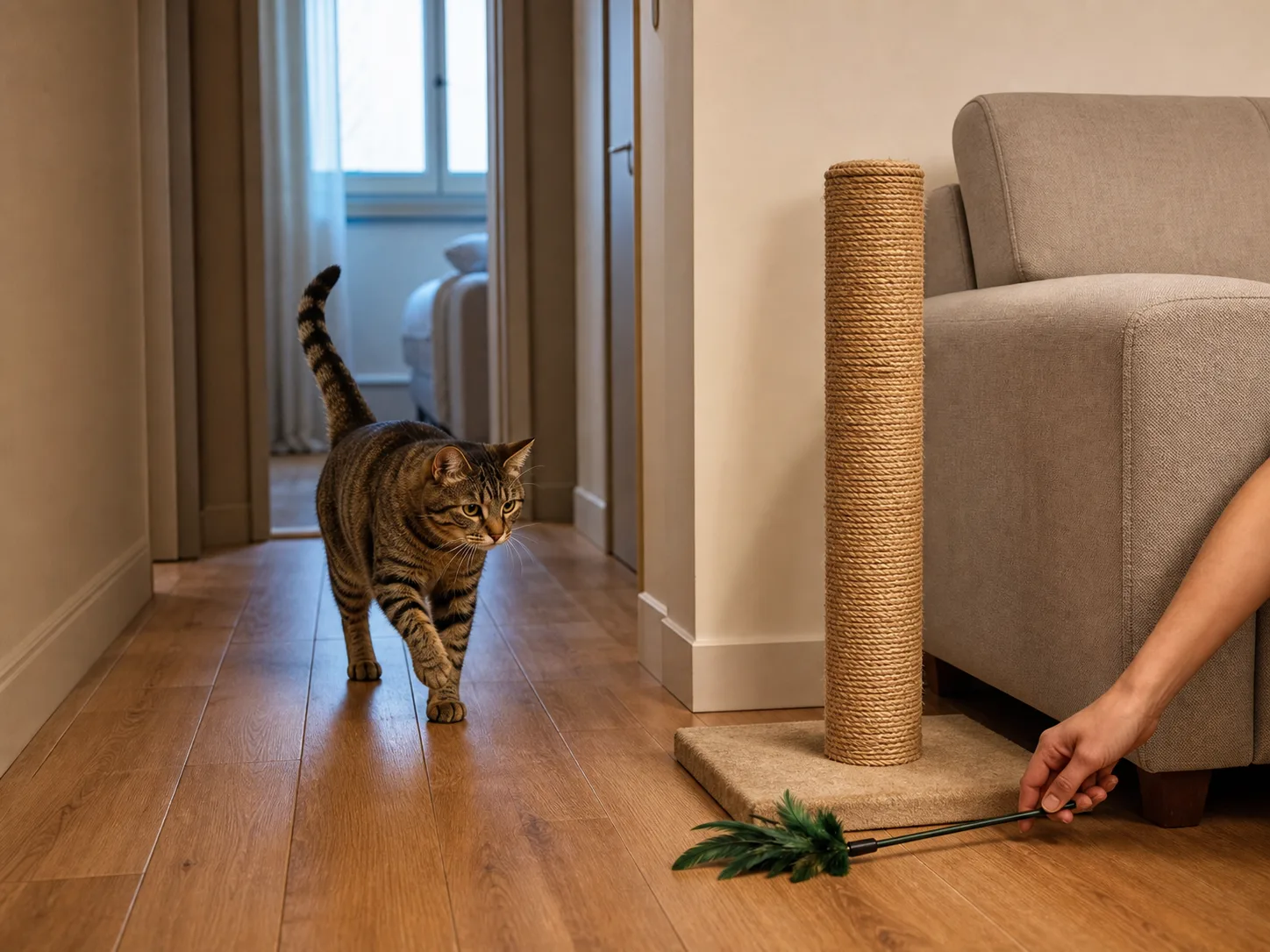
Then repeat the timing. Morning wake-up, after dinner, after play, and before the household settles down are common scratching windows. A two-minute routine at the right time is often more useful than a new product in the wrong place.
Run the room like a two-week trial
Do not judge the plan after one dramatic scratch or one lucky day. For two weeks, keep the replacement in the real target zone, keep the old surface less rewarding, and watch when the cat chooses each option. The pattern matters more than a single mark.
Use a simple note, not a spreadsheet: morning sofa arm, post after play, rug after dinner, no scratching overnight. Patterns like that show whether the surface is wrong, the location is wrong, or the cat needs another station in a second room. They also stop the household from moving the scratcher every day and accidentally resetting the test.
This trial belongs with other cat behavior setup checks because the behavior is tied to routine, energy, stress, and resource placement. The goal is not to buy the most impressive scratcher. It is to make the useful scratcher the obvious choice at the moment the cat already wants to use one.
Protect the furniture without making the room hostile
Furniture protection should reduce the reward, not turn the room into a punishment zone. Temporary covers, smoother barriers, washable throws, or rearranged access can make the old target less satisfying while the new scratcher becomes familiar. Harsh reactions, shouting, or spraying water may only teach the cat to scratch when you are not watching.
The San Francisco SPCA scratching post guidance focuses on providing attractive alternatives and making those alternatives easy for the cat to choose. That is the same logic behind broader cat-proof apartment setup: protect the home by changing the environment, not by turning every normal cat behavior into a conflict.
If there are multiple cats, treat scratching stations like other important resources. One post beside one sofa may not be enough if two cats use the same room at different times or one cat guards a narrow route. Add another station in a second high-use area before conflict becomes part of the habit.
Protective products also need an exit plan. A cover or barrier can stay while the new habit forms, but the room should not depend forever on tape, blocked corners, and scolding. Once the cat has a preferred station, reduce the visual clutter gradually and keep the scratcher maintained so the furniture does not become the better surface again.
When scratching changes suddenly, look beyond habit
A new scratch mark is not automatically a crisis. A sudden pattern change deserves more attention. If a cat who normally uses posts starts shredding door frames, scratching frantically, hiding, fighting, overgrooming, or changing appetite or litter box habits, the scratching may be part of a bigger stress or health picture.
Check what changed first: new furniture, new pet, new baby, guests, construction noise, closed doors, a moved bed, fewer play sessions, or a scratcher that has become unstable. Replace worn scratchers before they wobble. Trim claws safely if your cat tolerates it, or ask a veterinary team or groomer for help if nail care is difficult.
The goal is not a scratch-free cat. It is a home where scratching has a good place to land. Match the material, move the option to the real route, protect the old target without making the room hostile, and make the right choice easy at the moment your cat already wants to stretch, mark, and reset.