

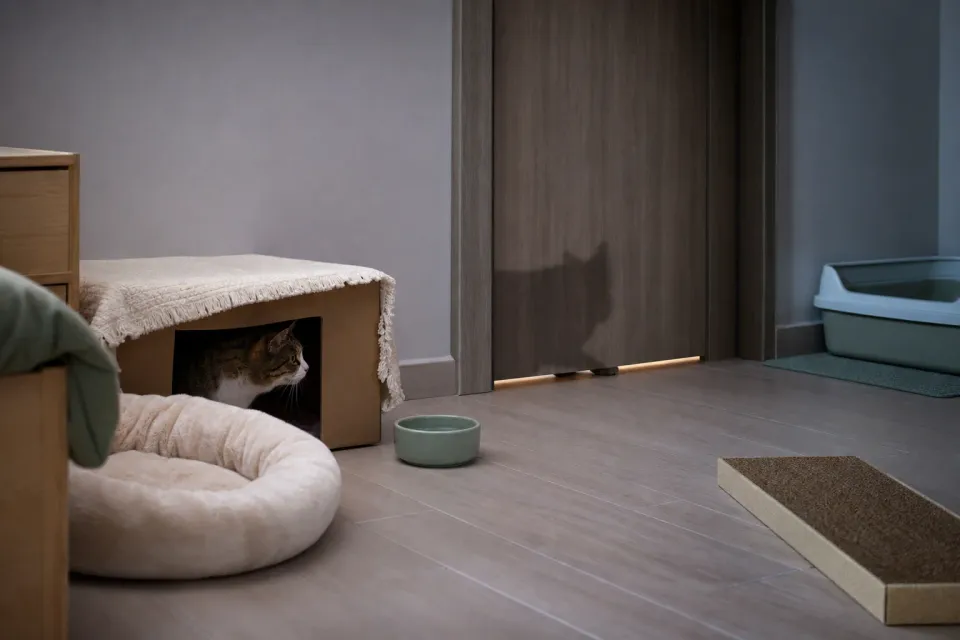
The quietest part of introducing a new cat to a resident cat is usually the most useful one: the closed door. Before there is a nose-to-nose meeting, there is a room that smells unfamiliar, a resident cat pausing in the hall, and a person deciding whether the next step should happen today or wait.
A good new cat introduction room does not rush the relationship. It gives the new cat a small territory that can become predictable, while the resident cat learns that something has changed without losing the whole home at once. That first boundary is not a delay. It is the beginning of the introduction.
The door is already part of the introduction
Many introductions go wrong because people treat the closed-door period as empty time. The cats may not see each other, but they are already gathering information. They hear food bowls, footsteps, litter digging, human voices, and the sound of the other cat moving through the home.
Use that stage deliberately. Keep the door closed. Keep routines calm. Feed, scoop, visit, and leave without turning every visit into a big emotional event. The new cat needs to learn that the room resets the same way. The resident cat needs to learn that the door does not mean the rest of the apartment has disappeared.
The Cat Friendly Homes introduction resource supports a gradual approach with separation before direct contact. That matches the practical goal here: let both cats collect information while neither one has to defend space face to face.
Build the room around predictability
The introduction room should feel boring in the best way. Put food and water away from the litter box, add a clean litter tray, offer a covered hide or cardboard box, and set a scratching option near the route the cat naturally uses. If the room is also an office, laundry room, or guest room, remove the clutter that could trap a nervous cat behind furniture.
Do not make the first setup too clever. A new cat does not need a puzzle feeder, three perches, a noisy toy, and constant visits on day one. The first useful question is simpler: can this cat eat, drink, hide, use the litter box, and watch the room without being cornered?
If the home is small, connect the room plan with the broader cat-proof apartment setup. Door swing, storage, litter access, and escape routes matter more than a perfect spare room.
Let scent travel before paws do
Scent swapping is not a magic peace treaty. It is a low-pressure way to make the other cat less abstract. Start with soft items that already belong to each cat: a towel from a resting spot, a small blanket, or bedding that carries normal household smell. Place the item near, not inside, each cat's core resting or feeding area.
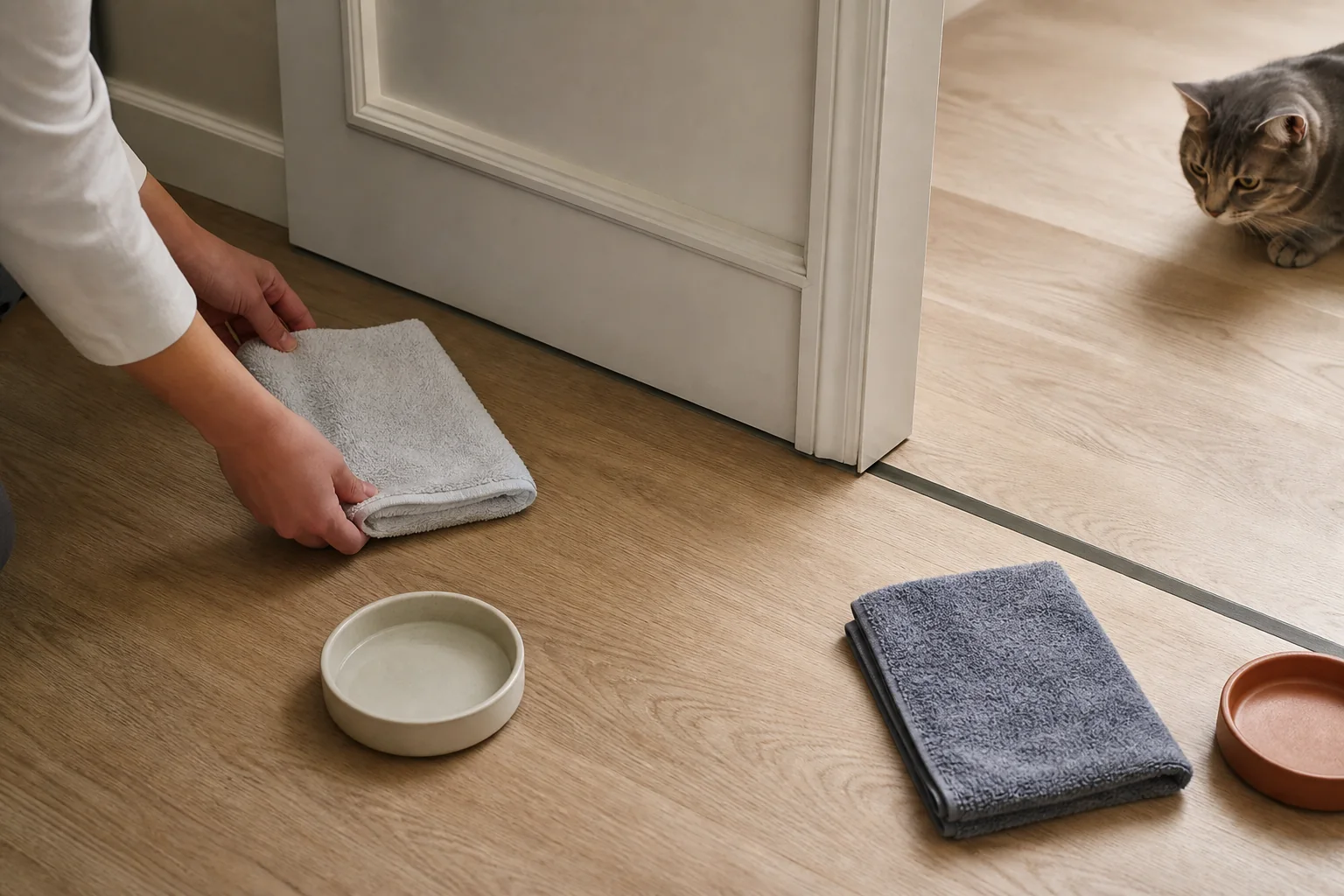
Watch what happens without forcing a reaction. A cat who sniffs once and walks away may be processing calmly. A cat who freezes, growls, refuses food, or avoids the area is telling you the step is still too large. Move the item farther away, make it available for a shorter time, and try again later.
The International Cat Care introduction advice emphasizes that cat introductions often need time and gradual scent work. That matters because scent can feel like territory to a cat, not decoration in the room.
Treat the doorway like a mood check
After scent is familiar enough that both cats can eat and move normally, the door area becomes a daily weather report. You are not looking for affection yet. You are looking for lower tension.
Good signs are small: a cat eating near the hall without rushing, walking past the door with a loose body, sniffing and leaving, or choosing a perch instead of standing guard. Harder signs are also small at first: blocking the hall, tail lashing, repeated growling, stalking the gap under the door, or refusing to use a normal route because the other cat is nearby.
If the doorway feels loaded, do less. Feed farther away. Shorten visits. Add more play in separate spaces. A pause is not failure; it is how you keep one nervous day from becoming the cats' first shared habit.
Short visual meetings do more than one brave leap
When the door area has become ordinary, add sight without adding access. A tall pet gate, screen barrier, cracked door with a secure secondary barrier, or another controlled visual setup can let the cats see each other while still having space to leave.
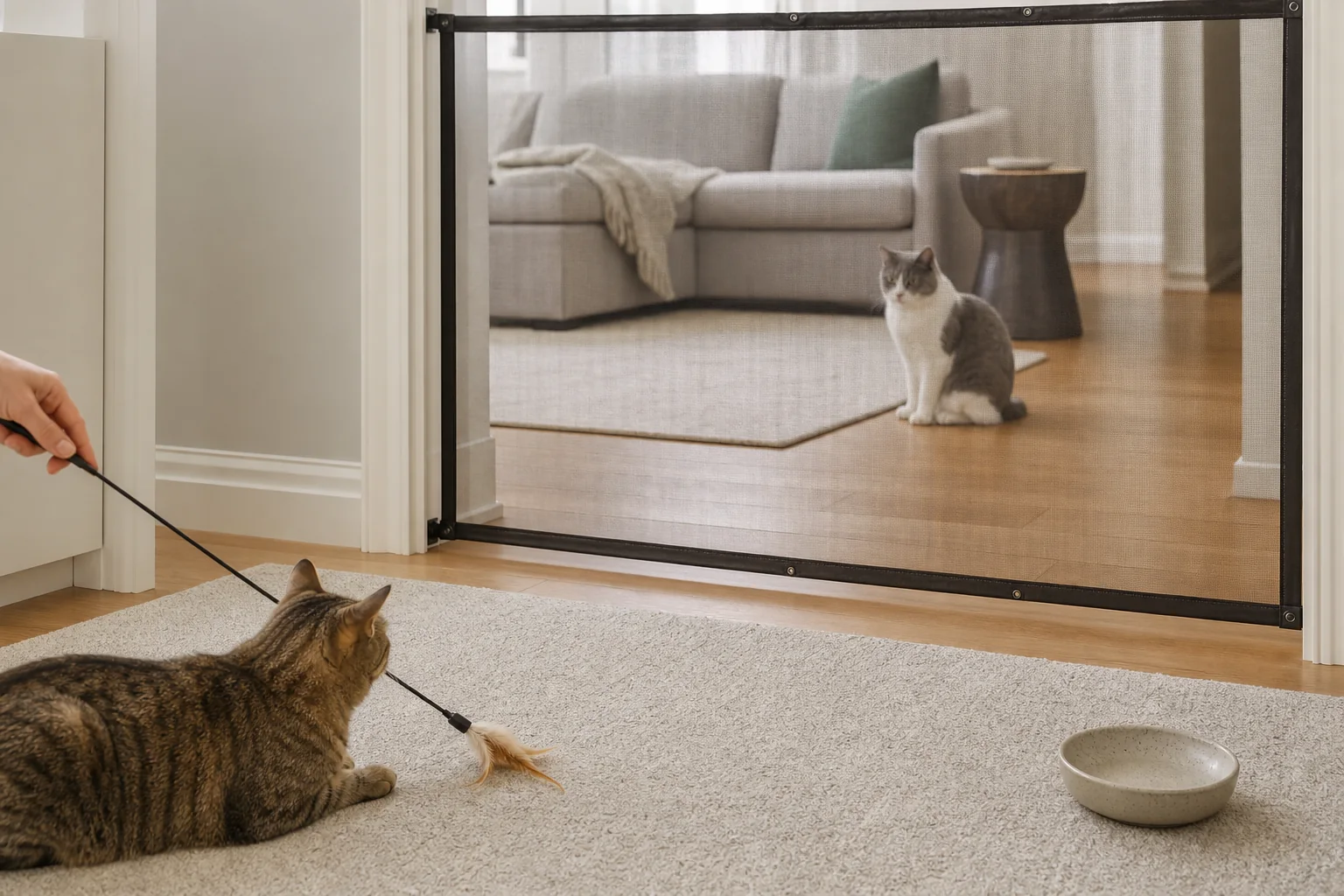
Keep the first sessions brief enough that they end while the room is still calm. One minute can be plenty. Use food or a wand toy at a comfortable distance, but do not lure either cat right up to the barrier. The aim is parallel calm, not a dramatic greeting.
The Humane World introduction guidance also favors gradual contact rather than immediate free access. That is useful framing for owners who feel guilty about moving slowly: the slower plan is often the kinder plan.
Keep food close enough to notice, not close enough to pressure
Food can help a cat build a calmer association with the other cat's presence, but only if the distance is fair. If either cat stops eating, crouches over the bowl, bolts afterward, or keeps looking over a shoulder, the bowls are too close or the session is too intense.
Move the bowls back until both cats can eat normally. Then let the distance shrink by inches over several sessions, not by a sudden big jump. A relaxed meal fifteen feet from the door tells you more than a tense meal three feet from it.
Keep resources separate even when the first meetings look promising. Each cat should still have reliable access to litter, water, resting space, and escape routes. If the new cat's litter box is in a temporary room, make sure it is easy to clean and not wedged into a stressful corner; apartment litter placement decisions can borrow from the same practical thinking used in small-space litter setups.
Swap spaces only when both routes feel ordinary
Space swapping can help the cats learn the home through scent before they share it. Let the resident cat investigate the new cat's room while the new cat explores a different, controlled part of the home. Keep the cats separated during the swap.
This works best after both cats have shown curiosity rather than alarm at the door. If the resident cat enters the room and immediately sprays, hides, or patrols with a stiff body, the room still feels contested. If the new cat bolts from open space back into hiding and will not eat afterward, the home tour was too much.
A smaller version is allowed. Trade bedding again. Open only one quiet hallway for a few minutes. Let the new cat explore while the resident cat naps behind another closed door. The step should fit the cats in front of you, not the calendar you hoped for.
Pause for signals that get louder
Some tension is expected. Hissing once and moving away is different from repeated chasing, cornering, swatting through a barrier, blocking food, or a cat who stays hidden and stops normal routines. Do not smooth over the bigger signals because the first few minutes looked fine.
Back up to the last calm stage when the room gets louder. That may mean closed-door feeding again, more scent work, or shorter visual sessions. If there is injury, repeated aggression, severe fear, sudden litter box changes, or either cat cannot eat or rest normally, involve a veterinarian or a qualified behavior professional instead of trying to push through.
The same principle applies when outside stress is already high. If fireworks, construction, visitors, or travel have made the resident cat jumpy, it may be better to strengthen the safe-room routine first and delay the next introduction step.
The good sign is a boring hallway
The first unscreened shared minutes should not feel like a grand reveal. Open access only after both cats can handle scent, doorway routines, visual sessions, food distance, and space swaps with ordinary body language. Then start with supervision, open escape routes, and no competition over food or litter.
The win is not that the cats become friends on schedule. It is that the hallway stops feeling like a border, the door stops carrying all the tension, and each cat can move away without being followed. When the best moment of the introduction feels almost boring, the room has done its job.