

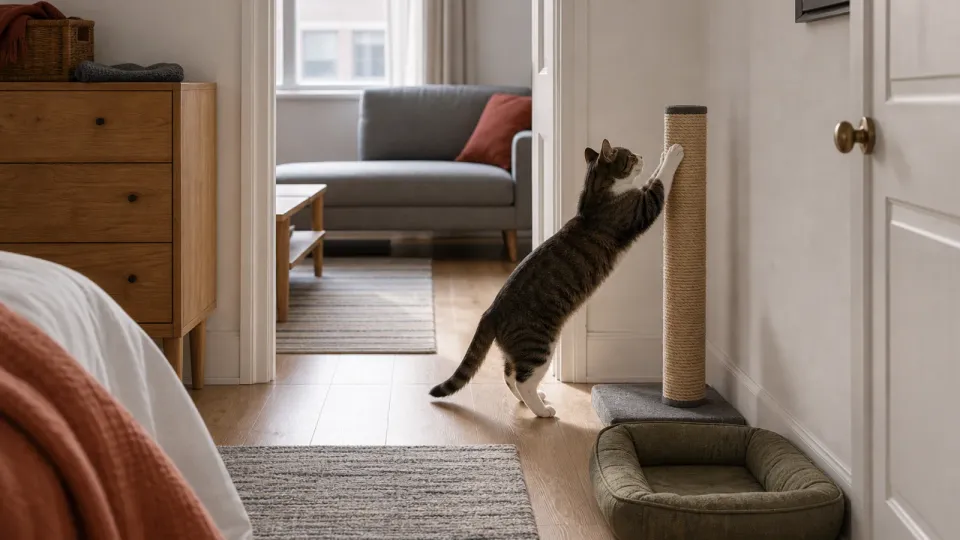
A cat scratching post can fail even when it is tall, new, and covered in the right material. The problem is often not the post. It is the location. Cats scratch at transition points: after waking, before play, near a doorway, beside a favored sofa, or along the route where people and pets pass.
When I look at a scratching setup, I do not start by asking what else to buy. I start by asking where the cat already decided scratching belongs. A good cat scratching post placement plan moves the acceptable surface into that moment, then gives the household enough time to test whether the habit transfers.
Buying another post usually misses the clue
More posts do not help if every post is placed away from the behavior. A sturdy scratcher in a spare room may be ignored because the cat does not wake there, greet people there, or pass through that space with energy to release. The old target keeps winning because it is on the real route.
The ASPCA's destructive scratching guidance frames scratching as normal behavior that needs acceptable outlets rather than simple punishment. That changes the job. The goal is not to convince a cat that scratching is wrong. It is to make the right place easier to choose than the furniture, rug, or door frame.
Before buying a second or third option, mark the scratch moments for a few days. Morning stretch at the bedroom door. Excited scratch beside the sofa after dinner. Rug edge after play. Door frame when the hallway gets busy. Those moments tell you where placement should start.
Place the first post inside the existing route
The first replacement should feel almost inconveniently close to the old target. If the cat scratches beside the couch, start there. If she scratches the bedroom doorway after waking, place the post beside that doorway. If she claws the rug edge while walking through the hall, a horizontal scratcher may need to live on that route for the trial.
That placement can look awkward at first. It is still better than a pretty post in a dead corner. The first job is habit transfer, not interior styling. Once the cat uses the replacement reliably, the post can move a few inches at a time if the household needs a cleaner final position.
Use furniture as a map. The side of the sofa the cat chooses, the exact corner of the rug, or the door frame height all carry information. A post placed two feet away may still be too far if the cat's body is lining up with a doorway, sleep spot, or greeting path. Close counts more than pretty during the first trial.
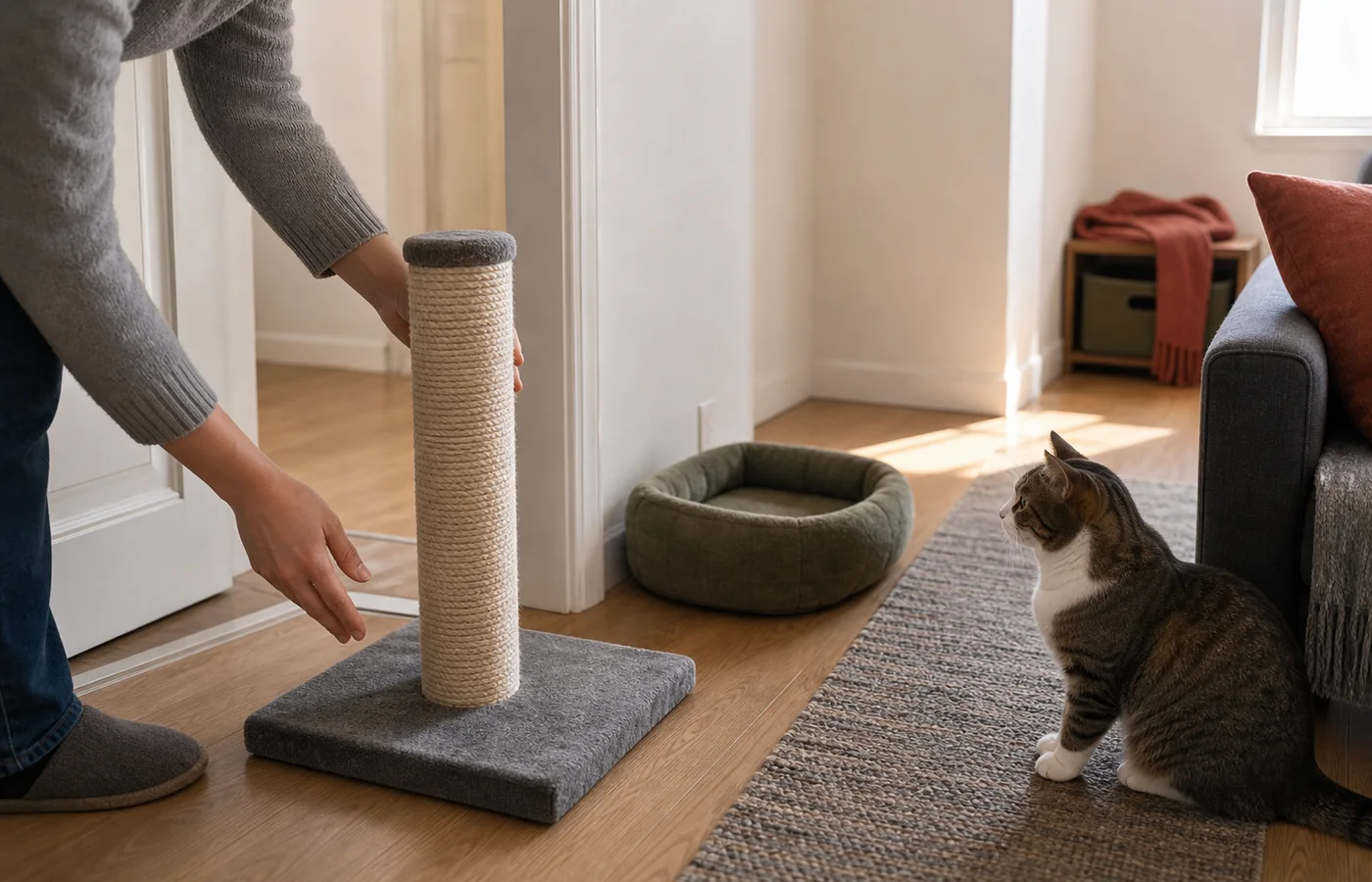
Do not move the post across the room the moment it gets used once. One successful scratch is curiosity. A repeated scratch at the same daily moment is the beginning of a new pattern.
Timing matters more than a perfect corner
Scratching is often tied to timing. Many cats scratch after sleep because the body is stretching and the paws are ready. Some scratch after play because excitement needs a reset. Others scratch when a person comes home, when another pet passes, or when the room becomes loud.
The Ohio State Indoor Pet Initiative's scratching resource points out that cats need suitable scratching objects and may prefer different angles and materials. Placement adds the missing layer: the object needs to meet the cat where the urge already appears.
For a wake-up scratcher, place the post near the bed or doorway, not across the living room. For a greeting scratcher, place it near the entry route. For a sofa scratcher, start next to the sofa arm before trying to move it. The right location is often the place people least want the post for the first week.
The post has to feel fixed, not merely available
Location will not save a post that shifts under pressure. Cats dig in, pull down, stretch long, and sometimes throw their full shoulder into the scratch. If the base skids, the cat learns that the object is less satisfying than the sofa or door frame.
Check the base on the actual floor where the post will live. A post that feels stable on carpet may slide on hardwood. A horizontal scratcher may skate across a rug. A wall panel may flex if it is attached too loosely. Add a heavier base, non-slip pad, wall mount, or different format before deciding the cat rejected the idea.
Match the angle after matching the location
Some cats want a vertical stretch. Some want a horizontal pull. Some like angled cardboard because it gives pressure without asking for a full stand. The damaged spot often tells you the angle: sofa arm and door frame point vertical, rug edge and carpet point horizontal, stair edge or sloped objects may point angled.
Cat Friendly Homes scratching post guidance emphasizes sturdy, appealing scratching posts and appropriate placement. In practice, I like to test angle and placement together. Put a vertical post and a horizontal scratcher on the real route for a short trial, then watch what the cat chooses without being pushed.
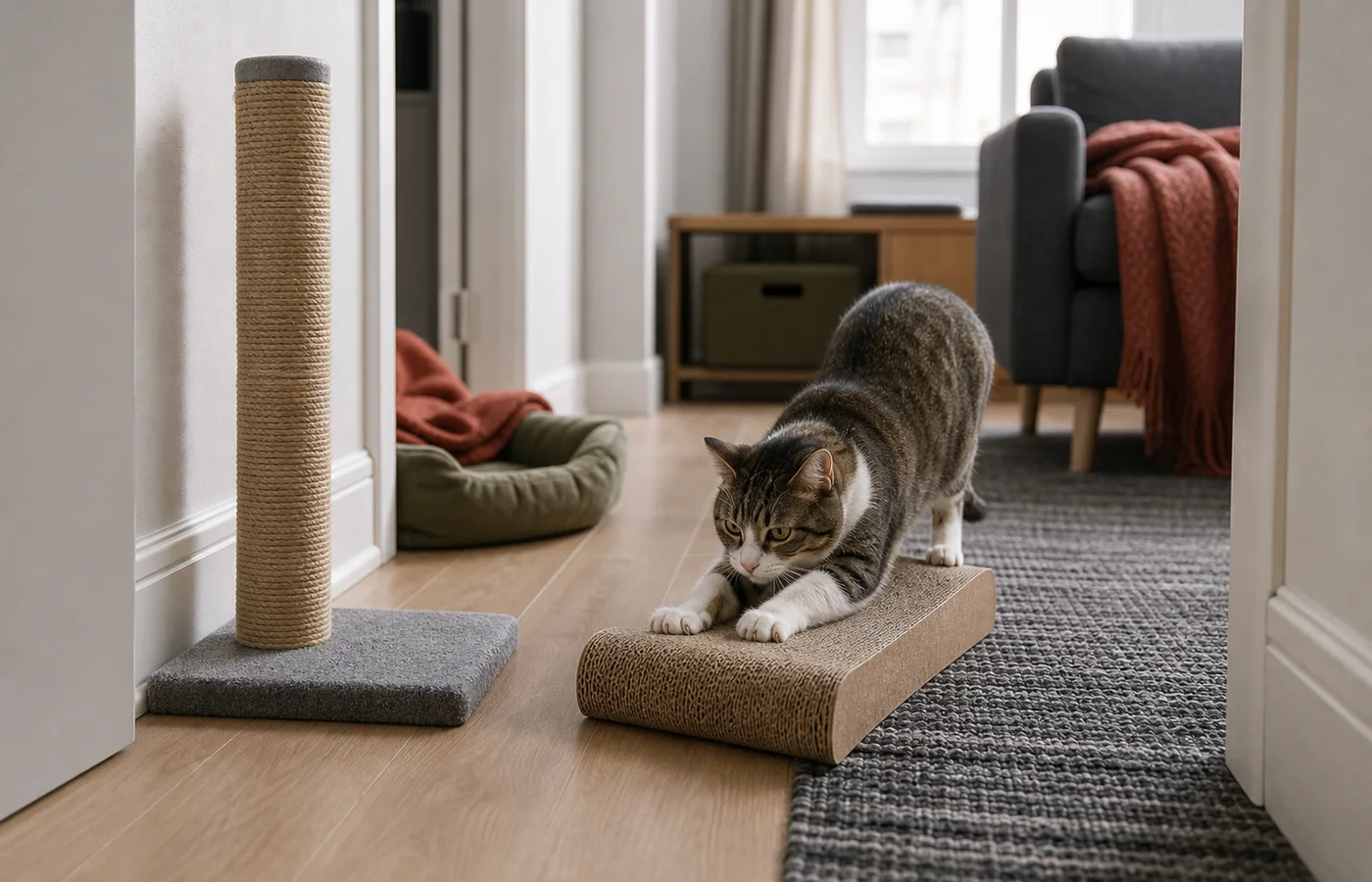
The test does not have to last forever. Give each option enough time to be noticed during the normal scratch window. If the cat keeps choosing one format, place the winning format where it matters and remove the extra object before the room gets cluttered.
Use furniture protection as a bridge, not the whole plan
Blocking the old target can help, but it works best after the replacement is placed correctly. Smooth covers, washable throws, temporary barriers, or less appealing texture can reduce the reward from the old surface. They do not teach the cat where to scratch by themselves.
Cornell Feline Health Center's guidance on destructive scratching keeps the emphasis on appropriate scratching objects and behavior management rather than punishment. That matters because harsh reactions can make scratching more secretive. A bridge plan should lower the furniture's appeal while making the post obvious and satisfying.
Use the same environmental thinking behind broader cat-proof apartment setup. Protect the object, change the route, and make the acceptable behavior easier. Do not turn the room into a collection of blocked corners and scolding moments.
Multi-cat homes need more than one scratch route
One perfect post may not be enough when several cats use the same room. A confident cat can own the best post, nap beside it, or block the route without a fight. A more cautious cat may then return to the sofa, rug, or door frame because those targets are available when the post is not.
Place scratching options like resources, not decorations. One near a sleep route, one near a main living area, and one near a high-energy hallway may do more than three posts grouped in one tidy corner. Watch for who uses which station and whether one cat waits until another leaves.
The broader cat behavior context matters here. Scratching can be routine, excitement, scent marking, or tension management. When conflict, guarding, hiding, or sudden behavior change appears with scratching, the placement plan should get simpler and more separated before it gets more decorative.
A 14-day placement test keeps the decision honest
Run the test before buying more. Put the best candidate on the real route, make the old target less rewarding, and keep the setup steady for 14 days. Track only what helps: time of day, surface used, location used, and whether the cat seemed calm, excited, or blocked.
Do not change everything every morning. A post needs repetition to become part of the room. Move it only when the pattern is clear: the cat avoids it, it slides, another cat guards it, or the old target still gets chosen at the same moment.
Keep the reward quiet. A treat nearby or a short play finish can help a cat notice the post, but do not turn every scratch into a loud event. The strongest placement win is normal use when nobody is staging it: a stretch after sleep, a quick mark after play, a calm reset before leaving the room.
A scratching post earns its place when the cat uses it without being lured, the household can live with the location, and the old target becomes less interesting. If that has not happened, do not assume the next purchase is the answer. First move the post into the moment where scratching already belongs.