


For a kitten already toileting independently, litter box training begins with a tray they can find, enter, and use without being disturbed. Keep the litter familiar, show the kitten where the tray is, and leave a clear route back to it. A quiet successful visit teaches more than repeatedly placing the kitten in the box.
A very young kitten that cannot toilet without help needs a veterinarian's or experienced rescue team's care plan. Do not use ordinary litter-training steps to solve that problem. For a newly adopted kitten, ask the previous caregiver which tray and litter were being used before changing either.
Make the entrance the easy part
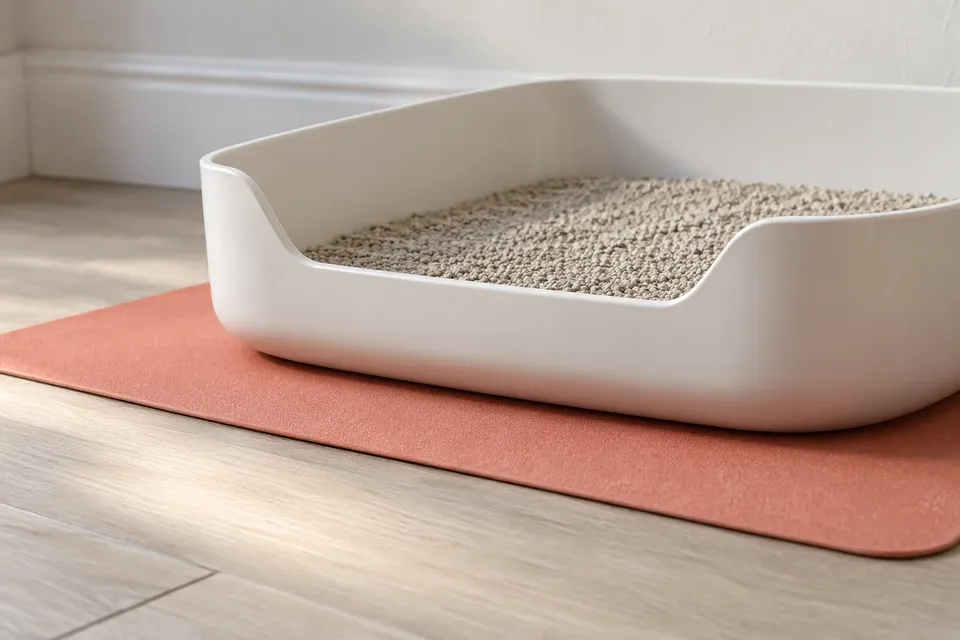
Watch the rim from the kitten's height. A deep storage tub can offer plenty of floor space and still be difficult to climb into. Choose an open tray with an entrance the kitten can step across comfortably, a stable base, and enough room to turn. Keep it on a surface that does not rock or slide.
A larger tray can remain useful as the kitten grows, provided the entrance works now. Avoid solving the height problem with a loose stack of objects that can move under a paw. A suitable lower entrance is simpler than an improvised obstacle course.
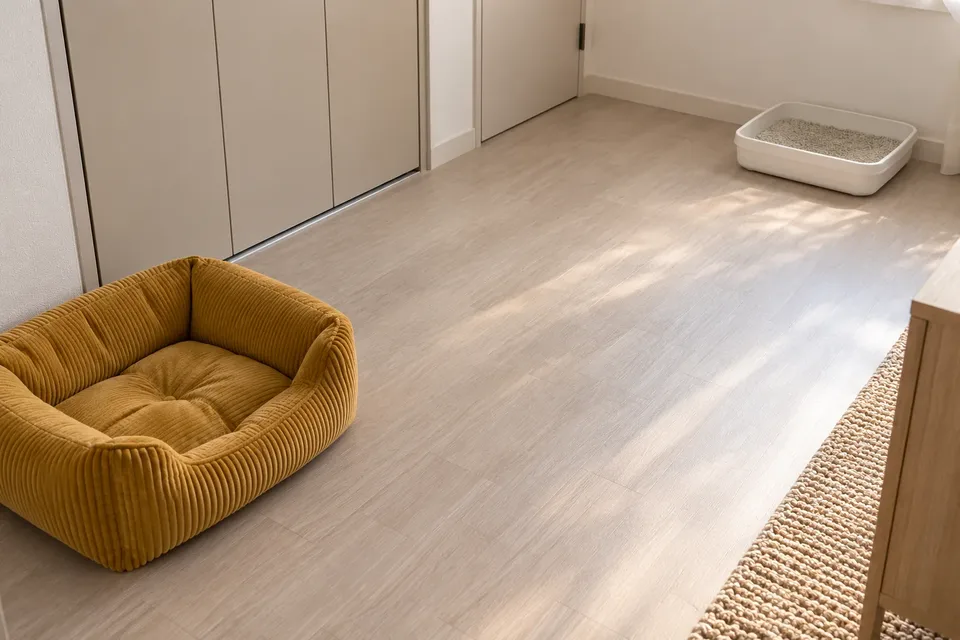
The first-room arrangement should make the tray easy to reach while keeping it separate from food, water, and the bed. A corner behind an appliance or a door that can close across the route adds a problem the kitten cannot fix.
Use the litter the kitten already knows when practical. Cats Protection's kitten guidance emphasizes familiar litter, quiet access, and gradual changes. Seattle Humane specifically advises against clumping litter for kittens under eight weeks because they may eat it. Check the kitten's age, the product instructions, and advice from the caregiver or veterinary team rather than treating every litter sold for adult cats as interchangeable.
Show the place, then let the kitten do the learning
Once the kitten is exploring the starting room, quietly show them where the tray is. An introduction can be as simple as bringing them near the entrance and allowing them to investigate. Do not hold them inside, move their paws through the litter, or keep putting them back after they step away.
Remain available without leaning over the tray. Children and other pets need to leave the kitten alone while they toilet. A camera or photograph is unnecessary when getting it would interrupt the visit.
After meals, naps, or a period of play, make sure the route is still open. These ordinary transitions are useful moments to notice whether the kitten is looking for a place to go. They are not a schedule that requires a kitten to produce urine or stool on command.
Keep the same location while the kitten learns it. Moving the tray out of sight to make the room tidier can remove the landmark that was beginning to work. The location and access check helps distinguish a private spot from one that is hard to reach.
A larger home needs more reachable options
Gradually opening another room also increases the distance back to the tray. Check that distance before giving the kitten a much larger area to explore. Another accessible tray may be more useful than expecting a small kitten to cross the whole home or negotiate stairs.
Keep useful trays in separate places. A row of boxes behind one busy doorway still depends on that doorway remaining available. In a multi-cat household, another cat waiting along the route can make a tray difficult to approach even when nobody is fighting.
Delay changes that are not needed. A new litter texture, covered box, different room, and unfamiliar mat introduced together make hesitation difficult to interpret. When a change becomes necessary, the gradual litter transition should preserve an accepted toilet.
After an accident, check what the route required
Clean the area with a product suitable for the surface and a home with cats, following its directions. Keep the kitten away until the area is ready for use again. Never rub the kitten's nose in waste, scold, or chase them toward the tray.
The location of the accident may reveal a practical obstacle. Was the tray behind a closed door? Had play carried the kitten into a room without one? Was the entrance too high, the material unfamiliar, or the tray already dirty? Change the relevant obstacle rather than buying several new products at once.
Remove waste promptly and keep the tray usable. Follow the litter and tray cleaning directions; a strong fragrance is not a substitute for removal. Keep another appropriate tray available during a full clean instead of leaving the kitten without access while the first dries.
Difficulty toileting needs care, not a training deadline
Persistent accidents, discomfort, repeated attempts, diarrhea, or a sudden change after reliable use deserve veterinary advice. Straining with little or no urine needs immediate assessment. Cornell identifies suspected urinary obstruction as an emergency; a different litter or another training session cannot rule it out.
For an otherwise comfortable kitten learning a new home, leave one thing unmistakable: the familiar tray is reachable, clean, and quiet. Notice a voluntary return to it, then give the kitten the space to finish.


