

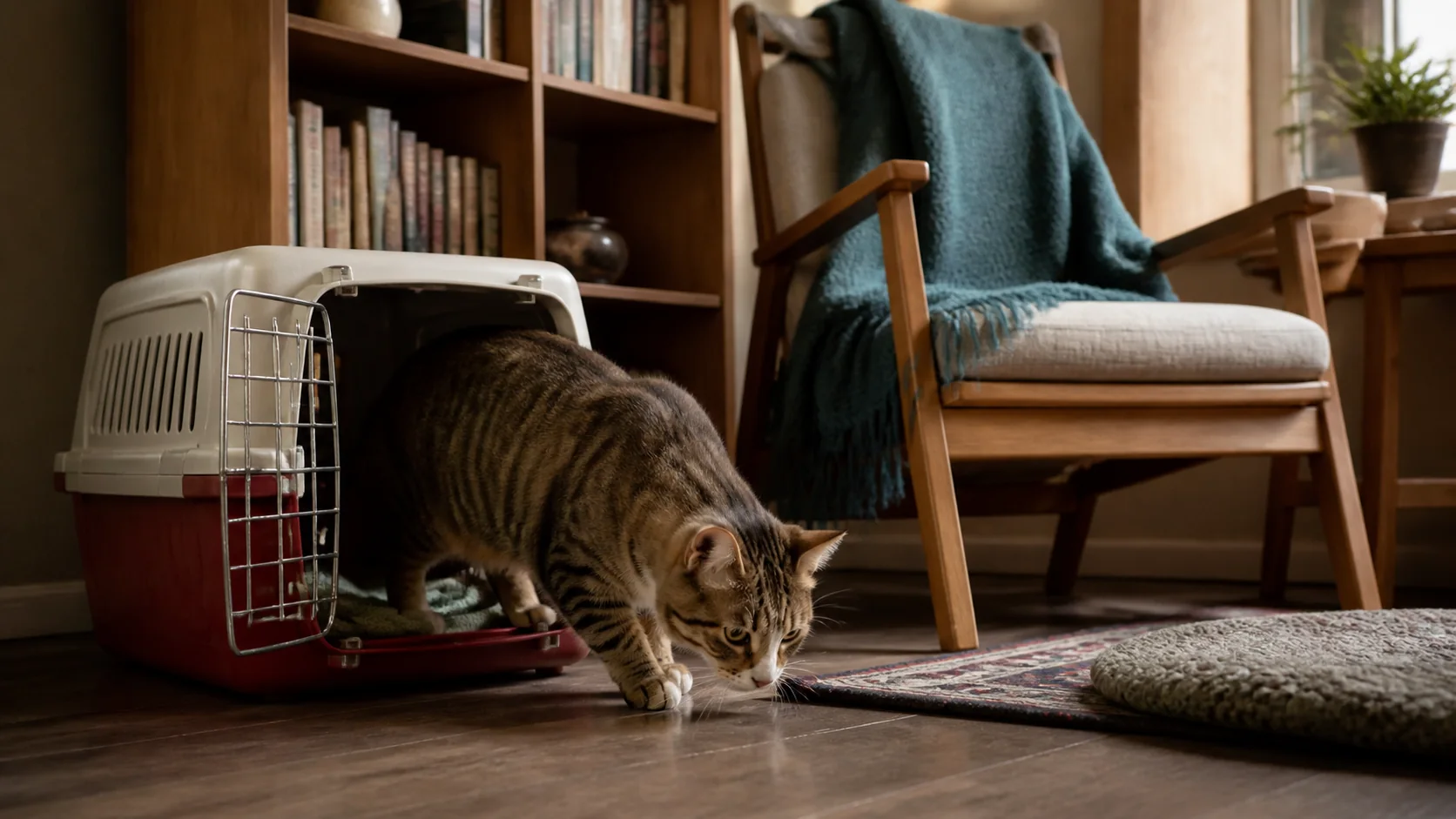
The carrier often announces a bad day before a cat ever sees the veterinarian. A closet door opens. Plastic scrapes across a shelf. The cat hears a familiar buckle and disappears under the bed. At that point, getting the cat into the carrier becomes a deadline problem, and deadlines make careful handling difficult.
Cat carrier training works best when it starts on an ordinary day. The goal is not to make every cat love car travel. It is to make the carrier familiar, teach one manageable action at a time, and stop turning its appearance into a reliable warning that restraint is coming.
First, stop making the carrier predict capture
A carrier stored in a garage or closet may smell unfamiliar and appear only before a trip. That combination creates a clear sequence: carrier arrives, cat is chased, door closes, home disappears. Training changes the sequence by letting the carrier exist without anything else happening.
Place it on a stable floor in a room where your cat already rests or passes through. Secure the door so it cannot swing or rattle. Put a thin, washable layer inside that carries a familiar home scent. Avoid stuffing the carrier into a narrow corner: a cat investigating it should be able to step away in more than one direction.
The carrier should also fit the cat and the trip. Cats Protection recommends a secure, well-ventilated carrier that is large enough for the cat to stand and turn around. Their guidance on choosing and using a carrier also favors designs that can be opened from the top as well as the front, because access matters when a cat is reluctant or unwell.
In my home, the useful change was not a special treat. It was moving the carrier out from behind a door. Once the door could no longer tap the carrier as people passed, the cat began inspecting it again. That small observation is why I start with stability and location before asking for any behavior.
Find the stage your cat can already do calmly
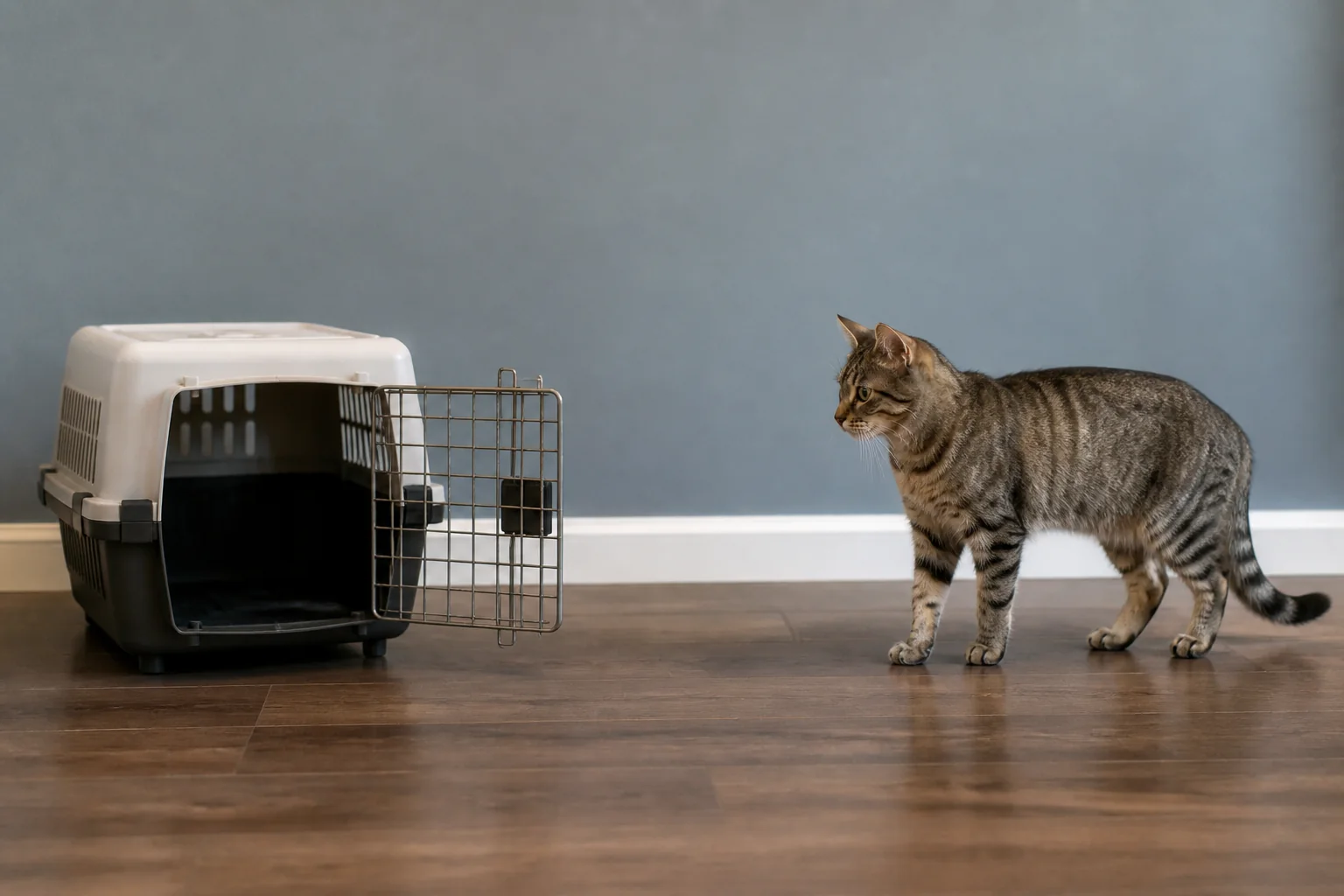
You do not need to begin with full entry. Start one step before the point where your cat hesitates. For one cat, that may be eating just inside the carrier. For another, it may be looking toward the carrier without leaving the room.
- Notice and approach. Reward calm orientation, sniffing, or walking near the open carrier. Place rewards around it, not only deep inside it.
- Enter with the door open. Let the cat step in and leave. Do not reach for the door during these first entries.
- Add door movement. Touch the door, move it an inch, then reopen it. Later, close it for one second and open it before the cat asks to leave.
- Add lifting. With the door secured, lift the carrier an inch while keeping it level, set it down, and release the cat.
- Add distance and travel. Carry the cat across the room, then to another room, then toward the car. A later session can include sitting in a parked car before a very short drive.
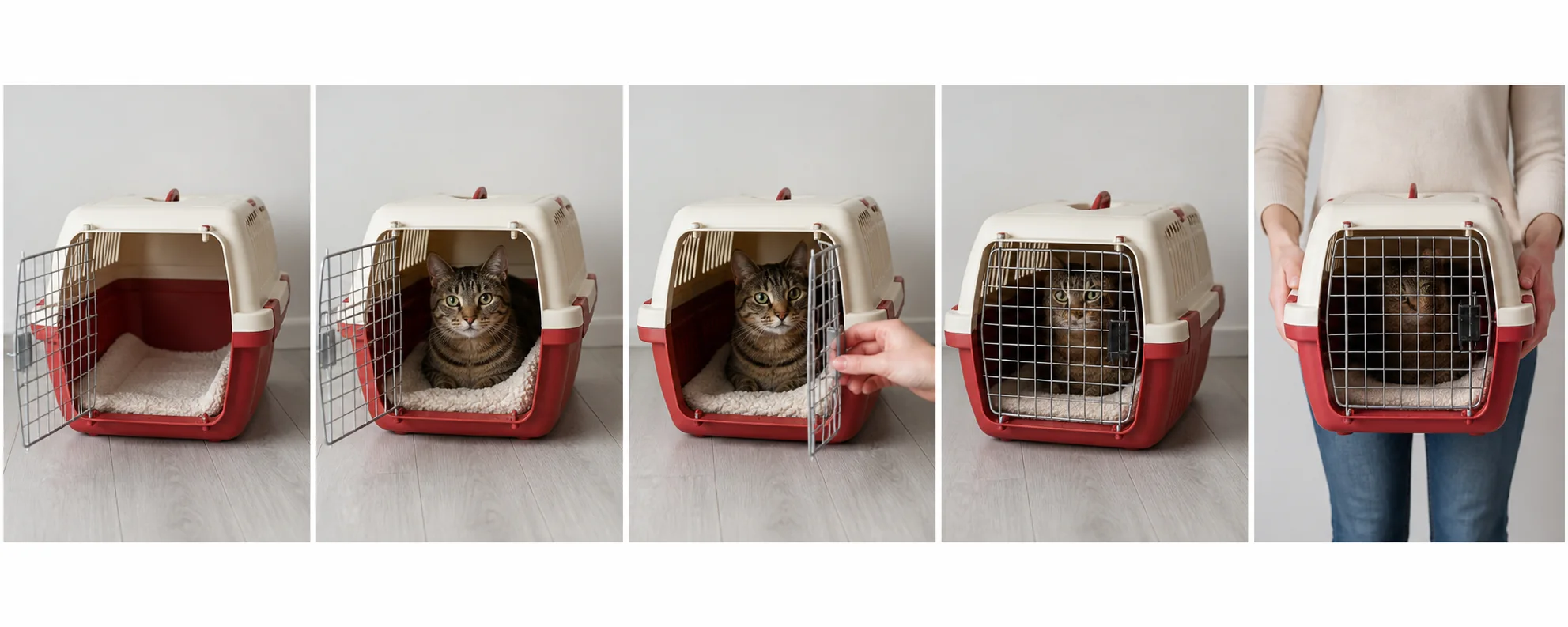
Cat Friendly Homes advises helping cats become comfortable with both the carrier and car travel before veterinary visits. Its veterinary visit guidance also emphasizes using familiar bedding and keeping the carrier stable. These steps do not guarantee a stress-free appointment, but they remove several avoidable surprises.
Keep sessions small enough to repeat
A good session may last 20 seconds. Duration matters less than whether the cat is willing to participate next time. Three calm entries spread across a day are more useful than a ten-minute session that ends with a struggle.
Choose rewards that fit your cat: part of a meal, a small food reward, play near the carrier, a warm blanket, or simply the chance to leave. Do not restrict meals to force entry, and do not close the door every time the cat walks inside. If entry always removes freedom, voluntary entry becomes a poor bargain.
Practice when the household is quiet and you are not watching the clock. A new kitten's carrier can be introduced alongside the predictable safe zones described in our new kitten room setup. With an adult cat who already fears the carrier, work farther from the opening and expect the early stages to take longer.
Watch for the moment before a struggle
Training plans often fail because the person measures task completion while the cat is already signaling that the task became too difficult. Look at the whole body, not one ear or one tail movement in isolation.
- Ready to repeat: the cat returns voluntarily, takes a familiar reward, looks around, sniffs, grooms, or leaves at a normal pace.
- Make the next repetition easier: the cat leans away, lowers the body, pauses at a distance, takes food roughly, or stops returning.
- End the session: the cat hides, freezes for an extended period, struggles, vocalizes unusually, pants, drools, or cannot settle after release.
Panting or open-mouth breathing can indicate significant distress and can also have medical causes. End the exercise and contact a veterinarian promptly if breathing is abnormal, especially if it does not settle quickly. Pain, motion sickness, or severe fear may require a veterinary plan rather than more home repetitions.
Rehearse the real sequence before you need it
A cat who can enter an open carrier has learned an important step, but a real appointment includes more: the door closes, the carrier moves, the car starts, and unfamiliar people handle it. Rehearse those pieces gradually and on separate days.
Keep the carrier level and support it from underneath rather than swinging it by the handle. In the car, secure it so it cannot slide. At home, practice covering part of the carrier with a light towel if that is something you plan to use during transport, while preserving ventilation and monitoring the cat.
Before an appointment, prepare your notes and supplies early so the carrier session is not surrounded by frantic packing. Write a short list of current food, medication, recent behavior changes, and the questions you need answered. A recent body condition observation can give the veterinary team useful context without attempting a home diagnosis.
When the appointment is tomorrow
One evening is not enough to complete carrier training. Do what reduces conflict now. Put the carrier in a small room before bringing the cat in, close inaccessible hiding places without chasing, and allow time. If the carrier has a removable top, the design may make entry and examination easier. Call the veterinary clinic for handling advice if you expect a serious struggle; they know the cat's health history and may recommend a specific plan.
Do not tip, shake, scruff, or force a resisting cat through a small opening. A towel may help some cats when used calmly, but restraint techniques are not interchangeable and can cause injury when improvised under pressure.
What progress actually looks like
Progress may be quiet: the cat eats beside the carrier, stays in the room when the door moves, or settles two minutes sooner after a lift. Keep a brief note of the last comfortable stage. That record prevents you from guessing after a break and makes it easier for another person in the home to practice consistently.
The emotional side of this routine matters, too. The Carrier That Stayed by the Door explores why leaving the carrier visible can change what it means in a home. For training, the practical target is simpler: find one action your cat can repeat calmly today, and let that be the place you stop.