

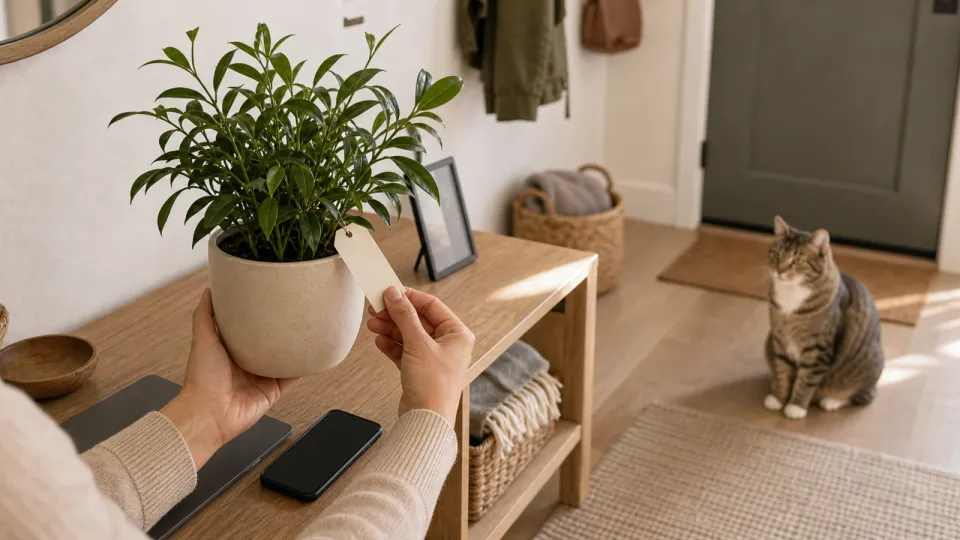
Cat-safe plants at home start with verification before the plant comes inside. The risky moment is not only when a cat chews a leaf. It is when a plant is bought under a casual common name, set on a shelf, and treated as safe because it looks harmless.
For a cat household, "cat-safe plants" should mean verified plants, verified names, controlled access, and a plan for what to do if a cat eats something. It should not mean guessing from a photo, trusting a shop label without checking it, or assuming a high shelf is enough for a determined climber.
Do not start with the plant's common name
Common names are messy. The same nickname can be used for different plants. A nursery tag may use a marketing name. A plant app may identify a look-alike. A friend may say "this one is pet friendly" because it has never caused trouble in their home.
Use the exact plant name before you decide where it belongs. The ASPCA toxic and non-toxic plants database is the first place I would check because it lets you search specific plant names and see cat-related toxicity listings. If the label is vague, treat the plant as unverified.
Write down both the common name and the botanical name when you can find them. Then compare spellings across the tag, receipt, and source page. A one-word mismatch may not matter for a decorative shelf, but it matters when the plant will share space with a cat who investigates by chewing.
In my notes, a plant is not "approved" until the name, spelling, and source match. If the tag says one thing, the receipt says another, and the search result shows several similar options, the plant does not enter the cat area yet.
Verify the plant before placement, not after chewing
The verification step should happen at the door or table, while the plant is still controlled. Keep the plant away from the cat, take a photo of the tag, search the exact name, and check whether the plant is listed as toxic or non-toxic for cats. If you cannot confirm it, keep it out of reach until you can.
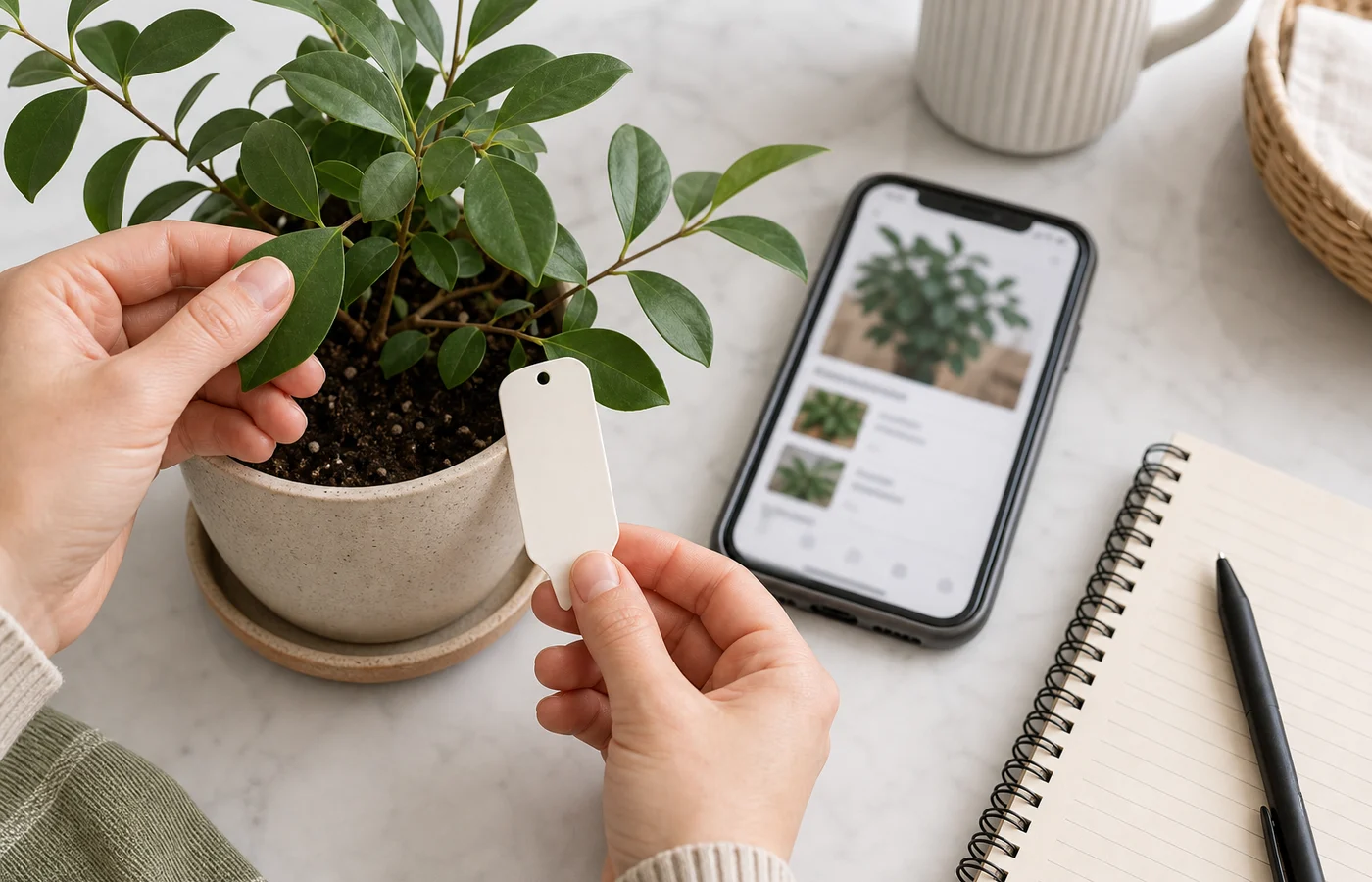
Do not rely on a visual match alone. Many houseplants have similar leaf shapes, and online photos, plant apps, and shop listings can blur those differences. The point is to verify the actual plant in your hand, not to compare it with a pretty picture online.
Use plant apps as clues, not final answers
Plant identification apps can be useful when a tag is missing, but they should not be the final safety decision. Lighting, leaf age, camera angle, variegation, pruning, and similar cultivars can change the result. If an app gives several possible names, every one of those names needs to be checked before the plant sits where the cat can reach it.
The safest workflow is layered: check the tag, ask the seller for the exact name, use a plant ID tool only as a clue, then verify the exact name against a cat-specific toxicity source. If those steps disagree, the plant stays out of the cat zone.
Safe does not mean snack
A non-toxic listing does not mean the plant is meant to be eaten. Chewing leaves can still cause stomach upset, vomiting, or a mess that teaches the cat the plant is interesting. Soil, fertilizer, pest treatments, decorative moss, and plant water can also create problems even when the plant itself is not the main concern.
That is why I would separate two questions. First: is the plant toxic to cats? Second: can this cat realistically leave it alone? A cat who chews cardboard, ribbon, flowers, grass, and paper tags should not be given a tempting new plant at nose level just because a database says the species is non-toxic.
If the cat is already plant-curious, start with access control. Keep the plant in a room the cat does not enter, behind a closed door, in a closed cabinet, or skip the plant until you have a safer setup.
Lilies get a separate rule
Lilies deserve a harder boundary because the risk is severe for cats. Do not treat them like a normal houseplant judgment call. Bouquets, pollen, vase water, leaves, petals, and mixed arrangements can all be part of the exposure concern.
The Pet Poison Helpline lily resource describes lilies as highly dangerous to cats and explains that even small exposures can be serious. If a plant, bouquet, or arrangement may include lilies, do not bring it into a cat home while you "check later."
This is one place where I would rather sound repetitive than clever: if you are not sure whether a flower is a lily, keep it away from the cat and verify before it crosses the door.
Placement is not a substitute for verification
A high shelf can help only after the plant is verified. Cats climb shelves, jump from furniture, knock pots over, and chew trailing leaves that people thought were out of reach. Placement lowers risk; it does not turn an unknown plant into a safe one.
Think about the whole access route. Can the cat jump from the sofa to the shelf? Can a trailing leaf hang within reach? Can a pot fall and spill soil? Is the plant near a favorite window, heater, or perch? A placement that looks unreachable from standing height may be reachable from cat height.
For the broader room audit, connect this with a cat-proof apartment setup. Plants are part of the same safety layer as cords, cleaners, windows, small objects, and unstable furniture.
Separate unverified plants until you decide
The cleanest temporary setup is boring: closed door, closed cabinet, or no cat access. Do not rely on bitter sprays, stern reminders, or the hope that the cat is "not interested." Interest can change when a plant moves, flowers, drops leaves, or gets watered.
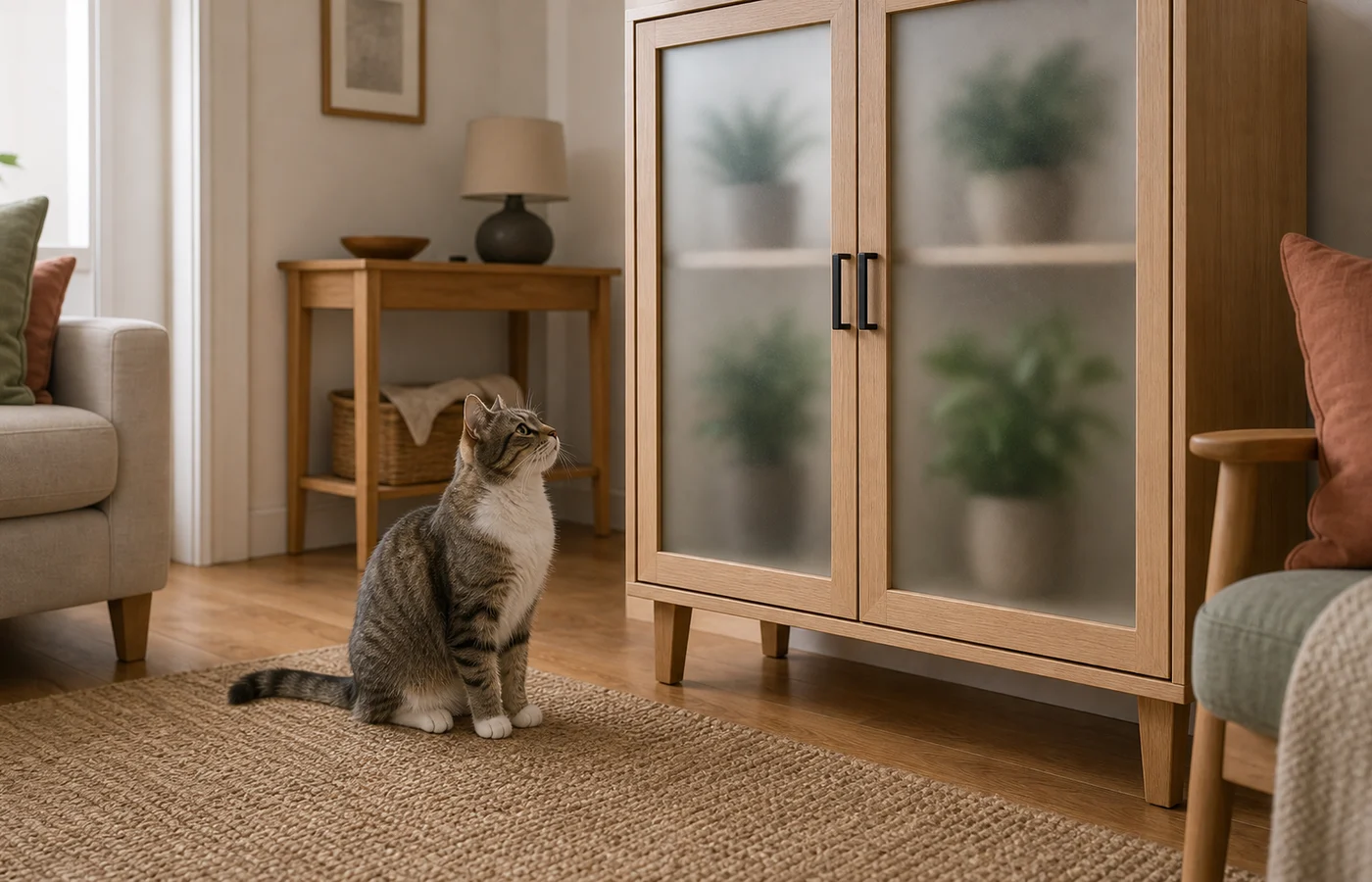
A closed cabinet also keeps the visual message honest: the plant is separated because access matters. If the plant needs airflow or light you cannot provide safely, that may be a sign it is not a good fit for the room.
Check the plant's whole setup
The plant is not the only object to verify. Check soil toppers, fertilizer sticks, pest granules, decorative stones, moss, twist ties, plant clips, self-watering reservoirs, and ceramic shards. A cat may be more interested in the dangling tag or loose soil than the leaves.
Watering routines matter too. Some cats drink from saucers or paw at damp soil. Do not leave fertilizer water, pest-treated leaves, or standing saucer water where a cat can sample it. If the plant needs a treatment that cannot be kept away from the cat, the plant should be moved or skipped.
Think of plants as one part of the broader cat home system. The same room that needs safe windows, stable furniture, and hidden cleaners also needs plant pots that cannot tip, leaves that do not trail into the cat's path, and supplies that are not stored beside food, water, or litter.
Use plain language on your own notes: plant name, toxicity status checked, source checked, where it is kept, and what products have been used on it. That is more useful than a vague memory that the plant was "probably fine."
Know what to do if a cat eats a plant
If you see chewing, missing leaves, vomit, drooling, lethargy, pawing at the mouth, appetite change, or any sudden behavior change after plant access, do not wait for a blog article to sort it out. Remove access, save the plant name and a photo of the plant, and contact a veterinarian or poison control resource.
The ASPCA Animal Poison Control Center is one emergency resource for suspected pet poisoning. Fees and availability can change, so keep your veterinarian's number and an emergency clinic contact available too. Time matters when the plant is unknown or known to be dangerous.
Do not induce vomiting or give home remedies unless a veterinary professional tells you to. The safest next step depends on the plant, amount, timing, symptoms, and the cat's health.
A practical plant rule for cat homes
Bring a plant home only when you can answer four questions: What is the exact plant? What does a cat-specific toxicity source say? Can my cat physically reach it? What will I do if the cat chews it anyway?
If any answer is fuzzy, pause. Put the plant behind a closed door, return it, give it to a no-cat household, or choose a plant you can verify more confidently. The best cat-safe plant decision is not the prettiest shelf. It is the one where the plant's identity, access, and emergency plan are clear before curiosity gets a chance to test them.