

A parcel takes both hands, the entrance opens, and the cat is already beside your shoes. Cat door dashing becomes harder to manage at exactly the moment your attention moves elsewhere. Change the arrival sequence before relying on the cat to wait.
A second closed boundary is the starting point where your layout allows one: keep the cat behind a suitable interior door before opening the exterior entrance. Pair that management with a consistent greeting place away from the doorway. Training can support the routine, but should not be the only thing between the cat and an open route outside.
Trace one ordinary arrival
Look at the entrance with the door shut. Where does it swing? Where do shopping bags land? Can a cat approach from behind a cabinet, and can the person arriving see that approach? A narrow hall can hide a cat close to the hinge or the person's feet.
Move loose objects out of the walking and door-swing area. Put a parcel landing place where setting something down will not require holding the entrance open. Avoid turning the threshold into the place where the household greets the cat, sorts mail, and removes several bags at once.
For an apartment, include the shared corridor in the plan. Another person's open door, lift arrival, or delivery knock can make the scene less predictable. Your control point still needs to be inside your own home; a quiet corridor is not a reliable barrier.
Choose a boundary that actually closes the route
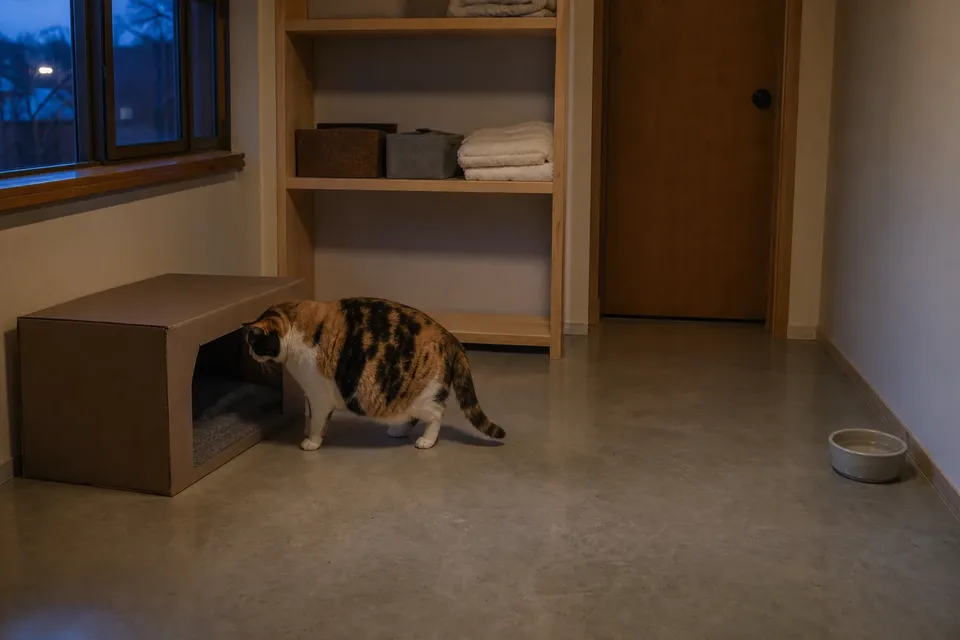
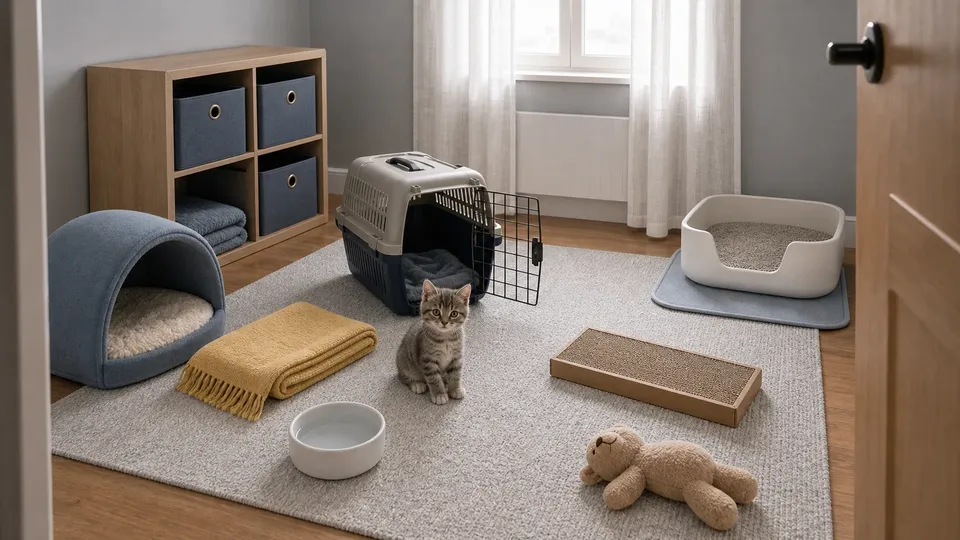
A suitable interior room can provide separation during an arrival or departure. First make sure it is safe and comfortable for the cat, with the resources needed for the time involved. Close the door, confirm where the cat is, and only then open the exterior entrance. Do not assume that someone else has already done the check.
If you have a genuine enclosed vestibule, use its two doors in sequence rather than propping both open. Everyone carrying bags or moving equipment needs to understand which door stays closed. Check that the arrangement is safe for people as well, including access and emergency exit requirements.
An ordinary baby gate may be jumped or climbed. A screen, pet barrier, or improvised panel also needs scrutiny for gaps, stability, and the individual cat's behavior. No product mentioned here is certified escape-proof. When the layout does not provide dependable separation, ask a qualified behavior professional to help plan management rather than testing a weak barrier against an open street.
The Wisconsin Humane Society's door-dashing advice combines management with alternative behavior and communication. That combination is useful because the household can control the opening even before a new waiting behavior is established.
Give visitors one clear arrival instruction
Tell expected visitors to knock or message and wait. Use the same short sequence each time:
- Confirm the cat is behind the agreed closed boundary.
- Open the controlled entrance and receive the visitor or parcel.
- Close and check the entrance before releasing the cat's boundary or dealing with the package.
A sign can remind someone, but cannot physically stop a cat or ensure a hurried guest reads it.
For a sitter, cleaner, or friend entering alone, rehearse the access plan before the first visit. Explain what to do if the cat is already at the entrance, and who to contact if the agreed boundary cannot be established. Do not ask the person to push through and hope.
Moving day or a large delivery needs a different arrangement from an ordinary greeting. If the door must stay open, place the cat in an appropriate secured space beforehand and tell every person working at the entrance. Check the room after traffic has stopped before restoring normal access. Our apartment safety guide covers the wider home check.
Practice a greeting place with the exterior door shut
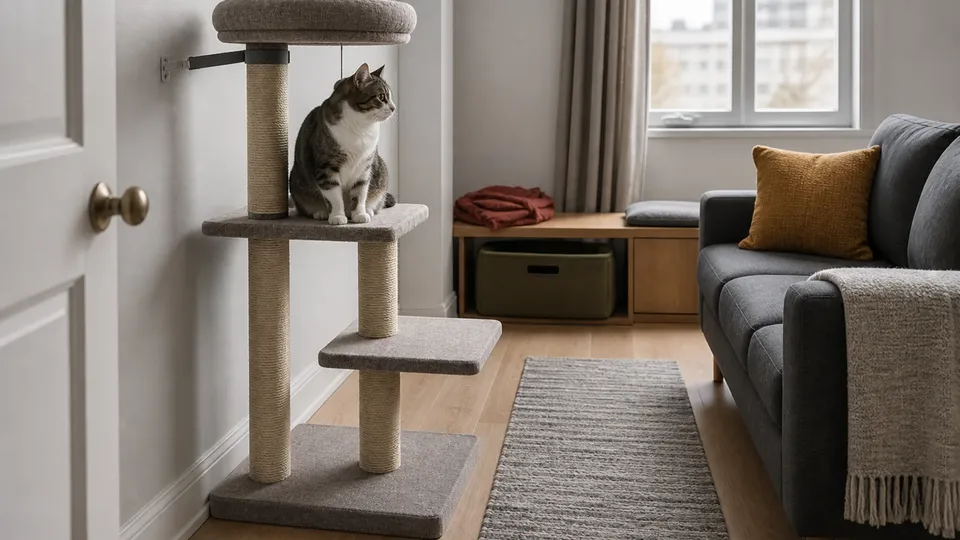
Choose a comfortable place several steps away from the entrance and outside its swing path. It might be a stable bed or a familiar chair. It should be easy for the cat to reach without threading between arriving feet.
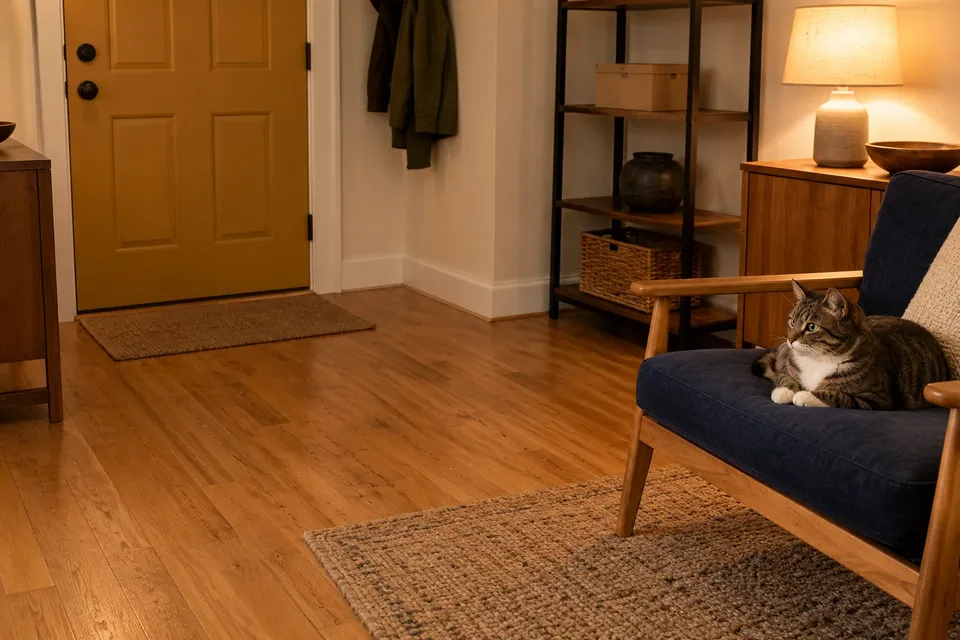
Begin in a quiet moment with the outside door fully closed. Reward the cat for approaching and settling at the chosen place. Keep the practice brief and comfortable. Gradually add small, ordinary arrival cues only while the cat can remain relaxed and a real boundary controls access.
Never open a direct route outdoors to see whether the lesson worked. If the cat leaves the place, calmly reset the practice with the door shut. Punishment, shouting, water sprays, or startling devices can make the entrance more stressful without creating dependable separation. Pasadena Humane's prevention advice also favors management and positive alternatives.
Households differ in layout and in what the cat finds rewarding. There is no fixed number of sessions after which a doorway becomes safe. Continue the physical management even when the cat often chooses the greeting place.
Departures need the same handoff
Prepare keys and bags before opening the exit. If another person is helping, use a specific confirmation: the cat is in the agreed space and its door is shut. Finish the exit before the remaining person releases that boundary.
When leaving alone, establish separation before collecting the final item that occupies your hands. Check that you have not closed a cat into an unsuitable cupboard or room without the resources needed for the planned interval. If the care plan is changing because you will be away, arrange coverage using the guide to leaving a cat at home.
Check the sequence again when the household changes
A new flatmate, a different delivery routine, or furniture moved into the hall can undo a previously clear route. Review the doorway with the people who actually use it. A microchip and current registration details are useful recovery precautions, but they do not replace prevention.
If the cat escapes or is injured, seek appropriate local recovery help or veterinary care; this article is not a missing-cat search protocol. For everyday arrivals, keep the handoff simple: exterior door closed, boundary checked, then the next person moves. Open access only after the entrance is secure.