

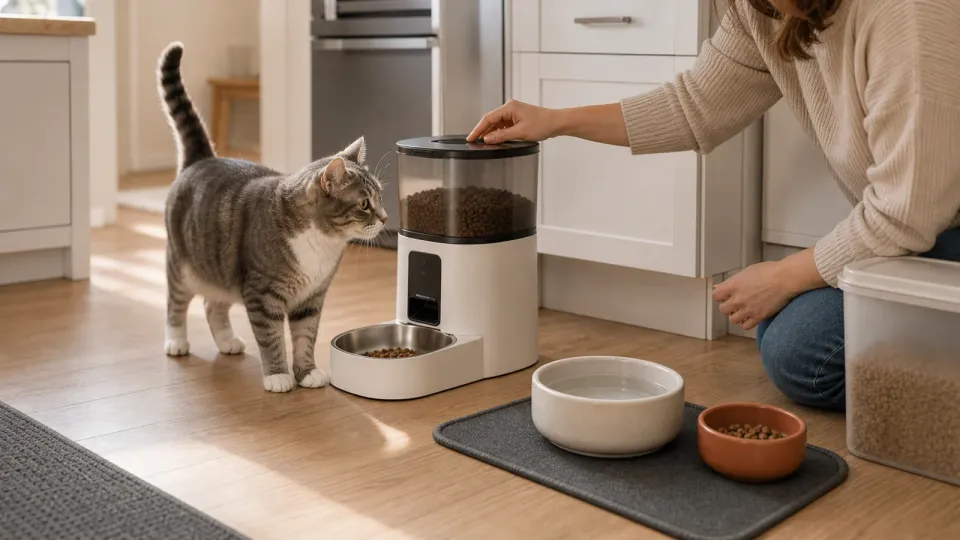
An automatic cat feeder is convenient right up until it becomes the only thing standing between your cat and dinner. That is why I would not trust a feeder for a weekend based on one successful breakfast. It needs a short home test, a cleaning check, a portion check, and a backup plan that does not depend on the app behaving perfectly.
This is not about buying the most expensive feeder. It is about proving that the feeder works with your cat, your food, your power situation, and your normal routine before you leave the house.
Test the feeder while you are still home
Run the feeder for at least two normal days before a weekend away. Use the same food, portion size, schedule, bowl, and floor location you plan to use while you are gone. Do not start the test with a new feeder, a new kibble, and a new feeding schedule on the same night.
The useful test is not whether the machine dispenses once. It is whether it dispenses repeatedly, at the right times, without clogging, startling the cat, spilling food, or getting pushed around the floor. Watch breakfast, dinner, and one low-attention moment when you are not standing over the feeder.
Cornell Feline Health Center's guidance on feeding frequency is a good reminder that feeding routines should fit the individual cat, not just the owner's schedule. A feeder should protect the routine you already know works.
Match the feeder to the food type
Most automatic feeders are easiest with dry food. Wet food, refrigerated inserts, and mixed textures create a different risk profile because freshness, temperature, cleaning, and timing matter more. If the feeder is only designed for dry kibble, do not make it responsible for wet meals while you are away.
The CDC's pet food safety guidance emphasizes handwashing, clean utensils, and safe handling around pet food. That matters because a feeder bowl is still a food-contact surface. Automation does not remove the cleaning job.
If your cat eats wet food for health, hydration, or preference reasons, keep the weekend plan conservative. Use a sitter, a timed chilled feeder only if you have already tested it, or a shorter absence. Do not assume a dry-food feeder can replace a wet-food routine without changing what your cat actually eats.
Run a portion check, not a guess
Feeder portion settings can be vague. One "portion" may not equal your cat's normal meal. Kibble shape and size can change how much falls through the chute. A setting that worked with one food may overfeed or underfeed with another.
Measure what the feeder actually dispenses. Run the same meal setting three times into an empty bowl, then compare the result with your normal measuring scoop or kitchen scale. If the three results are inconsistent, the feeder is not ready for an unattended weekend.
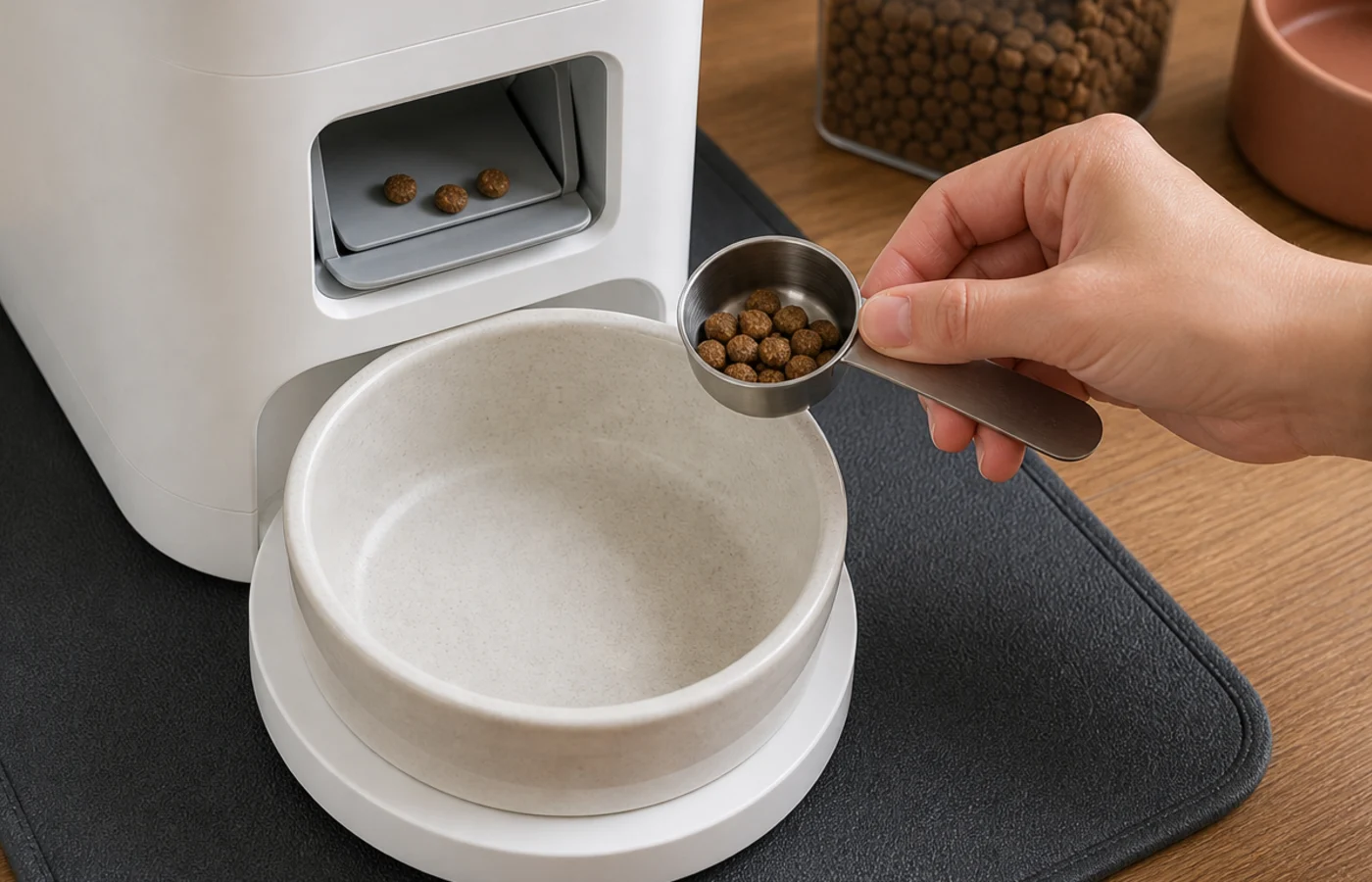
The Cornell Feline Health Center's feeding guidance points readers back to appropriate food amount, body condition, and individual needs. For a feeder test, that means your veterinarian's feeding plan and your cat's normal measured amount matter more than the device's default labels.
Check for jams with the exact kibble you use
Automatic feeders can behave differently with small round kibble, flat pieces, oily surfaces, broken crumbs, or mixed bags. The chute may bridge, the wheel may skip, or the bowl may receive a partial meal. You need to test the food you actually plan to leave in the hopper.
Listen during the test. A motor that runs but drops little food is more concerning than a loud but successful dispense. Look for crumbs in the chute, pieces stuck at the opening, and food backing up inside the bowl area. If the feeder needs a shake to work, it is not a weekend plan.
Keep the hopper amount realistic. Filling the feeder to the very top can change pressure on the mechanism. Leaving only a tiny amount can also behave differently. Test it with the amount you plan to leave, then check the first and last meals.
Power and app dependency need a boring answer
A feeder that relies on Wi-Fi, an app, or a plugged-in outlet needs a failure plan. Ask what happens if the router drops, the app logs out, the outlet is switched off, the cat bumps the cord, or the power blinks while you are away.
Some feeders keep a local schedule after setup. Some need batteries as backup. Some have manual buttons that a sitter can press. Read the actual manual before the weekend, then test the backup mode. The answer should be boring: the feeder still dispenses, or a person has a clear way to feed the cat.
Placement is part of power safety. Keep cords away from chewing, water spills, and the cat's walking route. If you are already auditing cords and small hazards, Cat & Meow's cat-proof apartment setup guide is a useful companion check.
Clean before the test, not after the trip
Food dust, oils, crumbs, and saliva can build up around the bowl and chute. A feeder may look clean from standing height while holding residue where food passes through. That residue can affect smell, freshness, and whether the mechanism moves smoothly.
The same CDC pet food safety guidance also makes storage part of food safety. Keep food in a clean, closed container, avoid unlabeled mystery leftovers, and do not pour stale crumbs into the hopper just because the feeder can hold them.
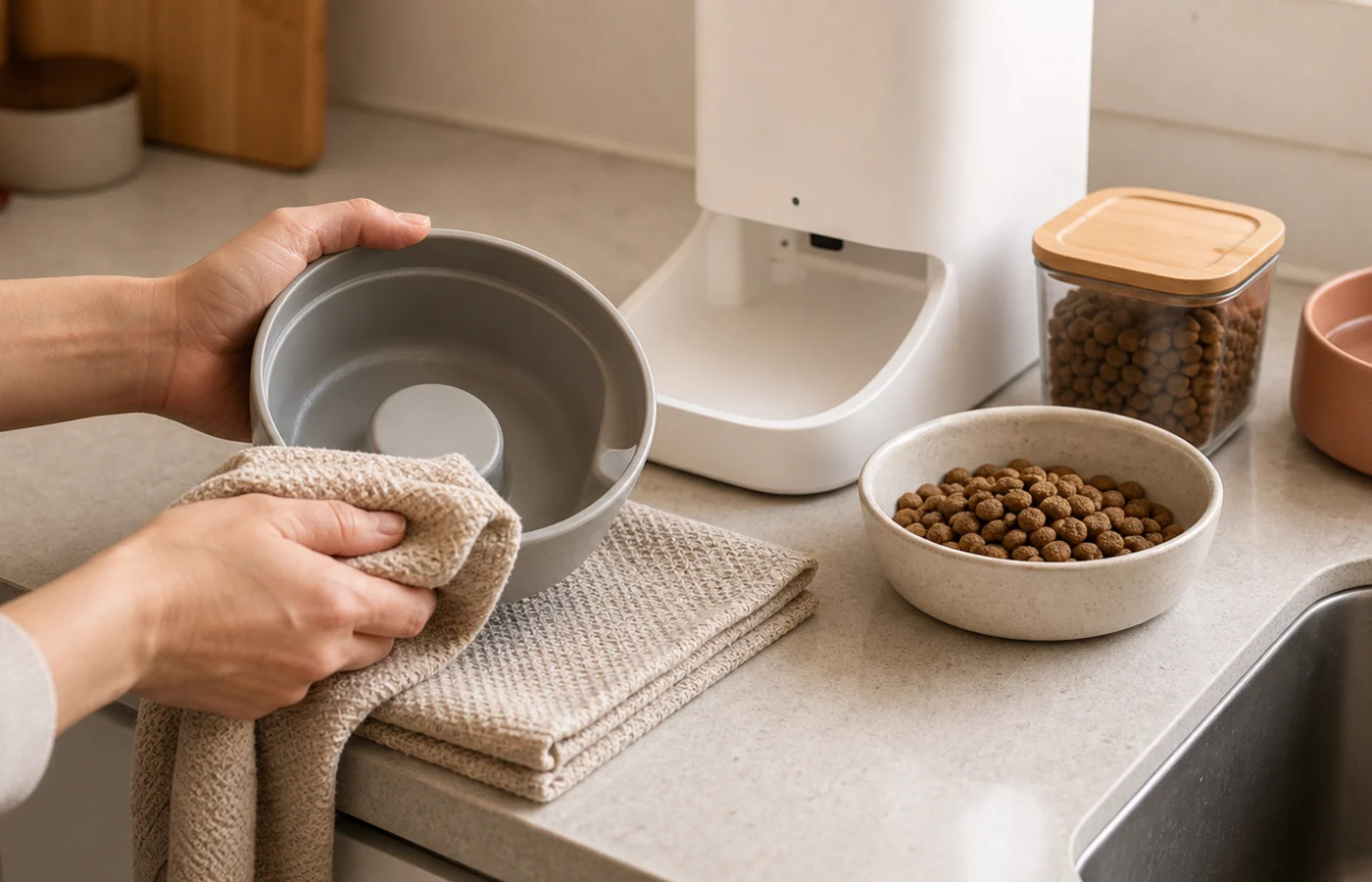
Before the weekend, wash removable parts according to the feeder instructions, dry them fully, and run at least one meal after reassembly. A clean feeder that was put back together incorrectly is still a failed feeder.
Watch how your cat reacts
The machine can work perfectly and still be wrong for your cat. Some cats ignore the sound. Others startle, wait until the room is empty, paw at the chute, guard the bowl, or eat too fast when food drops. In a multi-cat home, one feeder can quietly become one cat's private resource.
During the home test, watch the first few seconds after food drops. Does your cat approach calmly? Does another cat block access? Does the feeder location create a hallway bottleneck? Does the bowl slide? The behavior around the feeder matters as much as the dispense.
If your cat has a history of vomiting, food guarding, weight changes, diabetes, kidney disease, medication timing, or a prescribed diet, do not treat an automatic feeder as a simple convenience tool. Ask your veterinarian how much routine flexibility is safe.
Build a weekend backup plan
The backup plan should be specific enough that another person can use it. Leave the food container, measuring scoop, bowl location, normal meal amount, and emergency contact in a place that makes sense. If a sitter is checking in, ask them to confirm not just that the feeder is present, but that food actually dropped and the cat had access.
A simple backup bowl can help when a feeder fails, but do not leave a large pile of food as the default solution for a cat who overeats, competes with another cat, or needs measured meals. Use the wet/dry food calculator only as a planning support; your cat's real feeding instructions should come from known intake and veterinary advice when health is involved.
Do one last simulation the day before you leave. Fill the hopper to the weekend level, set the schedule, unplug and restore power if the manual says backup mode should handle it, and watch the next dispense. Then check the bowl 30 minutes later. A feeder that passes only while you are hovering over it has not really passed.
For Cat & Meow's broader feeding content, the cat food section can support routine planning. The weekend feeder plan should still be written for the specific cat in front of you.
The weekend verdict should be conservative
Trust the feeder only after it has passed a dull test: correct portions, no jams, clean parts, stable power, safe placement, cat acceptance, and a person who can intervene if something looks off. If any one of those is uncertain, shorten the absence, add a sitter visit, or use the feeder only as a supplement.
An automatic cat feeder is worth trusting when it makes an already stable routine easier. It is not worth trusting when it asks you to ignore food safety, portion control, power failure, cat behavior, or medical feeding needs. For a weekend away, boring reliability is the whole point.