

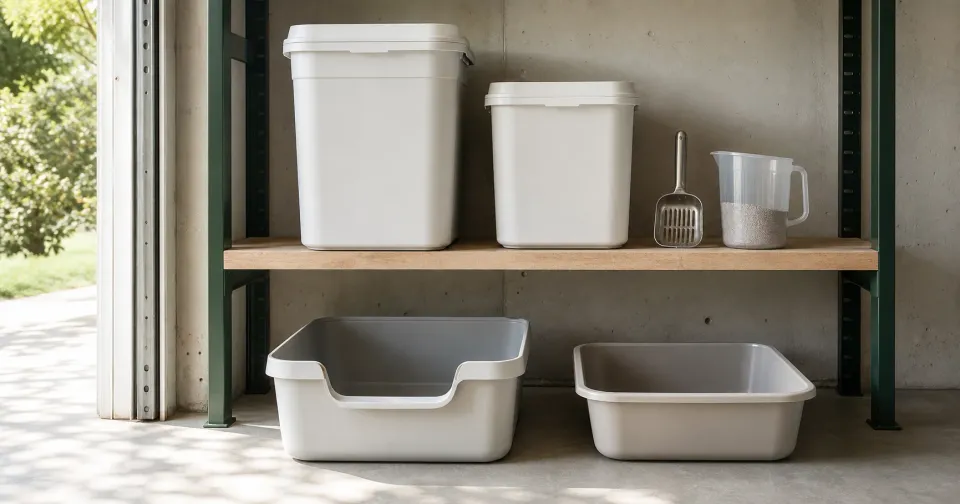
A bag size cannot tell you whether it is a one-week supply or a one-month supply. The answer depends on how many usable boxes you maintain, the filled footprint of each box, litter depth, what leaves in clumps and on paws, and how often the remaining bed is replaced.
Instead of trusting a universal “pounds per cat” estimate, measure one normal cycle in your own home. That creates a monthly number you can budget, carry, and store.
Separate the first fill from ongoing use
A new or fully emptied box needs a base fill. During daily use, scooping removes waste plus clean litter attached to the clump, while tracking and spills remove smaller amounts. Top-offs restore the working depth. A full change discards the litter still left in the box.
Those are four different flows:
- Base fill: what an empty box needs to reach the cat's normal depth.
- Top-offs: clean litter added between full changes.
- Reset remainder: usable and contaminated litter discarded at a planned full change.
- Handling loss: tracking, spills, bag dust, and litter stuck to liners or tools.
Do not count the first fill twice. If your monthly period starts with freshly filled boxes, the later reset figure already includes the next base fill only when you actually refill during that month.
Measure one box with the product you use
Litter is sold by weight, volume, or both. Clay, silica, paper, wood, corn, and other materials do not weigh the same per cup or per inch of box depth. A 20-pound package of one material does not occupy the same space as 20 pounds of another.
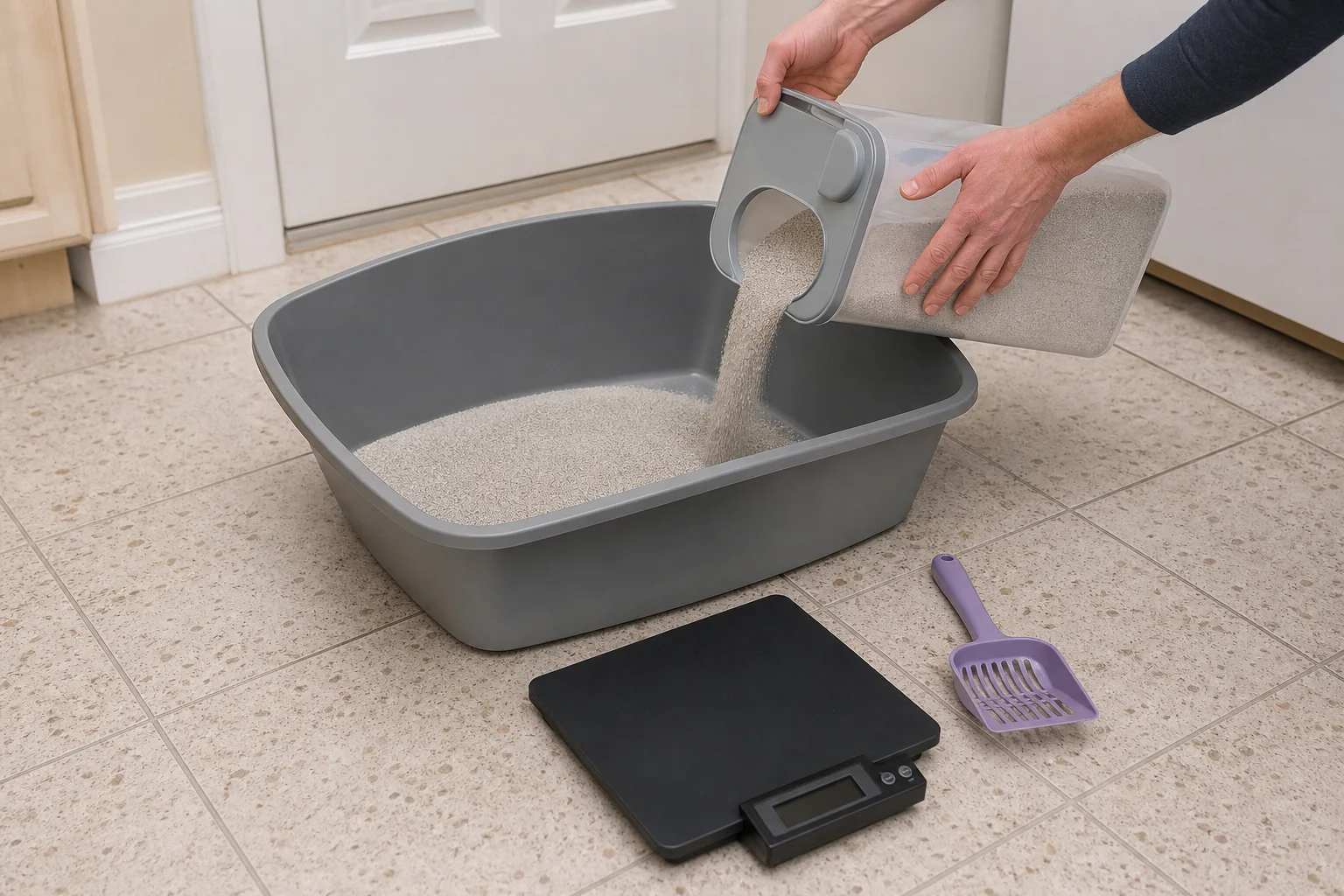
For the most reliable home measurement, weigh the package or storage container before filling, fill the clean box to the normal depth, then weigh the remaining supply. The difference is that box's base fill. Record the box's internal floor dimensions and depth so you know what the number describes.
Do not chase an arbitrary deep bed. Cornell notes that many cats prefer fine, unscented litter around one to two inches deep, but individual preferences and product instructions vary. Keep the depth that supports normal digging, covering, and elimination for your cat.
Use a seven-day top-off test
Begin after a normal full clean and base fill. Scoop on the usual schedule for seven days. Add litter only when you normally would, using the same scoop, cup, or storage container. Weigh or measure every addition.
At the end of the week, total the top-offs for each box. Multiply by 4.35 for an average month:
Estimated monthly top-offs = seven-day top-off amount × 4.35
A week with travel, diarrhea, unusual litter-box use, or a new product is not a good baseline. Repeat the test during a more typical week. In multi-cat homes, label the boxes if their use differs; the busiest box may consume far more than the quiet one.
Add the cost of full resets
A full reset is not scheduled by a universal calendar. Litter type, cat use, box count, clump quality, odor, moisture, and cleaning routine all matter. Merck advises daily scooping and regular complete cleaning, with more frequent care when more cats use the box. Follow the product instructions and your cat's normal acceptance.
When you perform a normal reset, weigh the litter discarded from the box after ordinary scooping. That is the reset remainder. Then record how much fresh litter refills the clean, dry box.
If a box is fully changed every four weeks, use roughly 1.09 resets per average month. If every two weeks, use roughly 2.17. Real calendar months vary, so a purchasing budget should include a small buffer.
The monthly formula
For each box:
Monthly litter = monthly top-offs + (base refill per reset × resets per month) + handling-loss buffer
If the measured top-off total already includes a reset week, do not add that refill again. Keep one method consistent across the observation period.
Example for one box:
- Seven-day top-offs: 2.0 lb
- Estimated monthly top-offs: 2.0 × 4.35 = 8.7 lb
- Base refill: 10 lb
- Reset frequency: once every four weeks, about 1.09 per month
- Reset refill estimate: 10 × 1.09 = 10.9 lb
- Measured subtotal: 19.6 lb
Add a modest household-specific buffer only after observing spills and tracking. This example does not say that every cat needs 19.6 pounds. It describes one hypothetical box, product, depth, and routine.
More cats do not always mean simple multiplication
The usual starting point of one box per cat plus one changes the amount of filled box area in the home. Review whether the boxes are truly separate and usable before budgeting litter for trays that do not function as independent resources.
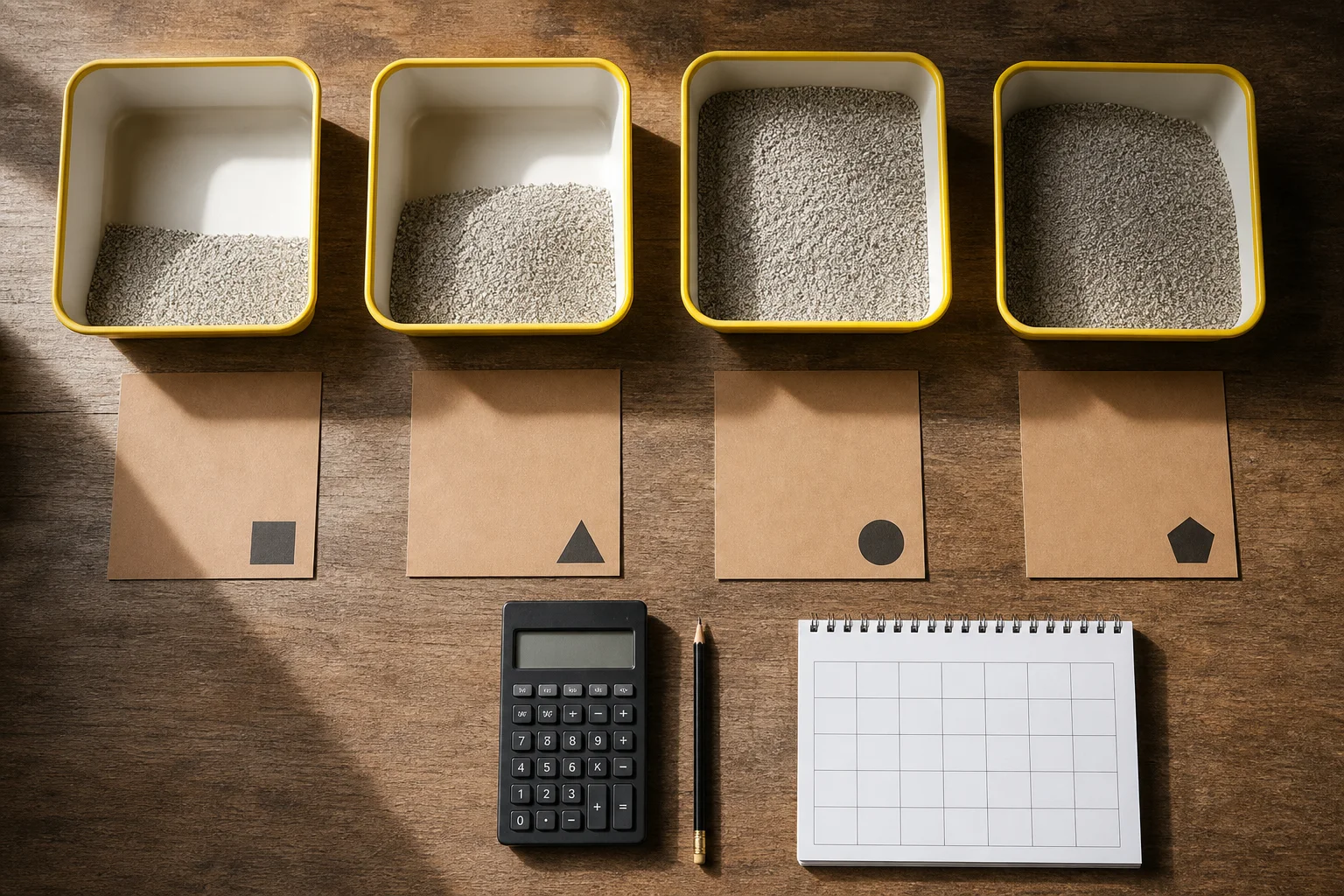
Three boxes used unevenly will not each need the same top-off. One may carry most urine, another may be used mainly for stool, and a third may stay quiet until a doorway becomes busy. Measure per box for a week, then combine the totals.
A larger box also needs a larger base fill at the same depth. If you recently corrected the usable size and turning space, do not keep the old monthly estimate.
Buy by verified duration, not the lowest unit price
Once you know monthly use, divide package weight by the measured monthly total. A 20-pound bag against a 19.6-pound estimate is roughly one month before the reserve. A 40-pound box is roughly two months, provided it can be stored dry and handled safely.
Storage and lifting are part of the decision. Several smaller packages may cost more per pound but reduce moisture exposure, stair carrying, and awkward pouring. A sealed transfer container can make daily top-offs easier, while the original package should be retained for product identification and lot information.
Waste reduction cannot reduce box care
Accurate scooping, a stable working depth, a well-sized scoop, and a mat that returns loose clean litter safely can reduce handling loss. Stretching a dirty litter bed, using too little litter for normal digging, or keeping a box because a bag is not empty is false economy.
Use appearance, moisture, odor, clump performance, product guidance, and cat use to decide when the bed is no longer working. A cat avoiding the box, straining, urinating frequently, or changing elimination habits needs veterinary attention rather than a tighter litter budget.
Recalculate after the system changes
Repeat the seven-day test after changing litter material, box count, box dimensions, normal depth, scoop, reset schedule, or household cat population. Seasonal humidity and a cat's health can also move the result.
Your final number should read like a measured household specification: product, total boxes, base fill per box, seven-day top-offs, reset frequency, monthly estimate, and reserve. That figure will be less universal than an online bag estimate and far more useful.