

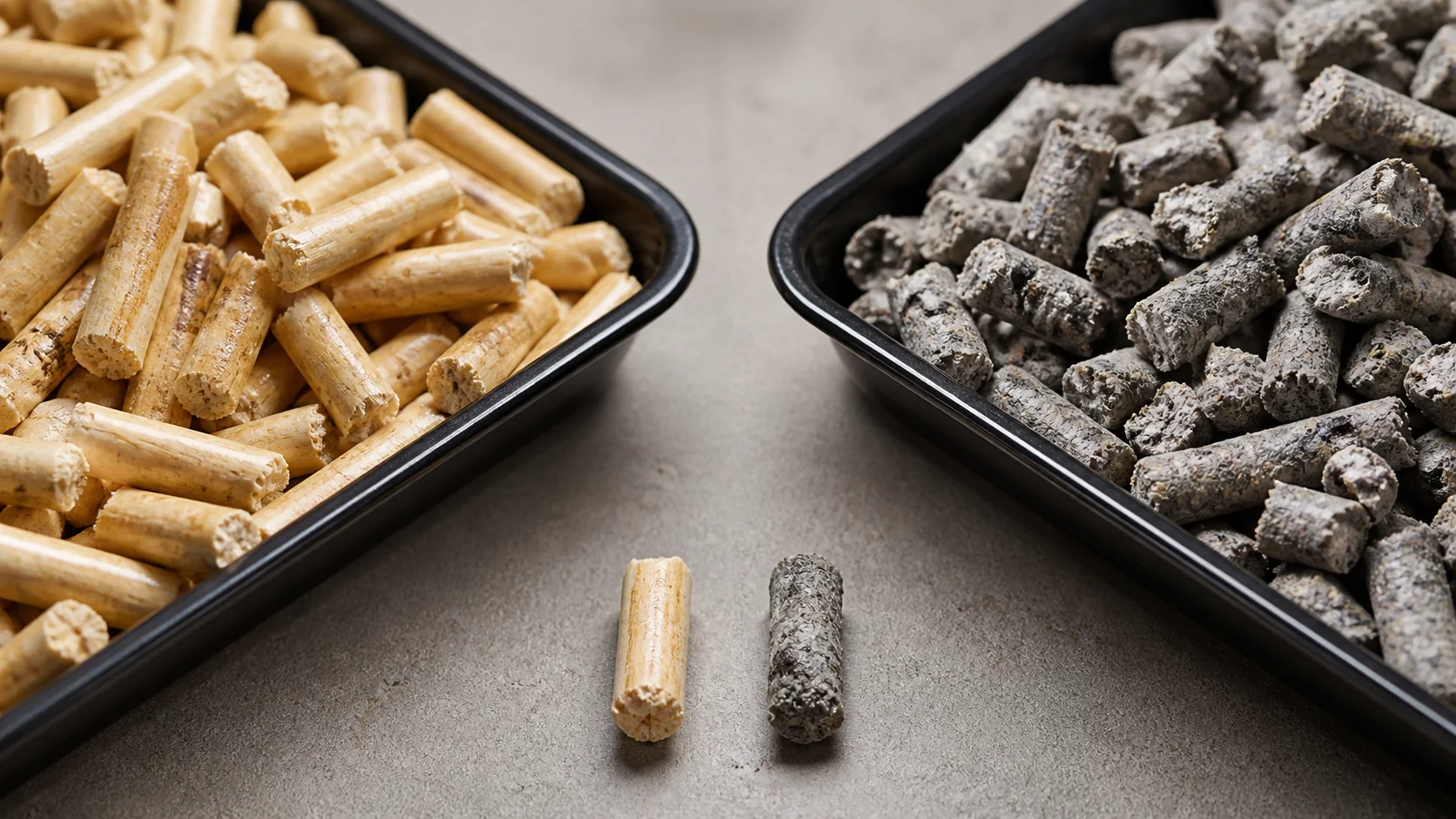
Wood pellets and paper pellets can sit beside each other under the same broad label, yet they do not behave the same way in a litter box. One may break into fine material as it absorbs urine. Another may swell and soften while keeping more of its shape. That difference changes the tray, scoop, cleaning motion, and amount of experimentation a household can tolerate.
Cat litter pellets are worth considering when their larger particle size and maintenance pattern suit the cat and the person cleaning the box. They are not automatically cleaner, safer, lower dust, better for odor, or more sustainable than every alternative. Start with the material, verify that the product is appropriate for cats, and preserve the cat's choice while you test it.
Wood and paper pellets are different starting points
Wood pellets
Wood-based cat litter usually begins as compressed fibers. Depending on the product, wet pellets may expand and break into smaller particles or sawdust-like fines. That can work well with a compatible sifting tray, but only when the holes retain the dry pellets and allow the broken material to pass without jamming.
Do not assume a fuel or stable pellet is suitable because it looks similar. Use litter sold for cats or obtain clear manufacturer confirmation about ingredients and processing. Avoid added fragrance and products with unknown binders or contaminants.
Paper pellets
Paper litter is often made from processed recycled paper formed into larger pieces. Wet material may become darker, softer, or swollen rather than breaking down exactly like wood. Many paper pellets are non-clumping, so urine removal depends on identifying and removing wet areas plus scheduled full changes.
Individual products vary in size, firmness, dust, additives, and instructions. Read the package before deciding what the category will do.
What changes in daily cleanup?
Solid waste should still be removed promptly. For urine, follow the product and tray directions. With non-clumping paper pellets, remove visibly wet material and surrounding affected litter. With wood pellets designed to break down, a compatible sifting system may allow damp fines to fall into a lower tray while intact dry pellets remain above.
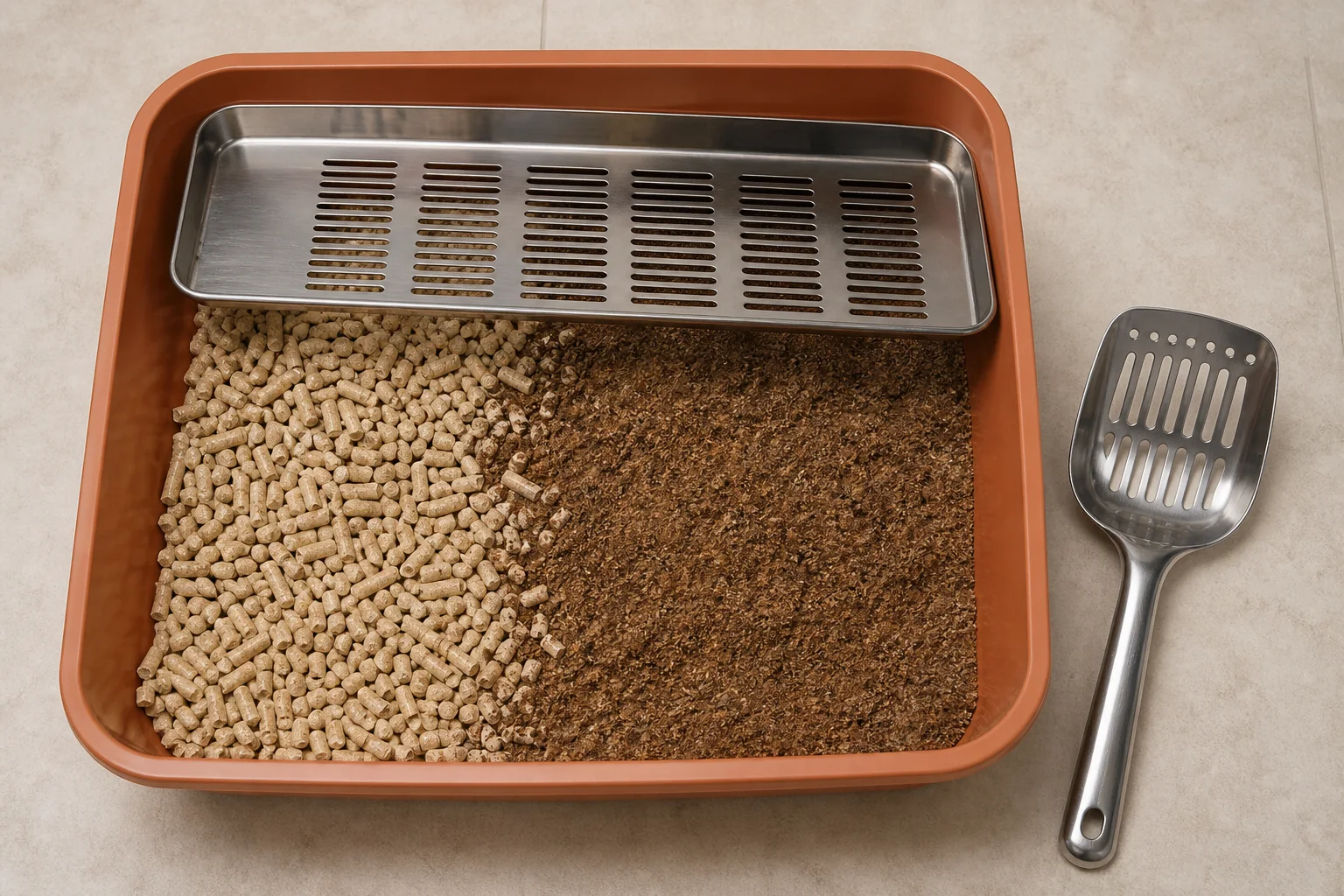
Neither method means the box cleans itself. Stirring wet material through dry litter can obscure used areas and spread odor. A sifting lower tray still needs emptying and washing. The box itself needs periodic full replacement and cleaning at a frequency based on the product, number of cats, box size, and what you observe. Our guide to how often to change cat litter separates daily removal from full-box replacement.
For my own comparison, I put equal dry samples in two spare shallow trays and added the same small amount of water. The useful result was not which material looked nicer. It was discovering that the scoop I already owned could not separate one softened paper pellet from the dry ones. That told me the proposed cleanup routine would be frustrating before I changed a cat's box at all.
Pellets may track differently, but do not promise no mess
Larger intact pellets may be less likely than fine litter to lodge between toes and spread as a thin layer through a home. They can still roll out of a box, break into smaller pieces, or be kicked onto the floor. Lightweight paper pieces may travel differently from dense wood pellets.
Use a box large enough for the cat to turn and dig without standing at the edge. A litter-catching surface can help, but it should not create an unstable or prickly approach. Sweep the actual route for a week before deciding that tracking improved.
Dust also varies by formula, shipping damage, and what happens as pellets break down. A bag of mostly intact pieces may still accumulate fines at the bottom. If dust is the main reason for changing materials, compare the package, pour, sifting process, and end-of-bag residue using the observations in our low-dust litter guide.
Texture is the cat's part of the decision
Some cats use pellets readily. Others dislike the larger, firmer surface or cannot dig and cover in their usual way. A cat with sore paws, arthritis, balance changes, or a history of litter box avoidance may need a different texture or a veterinary assessment.
Cats Protection notes in its guidance on choosing cat litter that many cats prefer a fine, sand-like, unscented material and enough depth to dig and cover. Preference is individual, but that broad tendency is a reason not to replace every familiar box with pellets overnight.
Watch what the cat does before, during, and after use:
- Does the cat step in normally or perch with paws on the rim?
- Can the cat turn, dig, eliminate, and cover without repeated hesitation?
- Does the cat leave calmly, or bolt and shake the paws?
- Is urine and stool still easy for you to find and monitor?
- Does use remain consistent over several days?
How to switch without removing the accepted toilet
The clearest test uses a separate box. Put an appropriately sized pellet-filled box in a suitable location while keeping at least one familiar box available. This preserves choice and makes preference easier to read than changing the texture, box, and location at the same time.
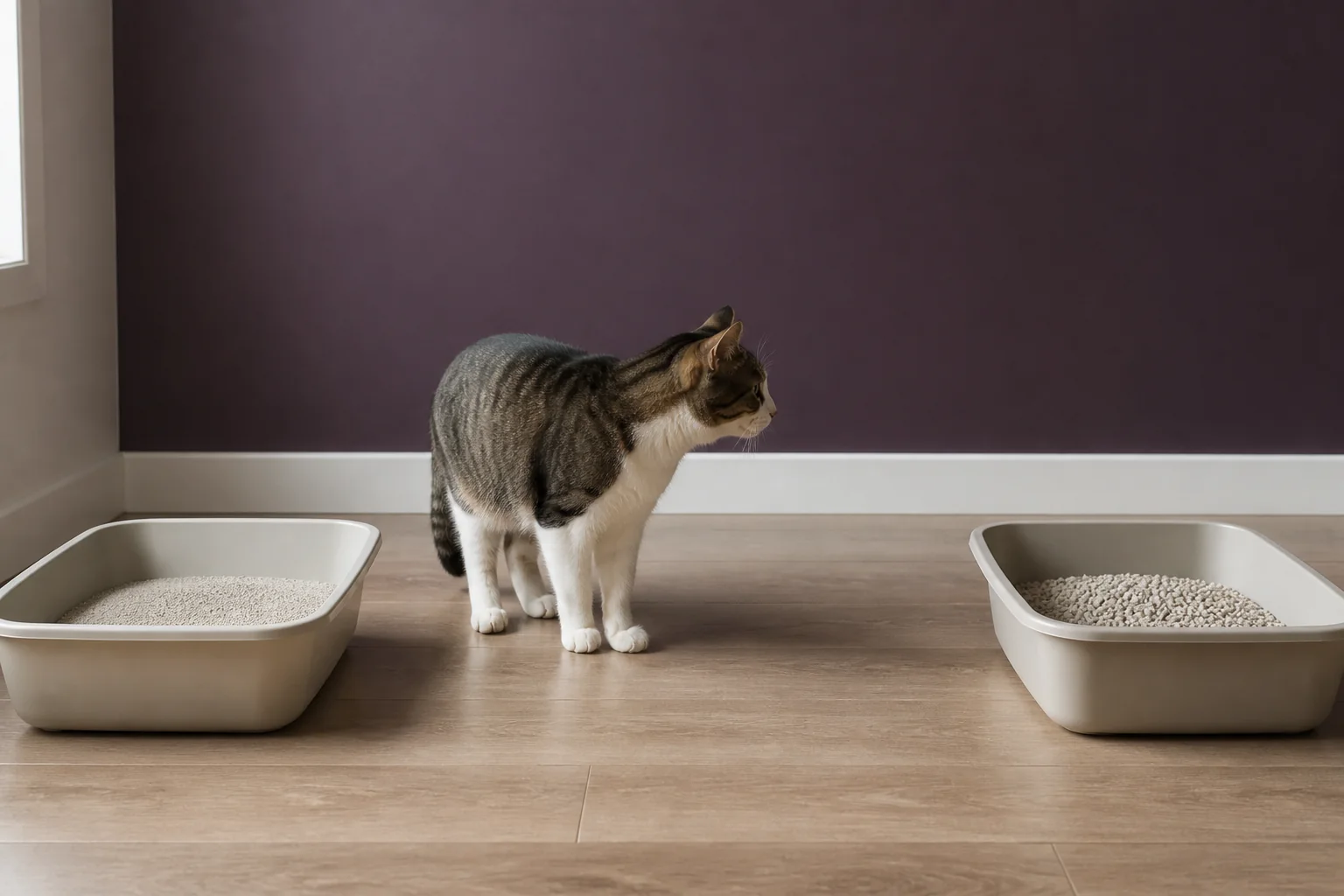
If another box is not possible, change a small portion at a time only when the product instructions allow mixing. Maintain the usual depth, location, and cleaning schedule. Pause or reverse the change if the cat avoids the box, eliminates beside it, or shows a persistent change in digging behavior. Our gradual litter-switching guide gives a fuller observation plan.
In a multi-cat home, one cat's acceptance does not establish another's. Keep enough boxes in separated locations and observe individual use where possible.
Pellets versus clumping litter
Many pellet litters are non-clumping. Instead of lifting a compact urine clump, you remove wet pellets, softened material, or sifted fines. That may use less or more litter depending on how accurately wet areas can be separated. It also changes how easily urine volume can be observed.
Clumping litter has its own tradeoffs involving particle size, tracking, dust, and clump strength. For a category-level comparison, use clumping versus non-clumping cat litter. The relevant question is not which label wins; it is whether the cat uses the material reliably and whether the household can remove waste thoroughly.
When not to keep experimenting
Stop the transition if the cat strains, makes repeated box visits, cries during elimination, produces little or no urine, has blood in the urine, or begins eliminating elsewhere. These signs are not a material preference test. Inability to pass urine can be an emergency, particularly in male cats, and needs immediate veterinary attention.
For a routine trial, preserve one accepted box, test one pellet material, and clean it according to what that material actually does when wet. A week of observed use will tell you more than the front of the bag.