


A blue-gray coat might belong to a British Shorthair or a Russian Blue. A fluffy cat with blue eyes and white paws could be a Ragdoll or a Birman. Familiar colors can make very different cat breeds look surprisingly alike.
Look a little further: the shape of the face, the length of the legs, the texture of the coat, and the outline of the tail all offer clues. Here are 36 breeds to get to know, with two photographs of each.
A breed, a color, or a pattern?
British Shorthair names a breed; blue describes a coat color. The same cat can be both. Keeping those descriptions separate makes many familiar cat names easier to understand.
| Label | Meaning |
|---|---|
| British Shorthair, Ragdoll, Persian | Breeds. Pedigree and registration records help establish ancestry; appearance alone cannot confirm it. |
| Blue, orange or ginger, black | Coat colors found in different breeds and in cats without a documented pedigree. Blue is the cat-fancy term for a gray-looking coat. |
| Tabby | A pattern family, including stripes, swirls, spots, and ticking. |
| Calico | A combination of black and orange with white, rather than a breed. |
| Silver shaded or golden shaded | Coat descriptions involving the underlying color and darker hair tips. They are not confined to British Shorthairs. |
| Colorpoint | Darker color on the face, ears, legs, and tail than on the body, as seen in Siamese, Ragdolls, and other breeds. |
Four familiar faces: British Shorthair, American Shorthair, Persian, and Exotic
The British Shorthair has a rounded, substantial outline; the American Shorthair looks sturdy and athletic. Persian and Exotic faces have much in common, but their coats make them easier to tell apart.
01. British Shorthair
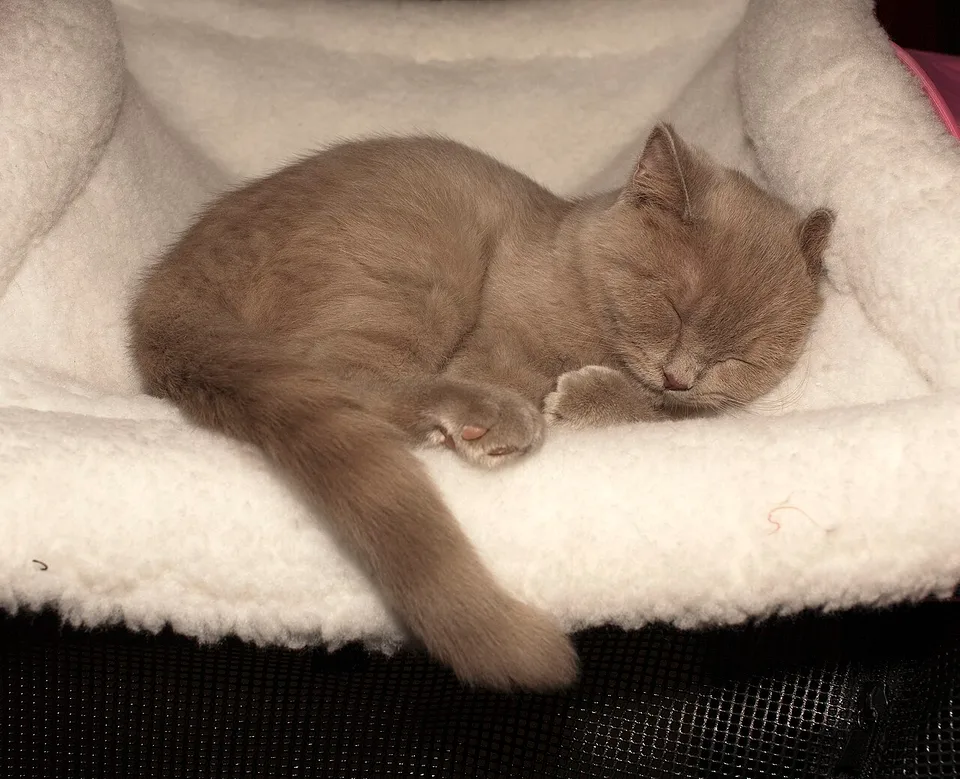
Round cheeks, a solid body, and a dense, plush coat give the British Shorthair its familiar teddy-bear outline. Blue-gray is the best-known color, but British Shorthairs also come in tabby, bicolor, shaded, and many other coats.
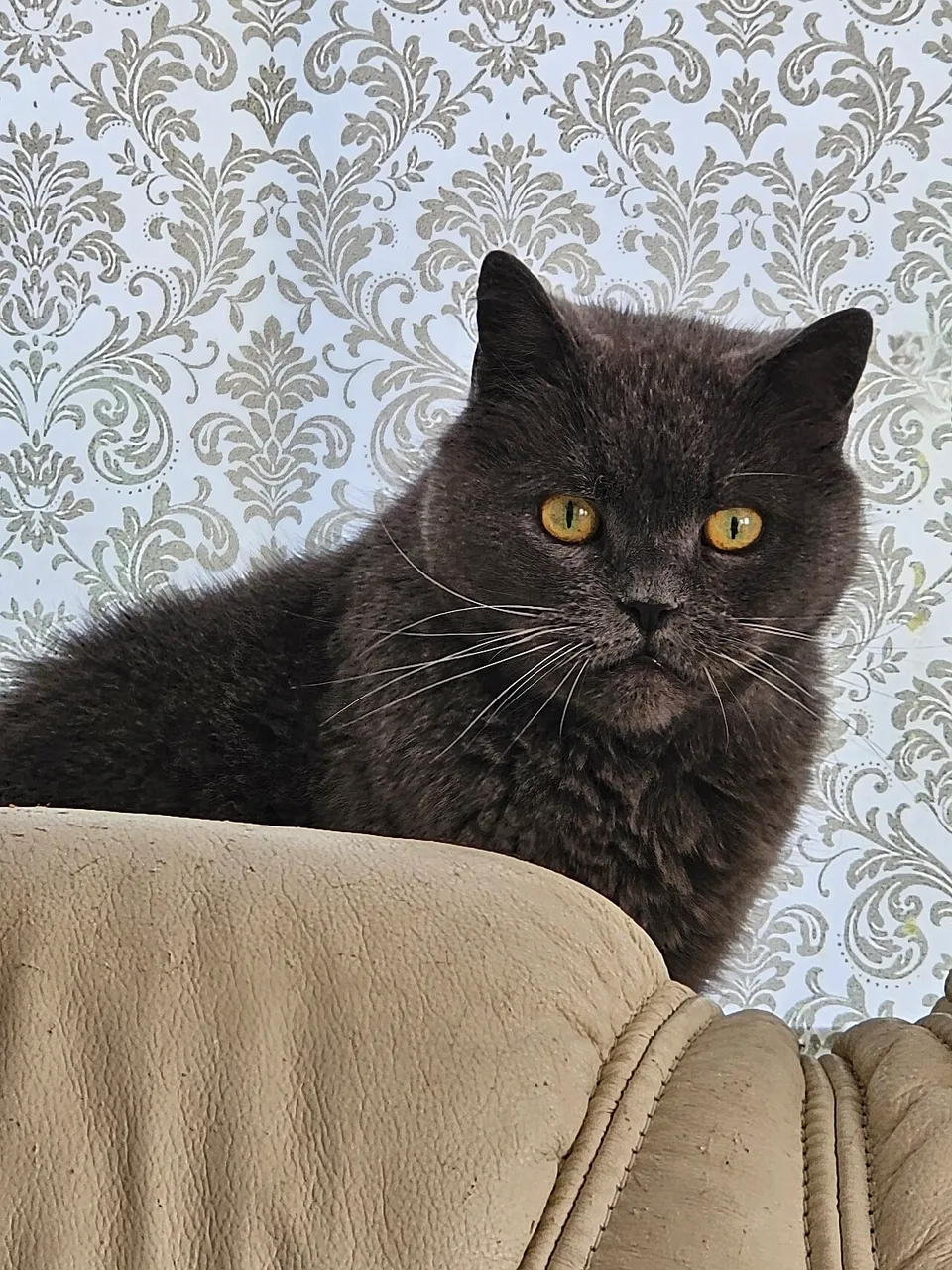
The breed has a reputation for being calm and companionable. Some enjoy sitting beside their people more than being carried around; a quiet manner does not necessarily mean a cat wants to be picked up.
02. American Shorthair
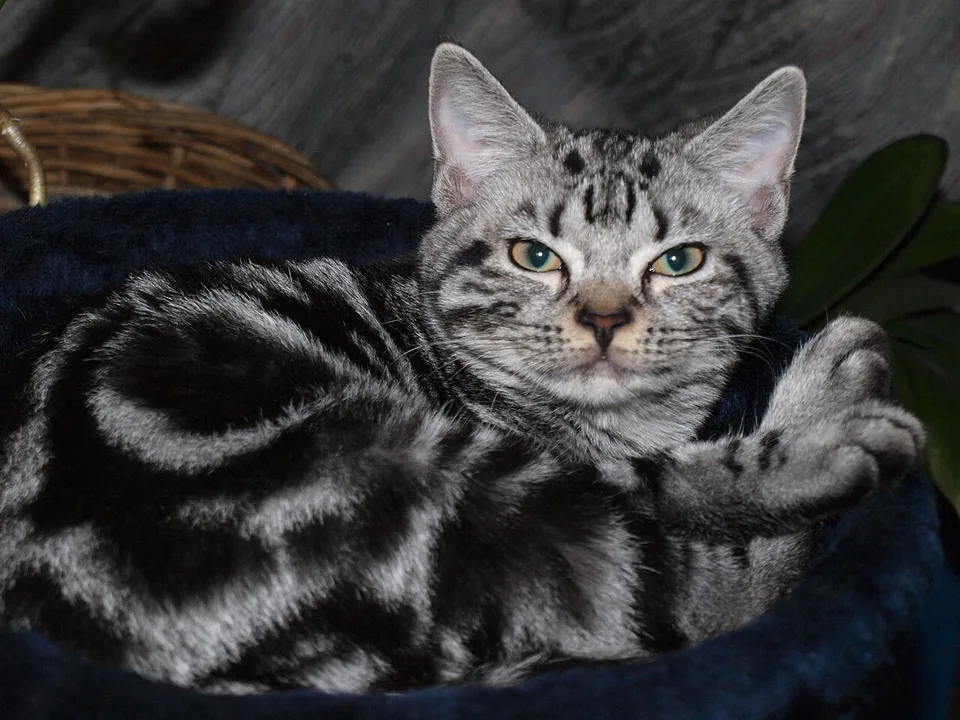
Silver tabby is a familiar American Shorthair look: dark markings stand out against a pale silver background, sometimes forming bold swirls along the sides. It is only one of the breed's many colors and patterns.
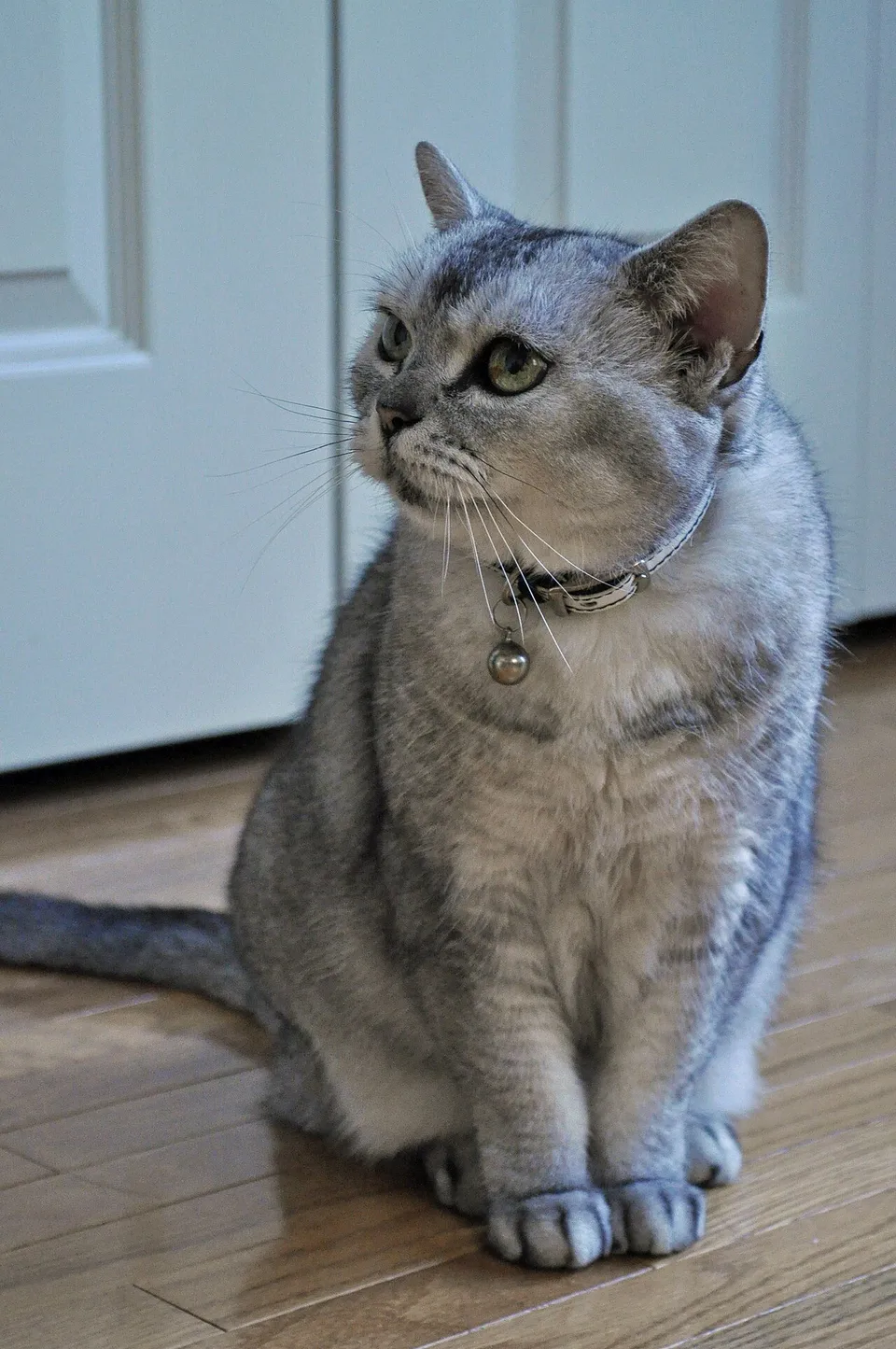
American Shorthairs have sturdy, muscular bodies and a history linked to working cats that caught rodents in early North America. An ordinary shorthaired cat living in the United States is not automatically an American Shorthair.
03. Persian
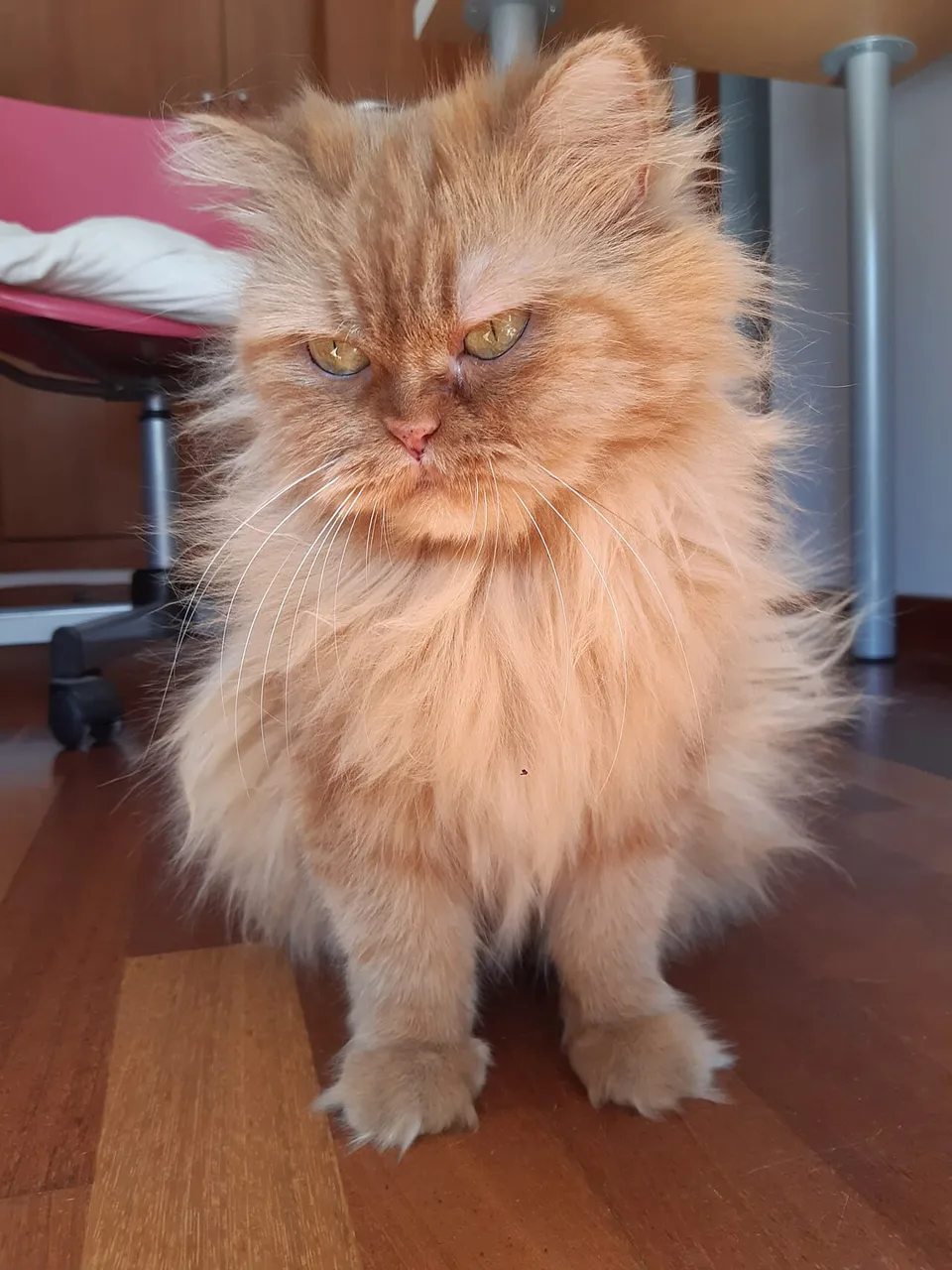
A Persian's long coat can hide much of its outline, but the rounded head, broad face, and short nose are also distinctive. White is a classic Persian color, though the breed comes in many other colors and patterns.
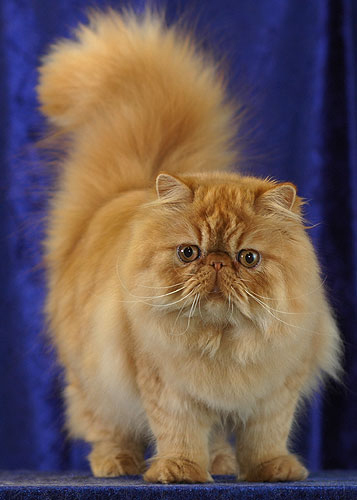
That coat needs regular grooming to prevent tangles. In flatter-faced cats, eye, dental, and breathing problems also deserve attention; a more exaggerated face is not a healthier one.
04. Exotic Shorthair
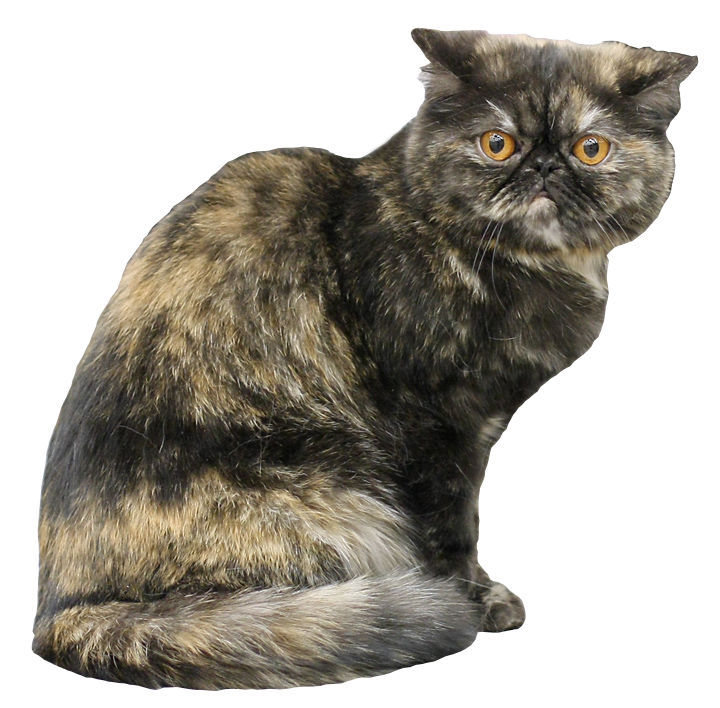
The Exotic Shorthair shares the Persian's round face, large eyes, and substantial body. Its much shorter, plush coat makes the family resemblance easier to see without all the flowing hair.
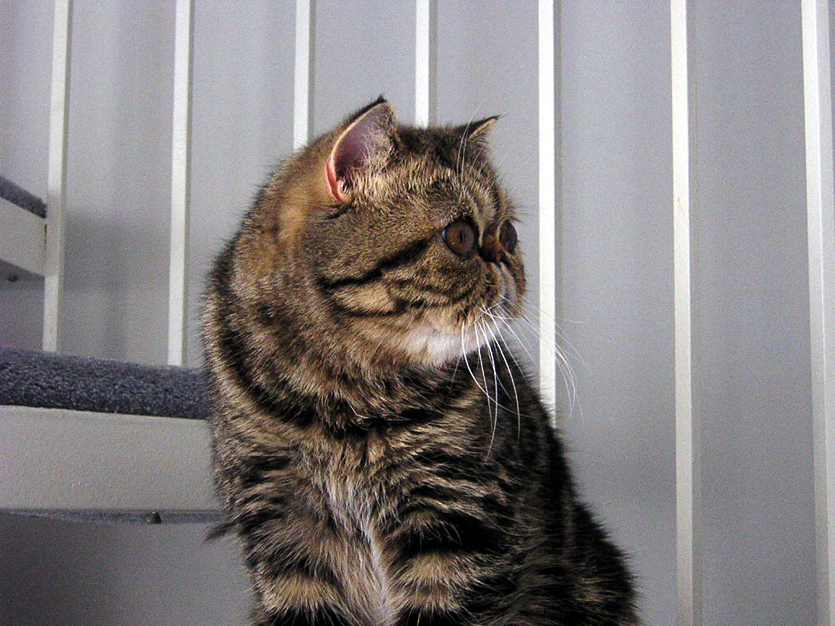
A shorter coat reduces some of the grooming work, but it does not remove the need for eye, skin, and dental care. The health concerns associated with a very flat face still matter.
Longhaired cats, from the Ragdoll to the Turkish Van
05. British Longhair
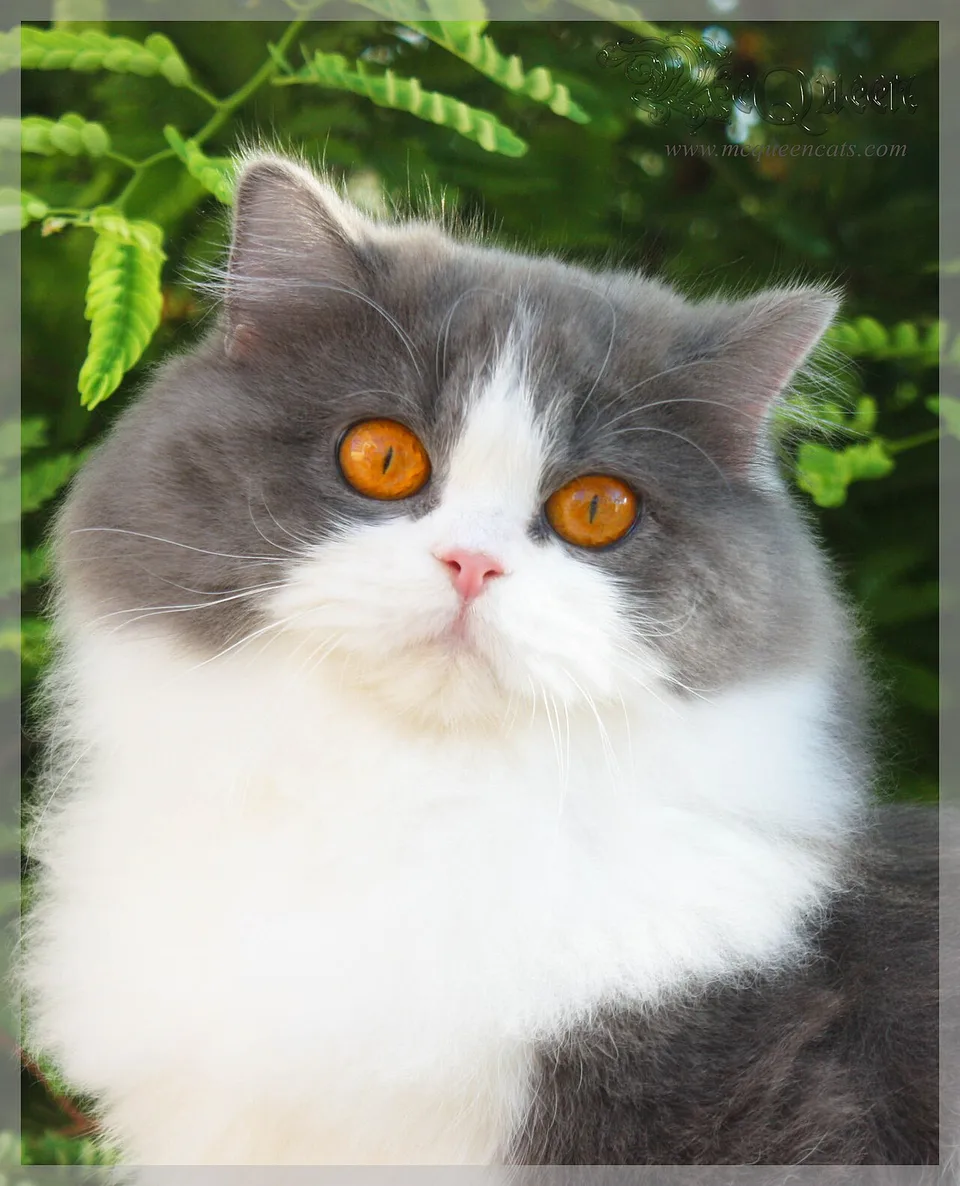
The British Longhair is closely related to the British Shorthair and shares its rounded face and solid build.
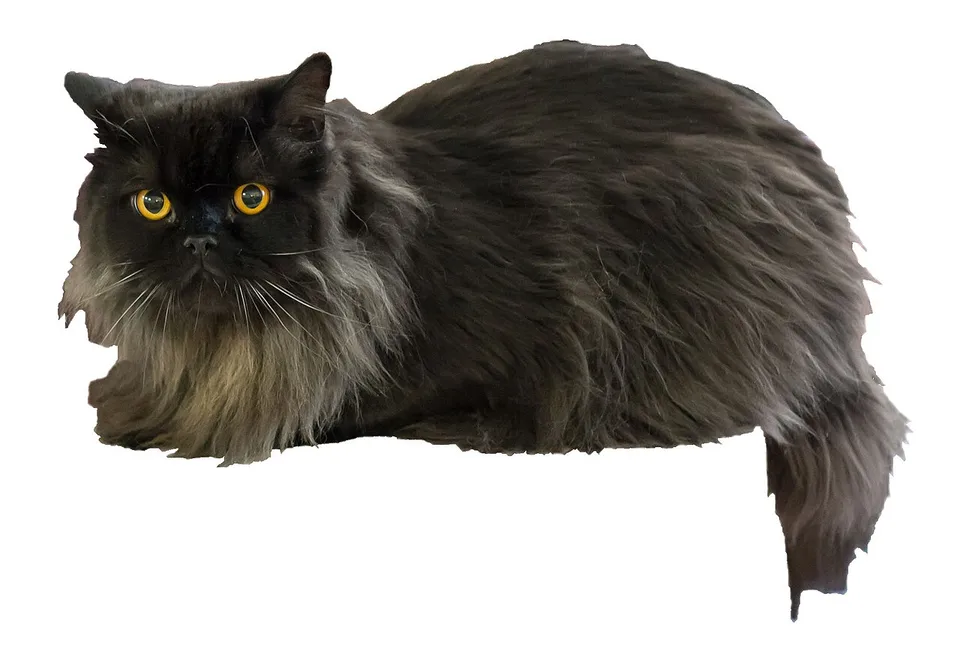
Longer hair gives the neck and tail a particularly full appearance. It also makes regular grooming a bigger part of everyday care.
06. Ragdoll
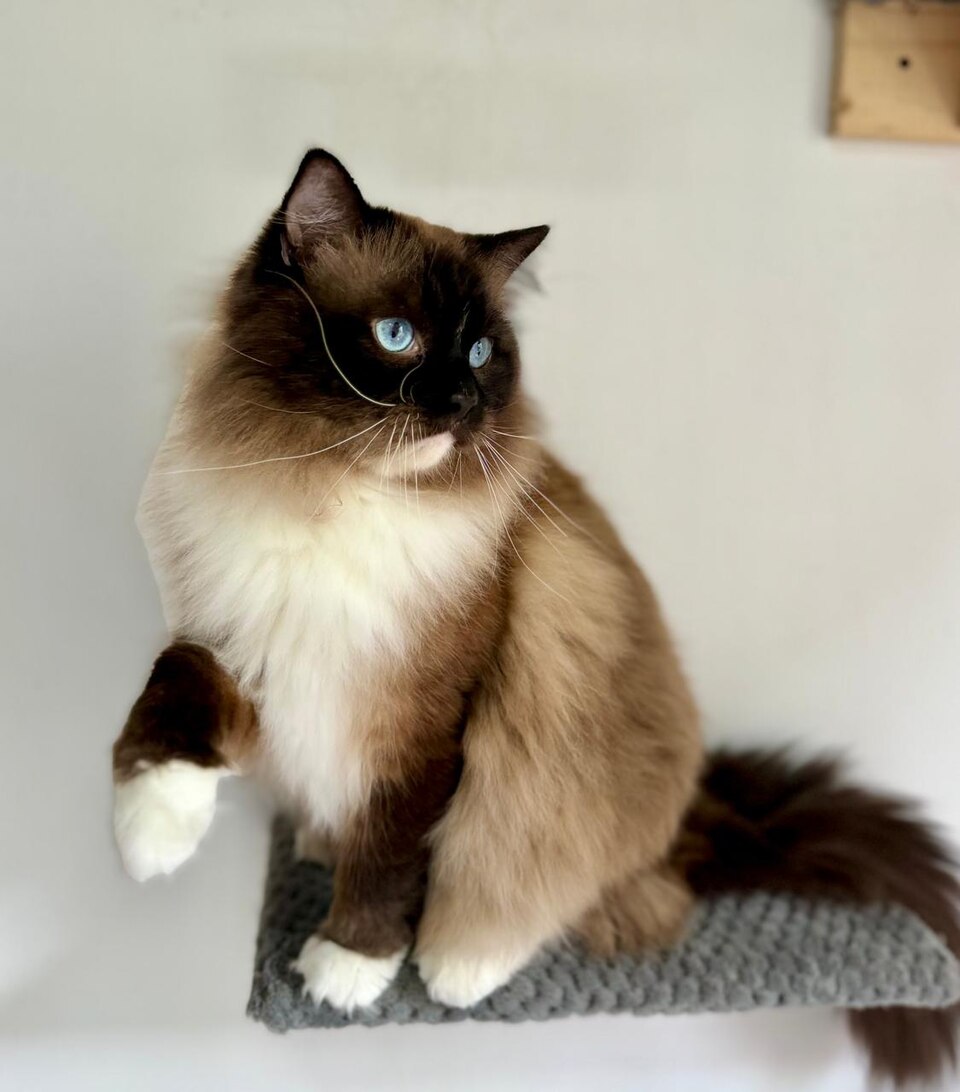
Blue eyes, a large frame, and a soft, semi-long coat are familiar Ragdoll features. The face, ears, and tail are usually darker than the body, a distribution called colorpoint. The popular bicolor look is one of several Ragdoll patterns.
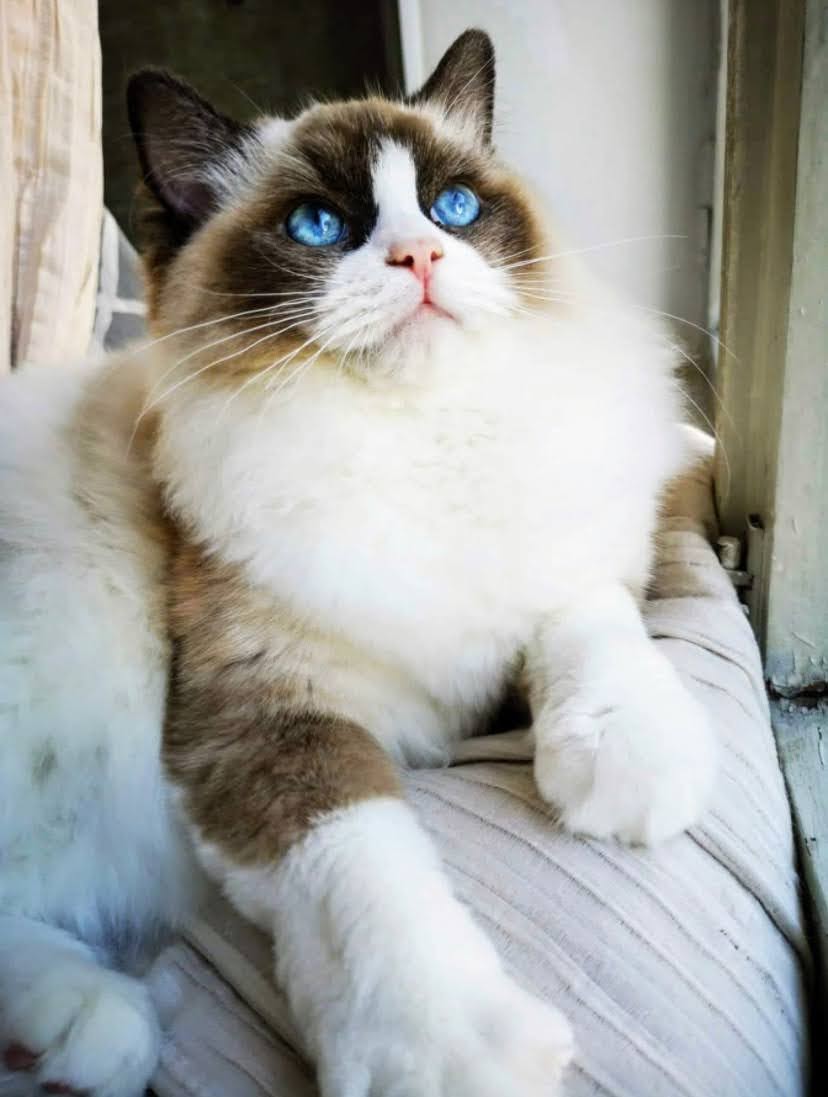
The breed was developed in California in the 1960s. Its name refers to the relaxed way some individuals settle into a person's arms, but it is no promise that every Ragdoll enjoys being held.
07. Birman
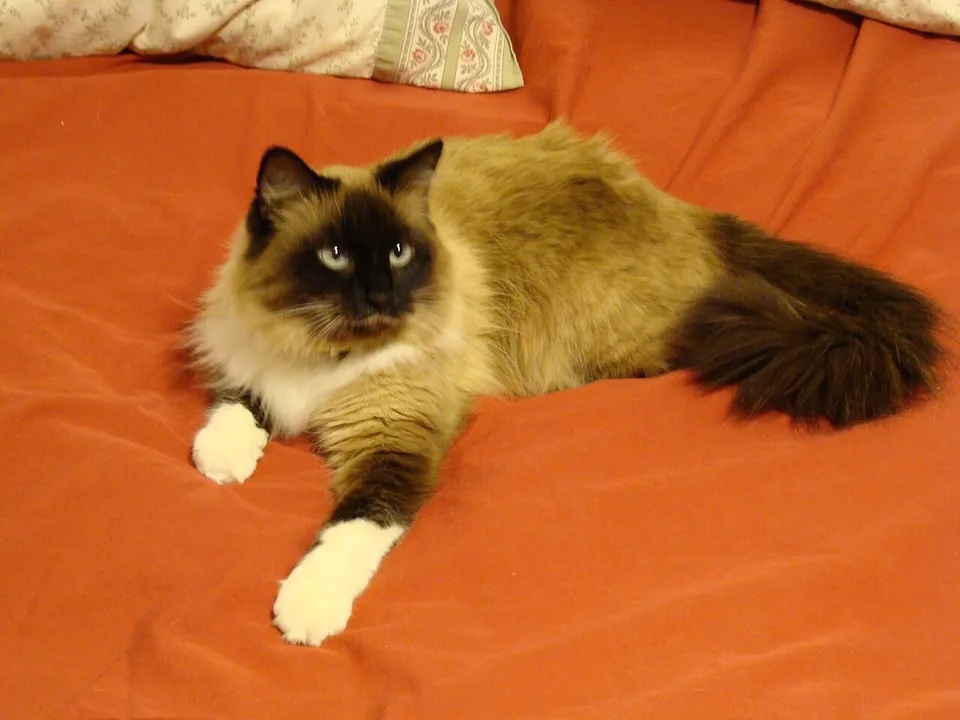
With blue eyes, a long coat, and darker points, the Birman can be confused with a Ragdoll. Its neat white paws are a distinctive feature, often described as gloves. The Birman is also known as the Sacred Cat of Burma; it is a different breed from the Burmese.
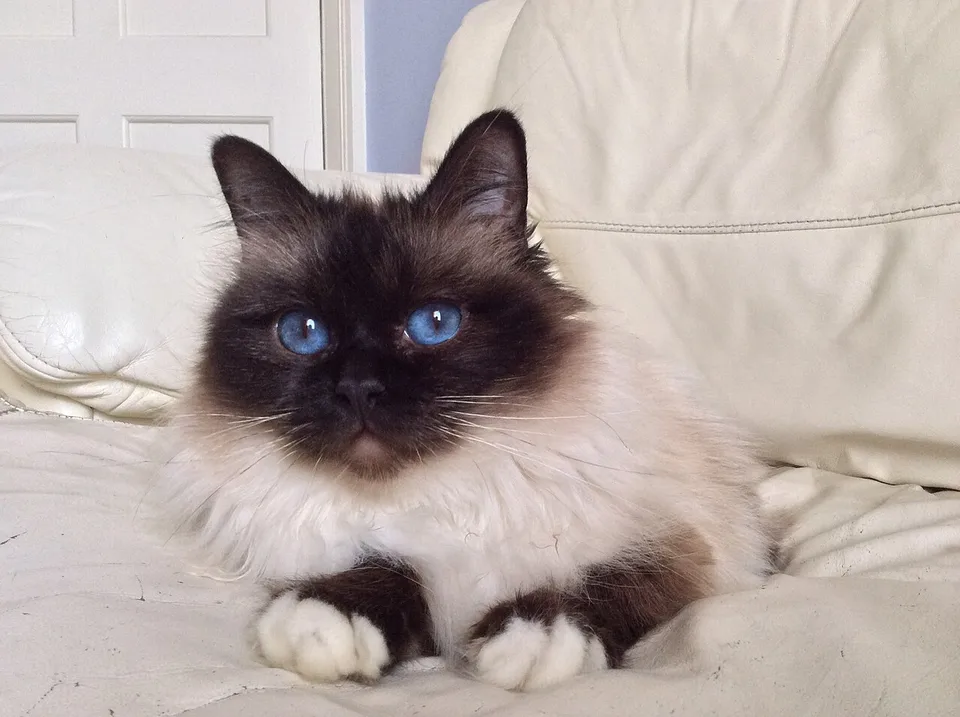
White paws alone cannot settle the identification. Ragdolls and other cats may have them too, so take in the face and overall build as well.
08. Maine Coon
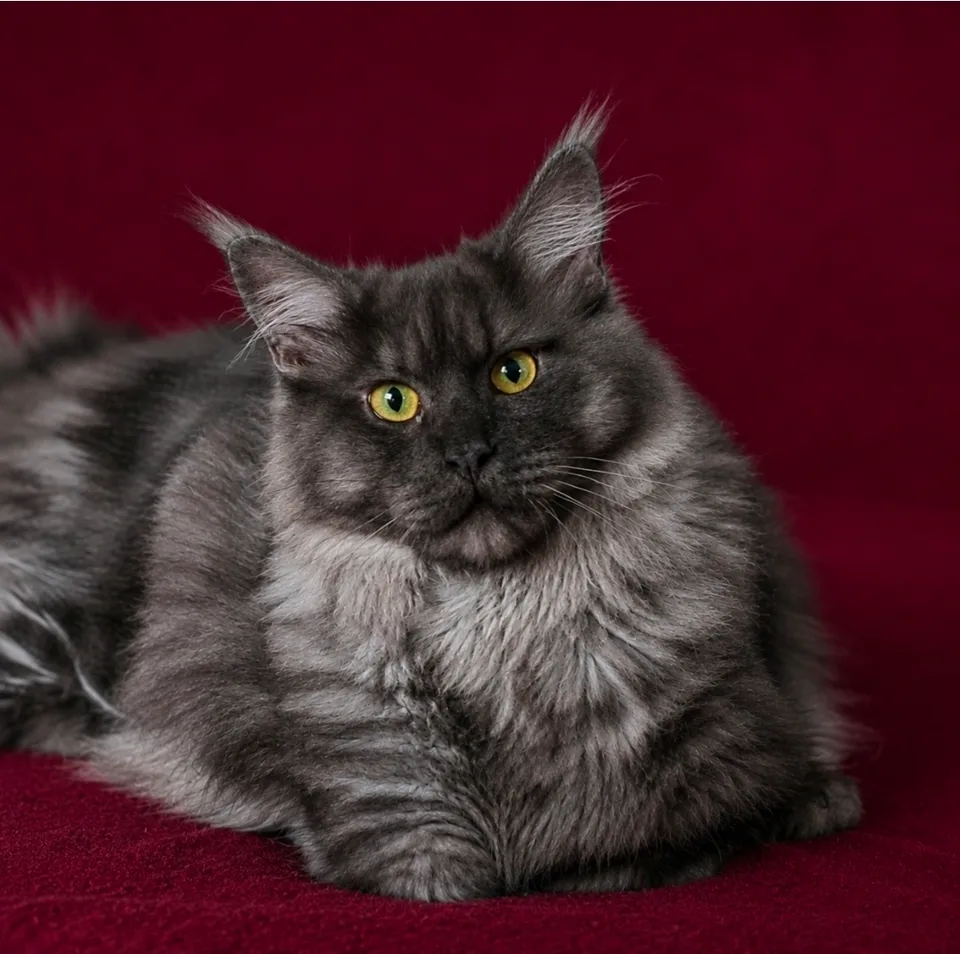
Maine Coons are large, sturdy cats with long, flowing tails and a noticeably square muzzle. Some also have prominent tufts at the tips of their ears.
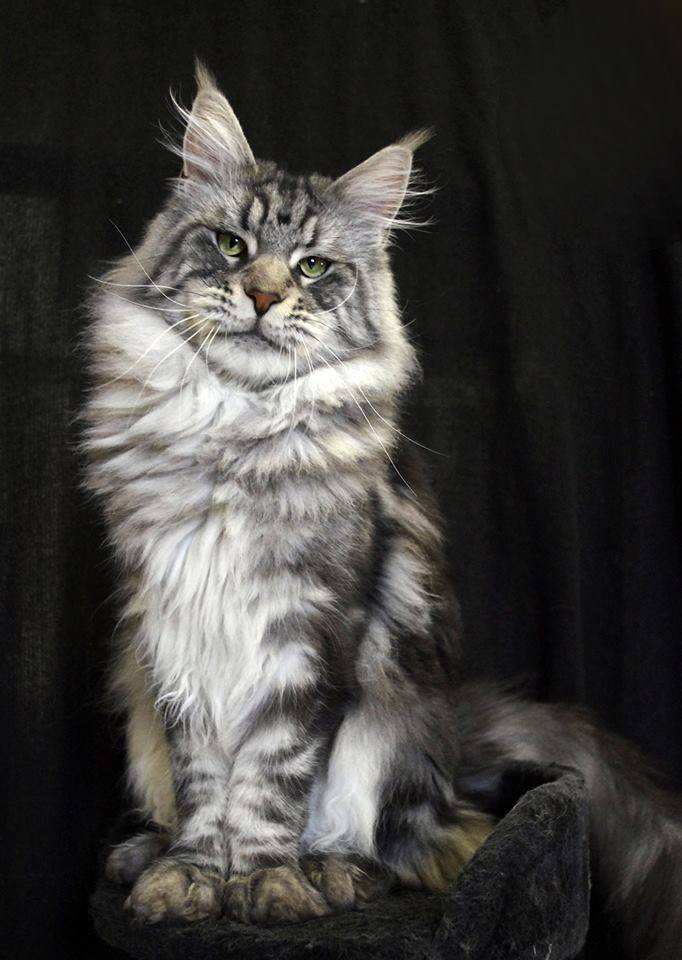
One old tale claims that they descend from cats crossed with raccoons. That is a story, not a possible breeding combination. The breed's name comes from the US state of Maine.
09. Norwegian Forest Cat
A heavy ruff and a long, bushy tail give the Norwegian Forest Cat a dramatic outline. Beside a Maine Coon, its face tends to look more triangular from the front, with a straighter nose in profile.
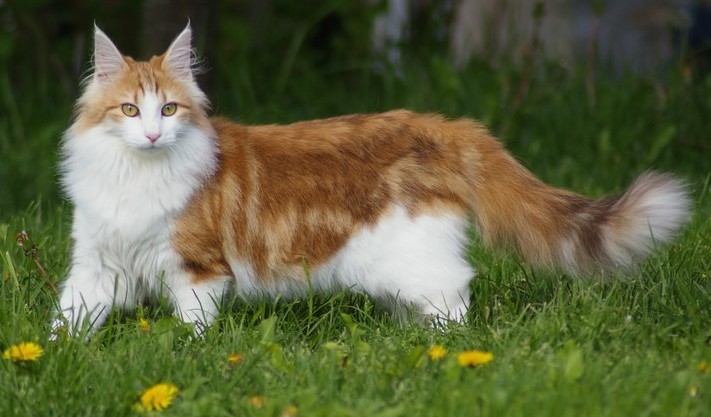
Many enjoy climbing. A stable climbing structure gives them somewhere to explore and a raised place to rest; its placement matters as much as its height.
10. Siberian
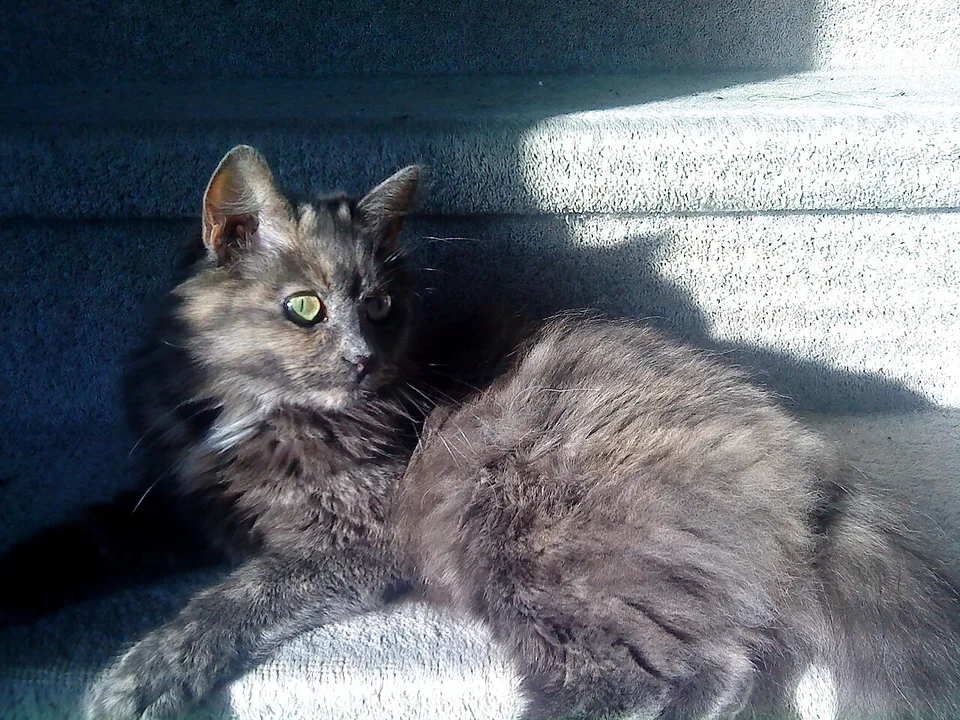
The Siberian, also called the Siberian Forest Cat, combines a substantial body with a thick coat. Its head and face usually look more rounded than a Norwegian Forest Cat's.
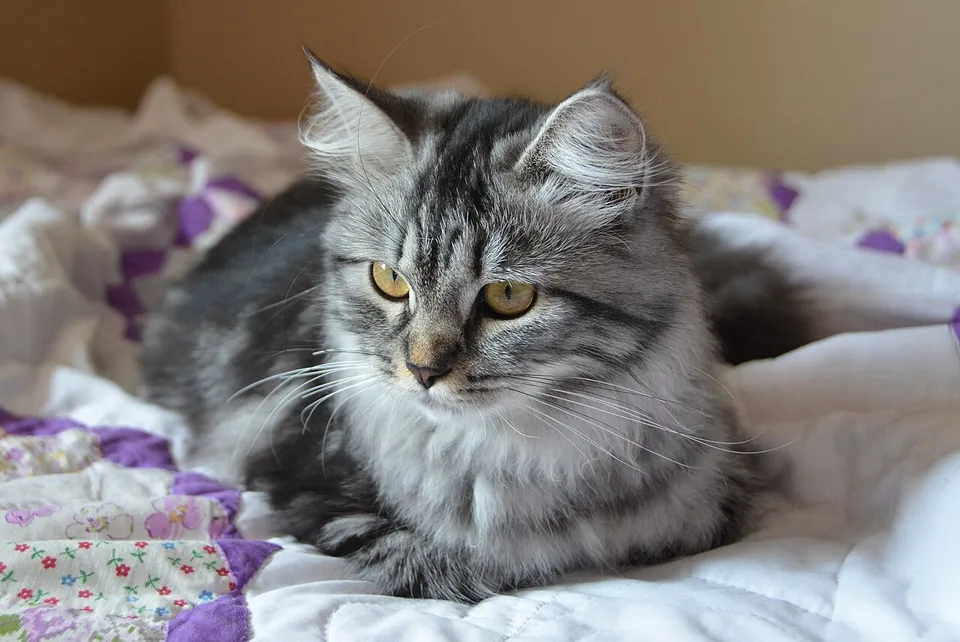
Siberians are sometimes promoted as hypoallergenic, but no cat breed can be guaranteed not to trigger allergies. Hair length and the amount of visible fur cannot tell you whether a particular cat will cause a reaction.
11. Turkish Angora
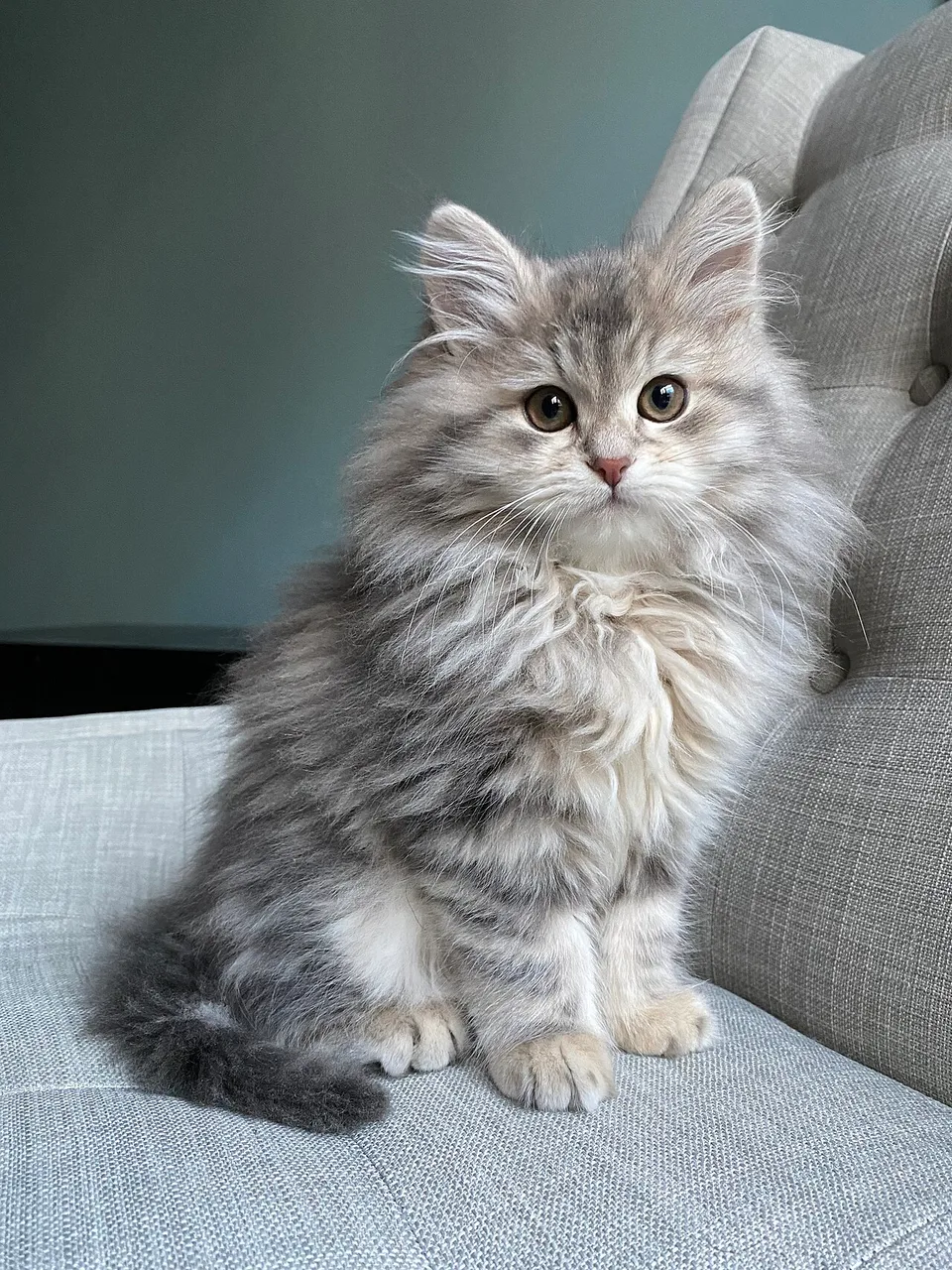
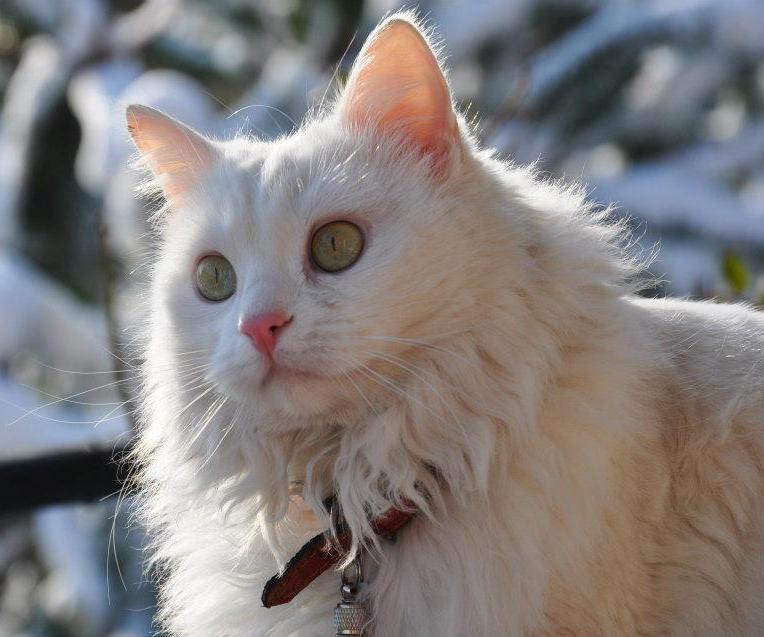
Compared with the heavier longhaired breeds, the Turkish Angora has a more slender frame and a lighter-looking coat. White Angoras are well known, but other colors occur, and mismatched eyes are not a requirement.
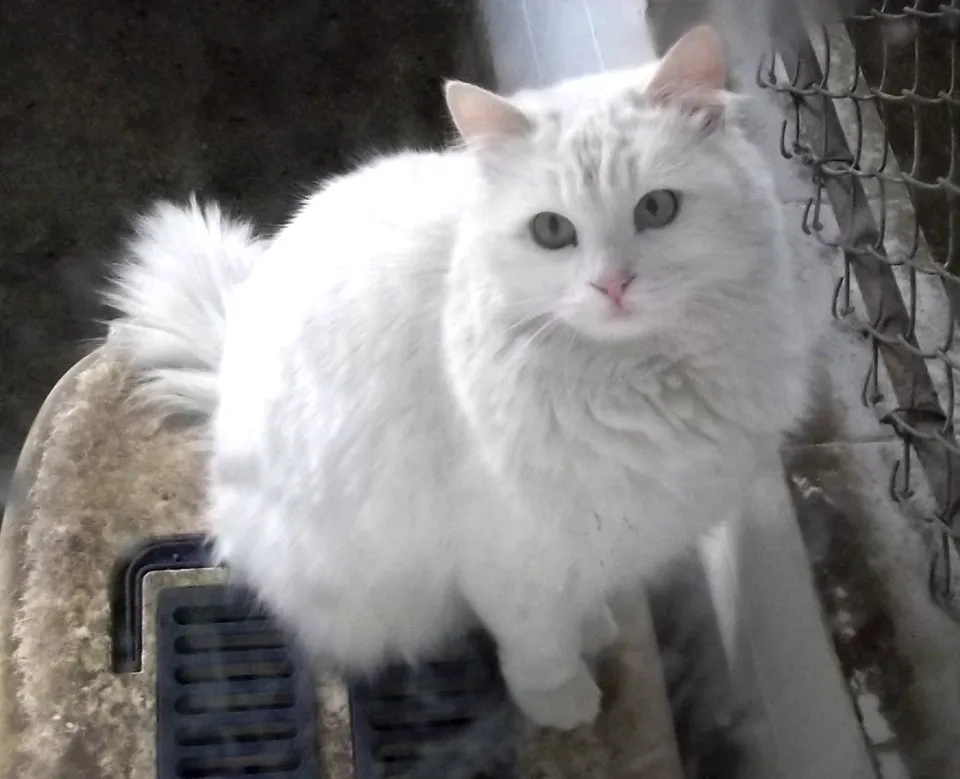
The breed is often described as curious. An Angora may be quick to investigate a new sound or join whatever its people are doing.
12. Turkish Van
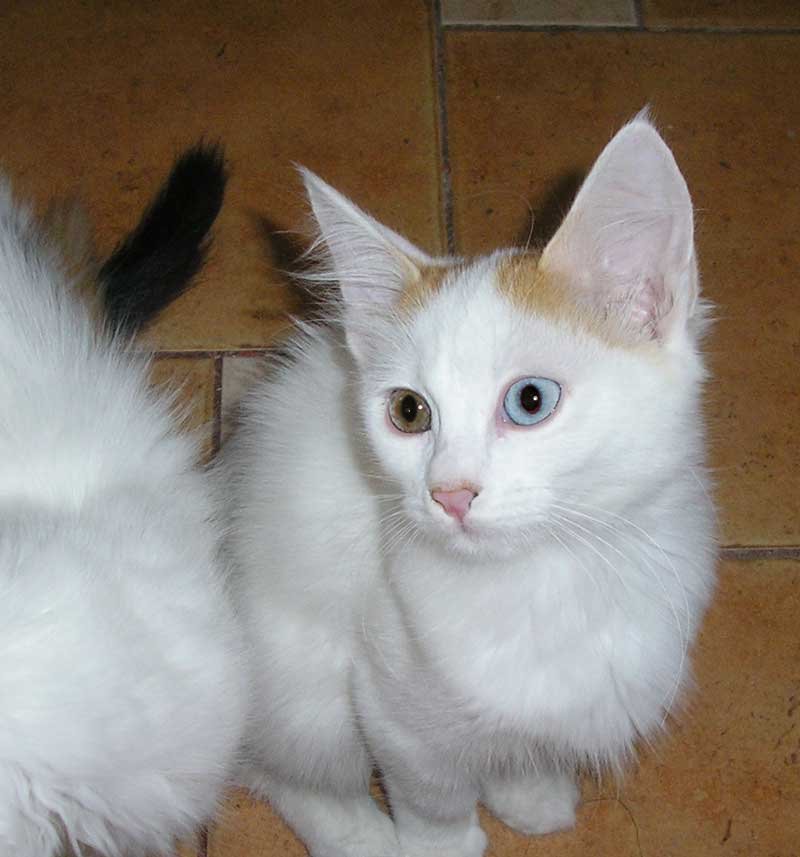
The classic Turkish Van pattern is easy to remember: a mostly white body, with color concentrated on the head and tail. The build is generally more substantial than a Turkish Angora's.
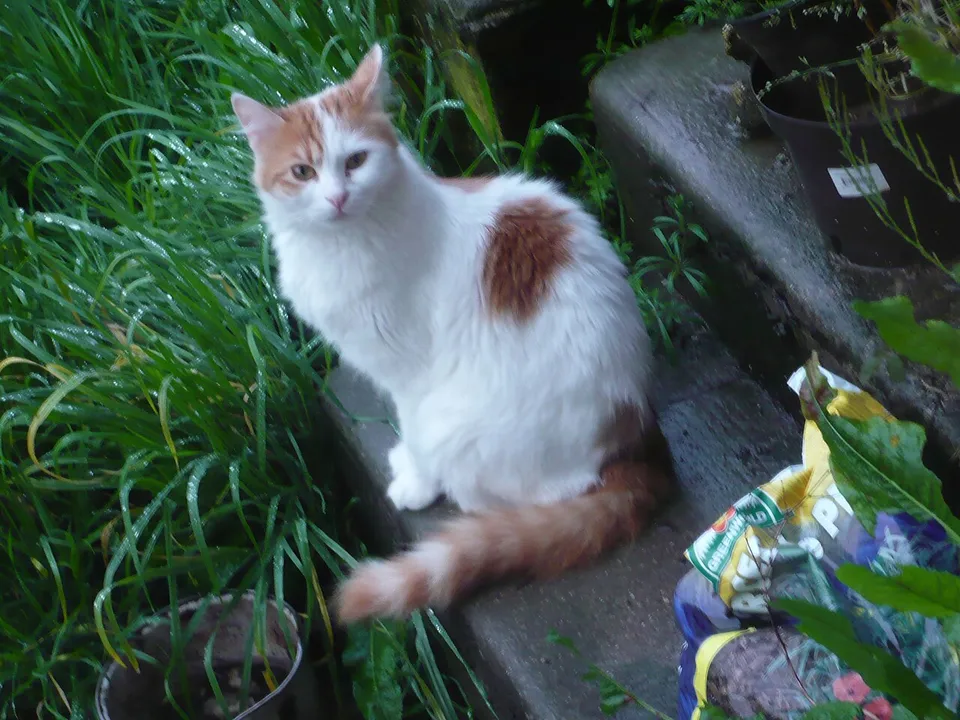
The nickname 'swimming cat' does not mean every Turkish Van likes water. Never force a cat into water to find out whether the nickname fits.
Want to compare a few of these cats side by side? Try the cat breed comparison tool.
Siamese relatives and lookalikes
13. Siamese
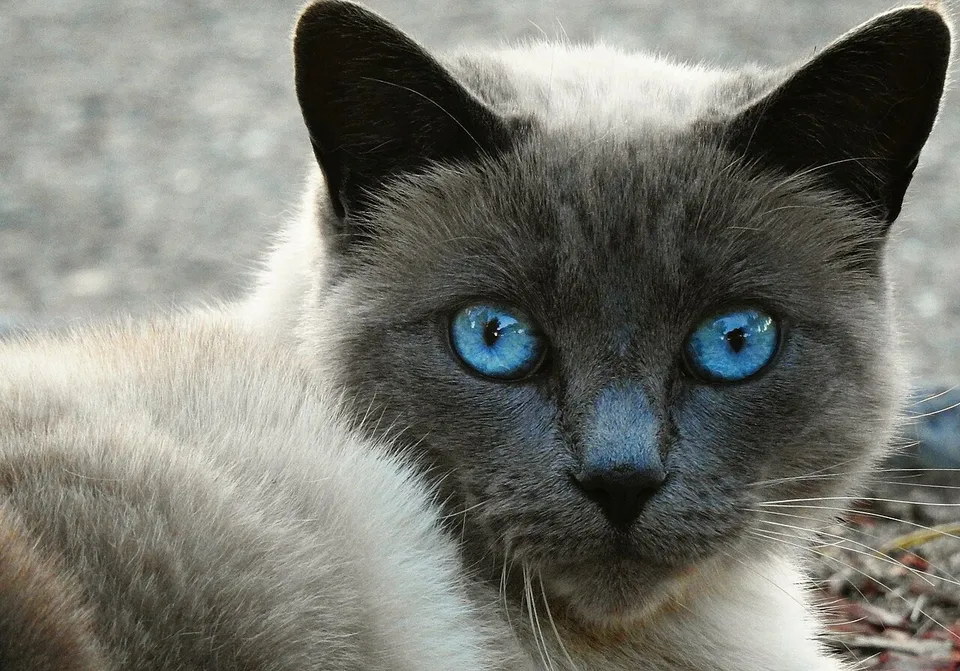
Blue eyes and a darker face, ears, paws, and tail make the Siamese's colorpoint coat immediately recognizable. Modern Siamese often have long, slender bodies, large ears, and a wedge-shaped head. The breed comes from Thailand, formerly called Siam.
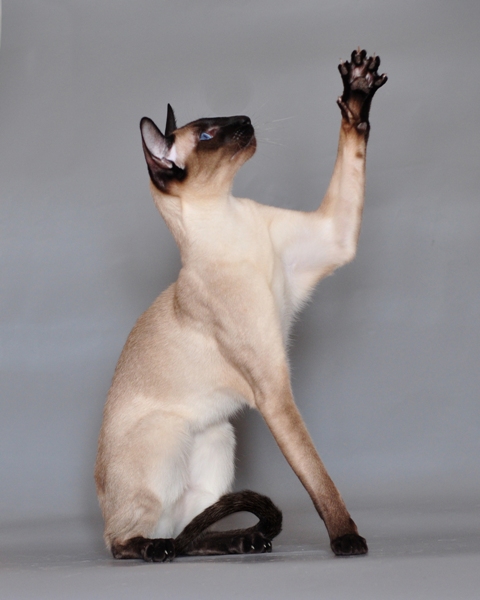
Siamese cats have a talkative reputation, and some readily answer their people with a meow. There are quieter individuals too; a breed description is not a script for every cat's behavior.
14. Thai
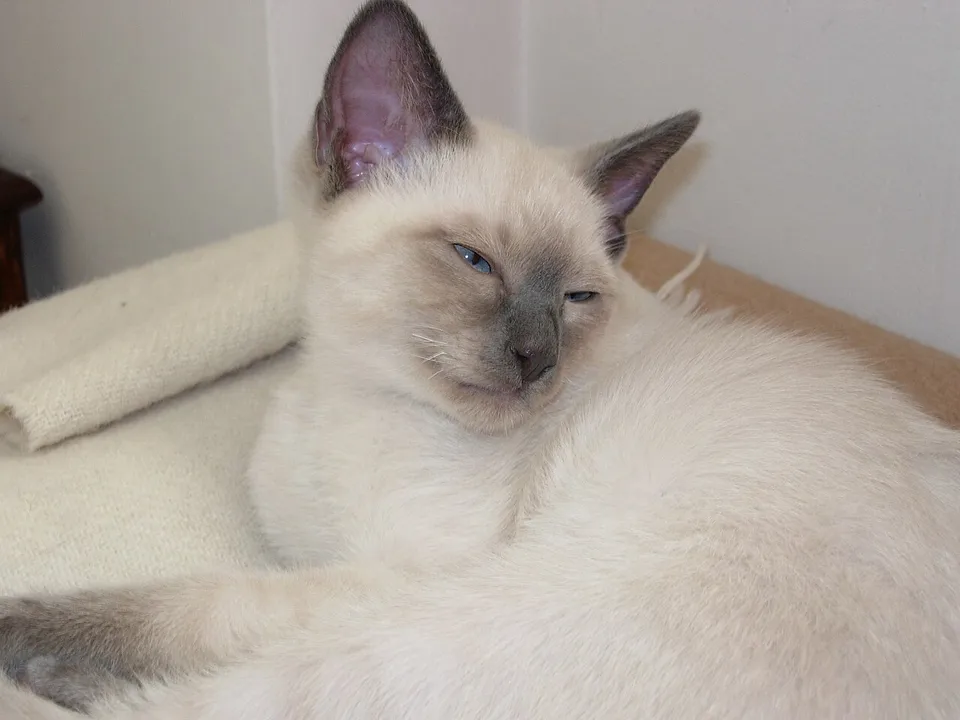
The Thai is closely related to the Siamese and also has blue eyes and a colorpoint coat.
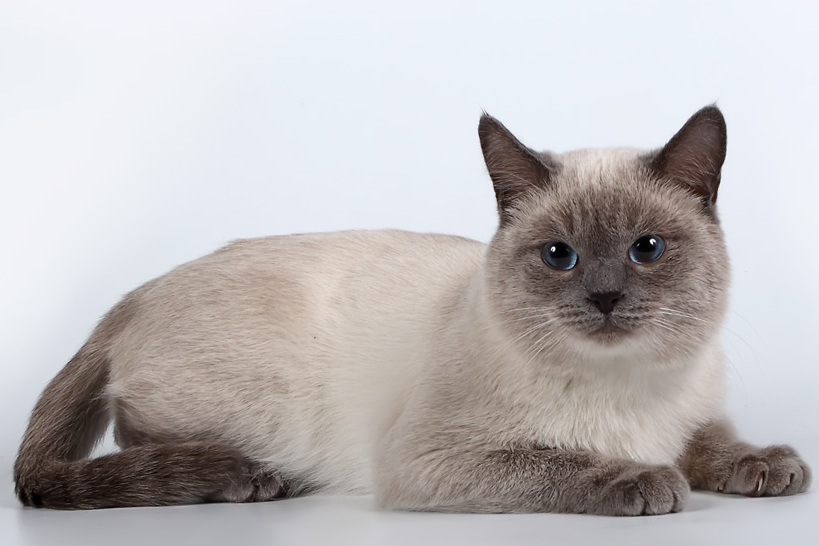
Its head and body are more rounded than those of the modern Siamese, giving it a look closer to the traditional Siamese type.
15. Balinese
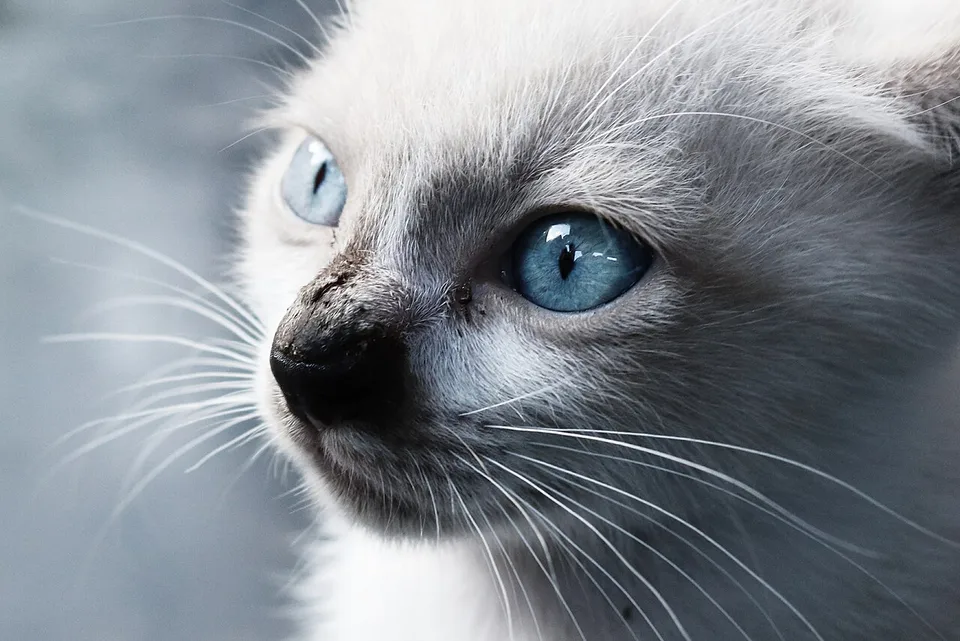
The Balinese shares the Siamese's slender shape, blue eyes, and darker points, with a longer coat and a fuller tail.
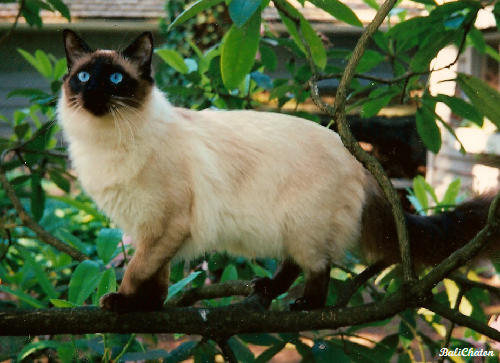
Despite the name, the breed did not originate on Bali. The name evokes Balinese dancers; the cats were developed from longhaired descendants of Siamese cats.
16. Oriental Shorthair
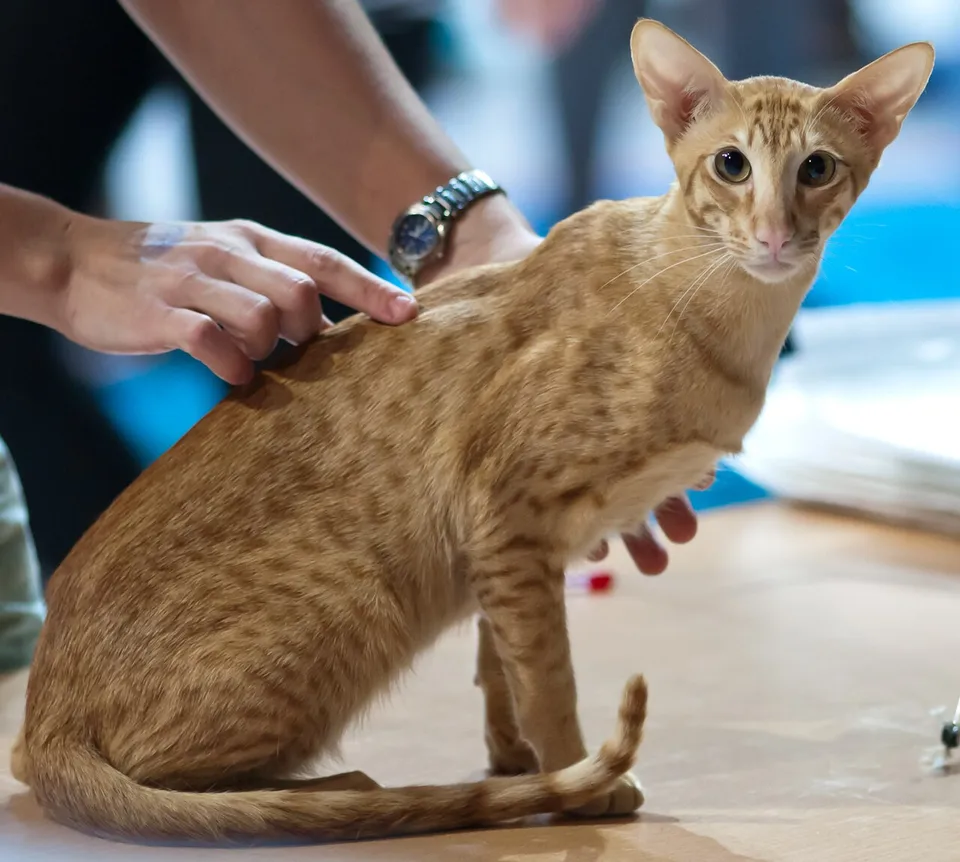
Large ears, a wedge-shaped face, and a long, slim body make the Oriental Shorthair resemble the Siamese. Its coat comes in a far wider range of colors and patterns, including solid, tabby, and bicolor.
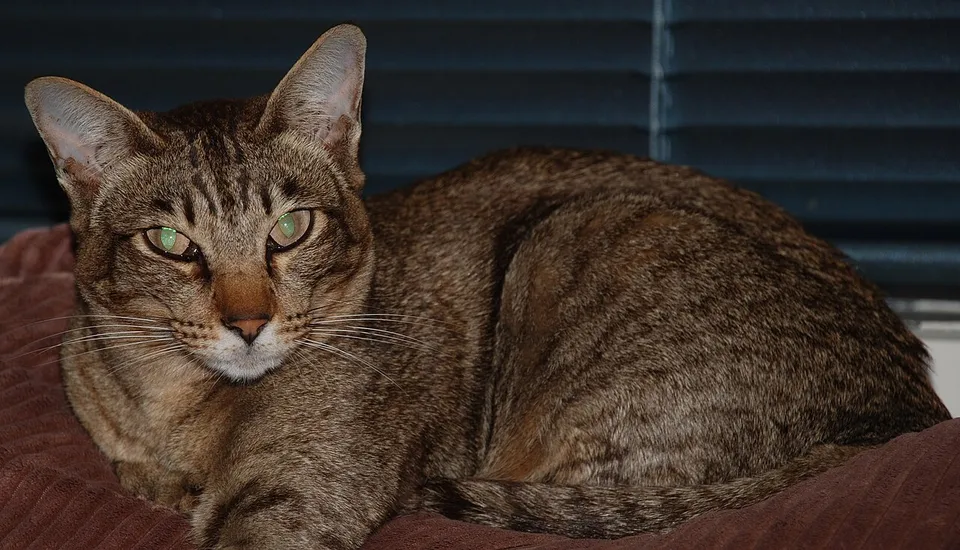
There is also an Oriental Longhair, with the same slender outline and a more generously feathered tail.
17. Burmese
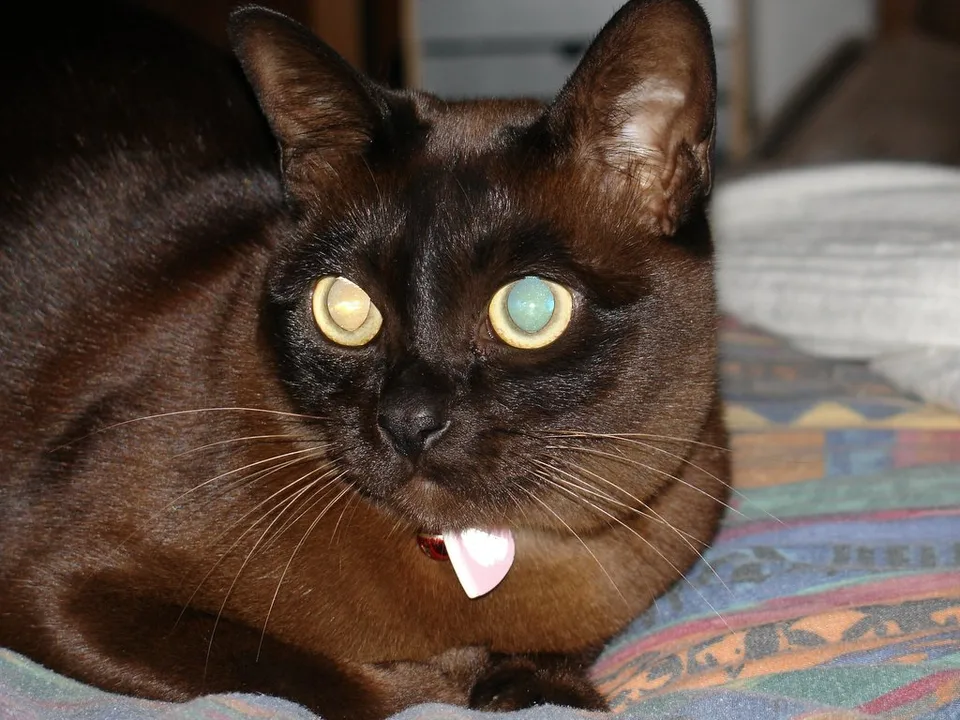
A Burmese cat's short coat lies close to a body that is more compact and rounded than a Siamese's. Deep brown is a classic color; blue and other colors also occur, with names and accepted varieties differing between registries.
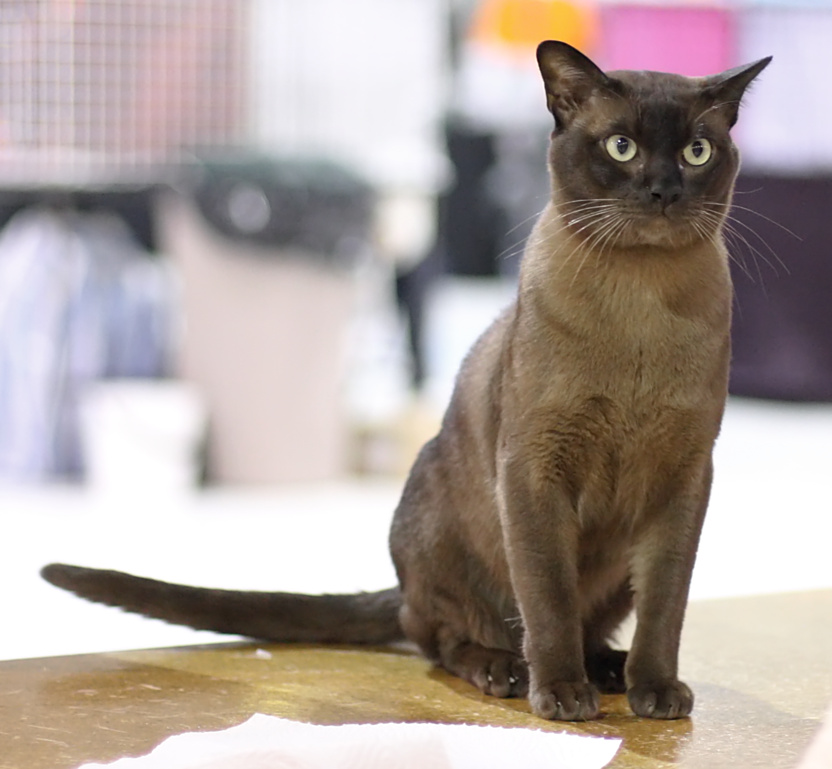
Burmese and Birman sound similar but name different breeds. The longhaired Birman has blue eyes and white gloves; the Burmese has a short, close coat.
18. Tonkinese
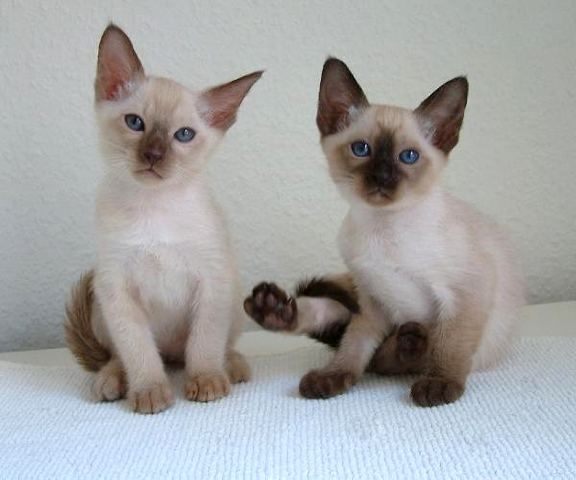
Developed from Siamese and Burmese lines, the Tonkinese shows something of both. Its balanced build is less elongated than that of the modern Siamese.
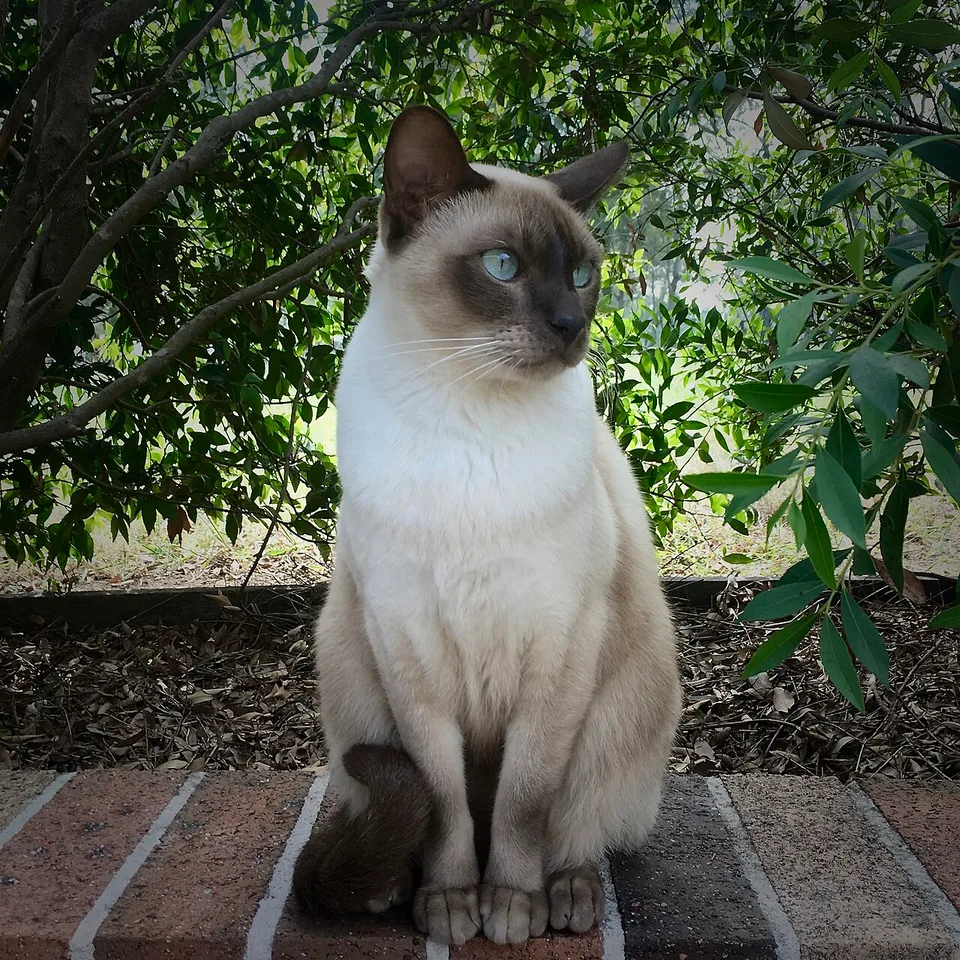
One characteristic coat pattern is called mink. The face, ears, legs, and tail are darker than the body, but the contrast is softer than in a typical pointed coat.
Blue-gray coats and one glossy black cat
19. Russian Blue
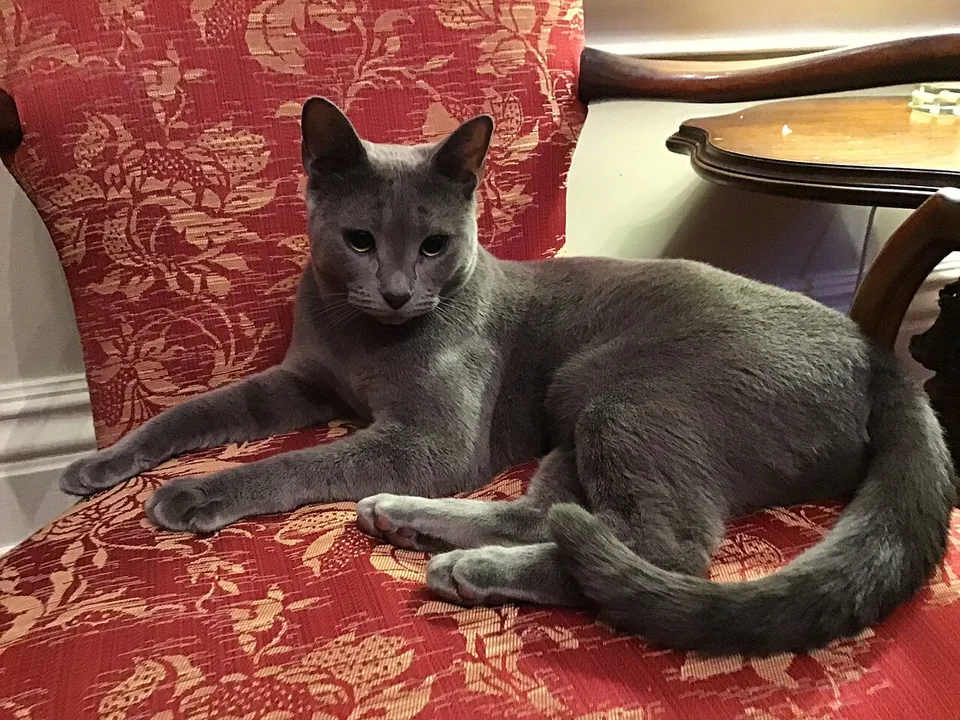
The Russian Blue has a short blue-gray coat with a silvery sheen. Mature cats typically have green eyes.
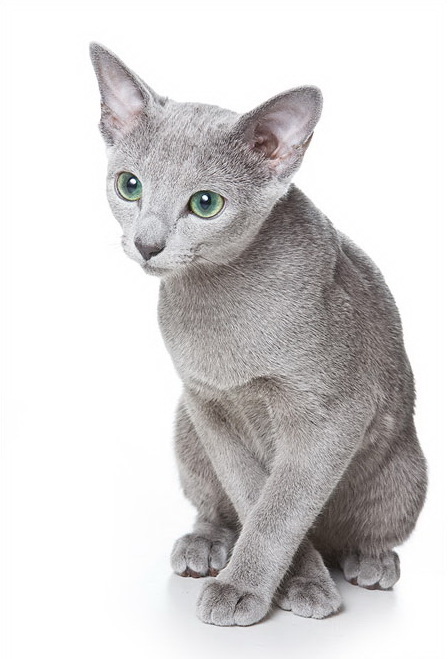
Compared with a British Shorthair's rounded face and stocky body, the Russian Blue has a more slender frame and a finer, wedge-shaped face.
20. Chartreux
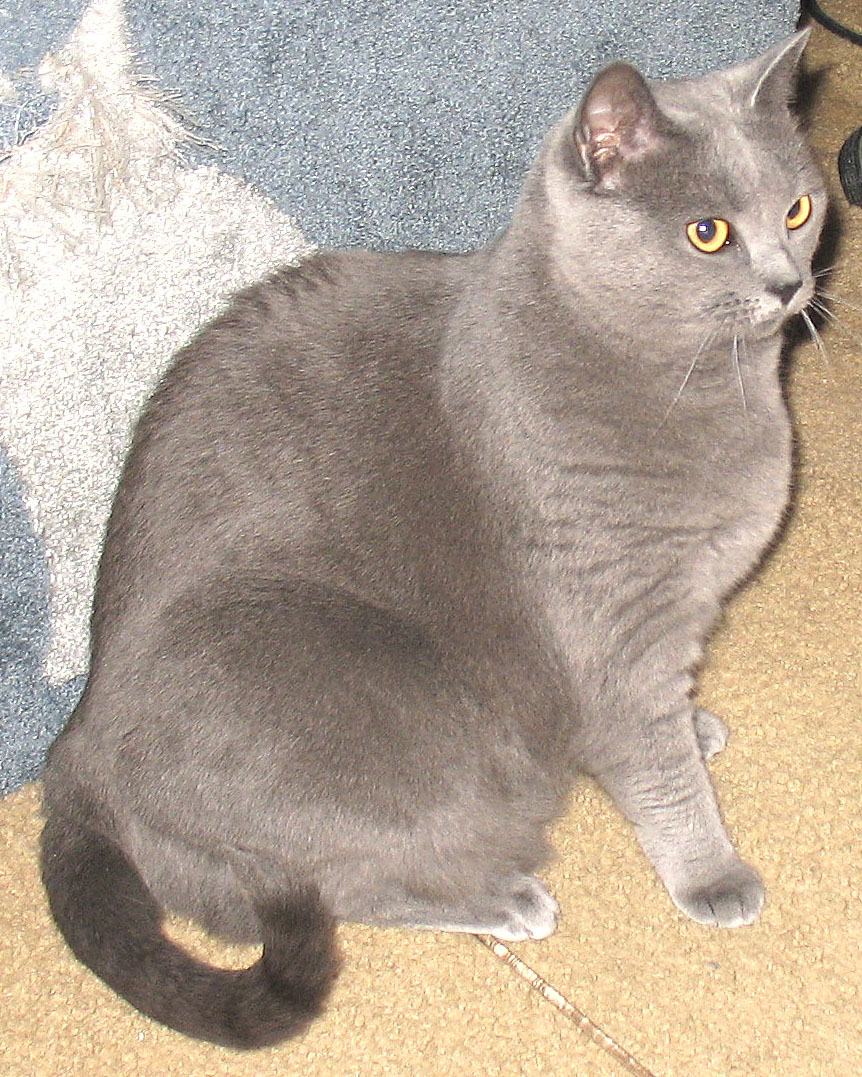
The Chartreux is a blue-coated breed associated with France, with a solid, muscular build.
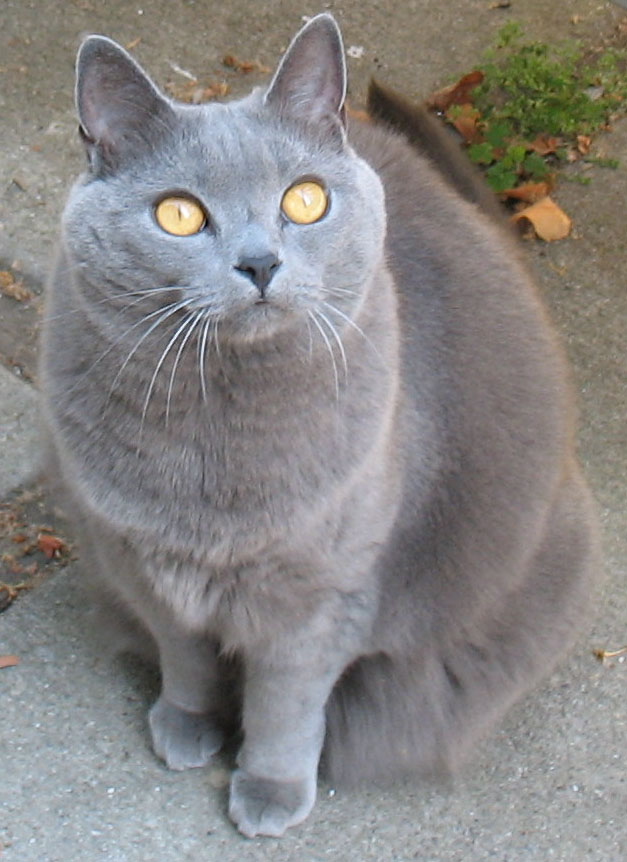
Its dense blue-gray coat has a woolly texture. Eyes ranging from gold to copper help distinguish its overall look from the green-eyed Russian Blue and Korat.
21. Korat
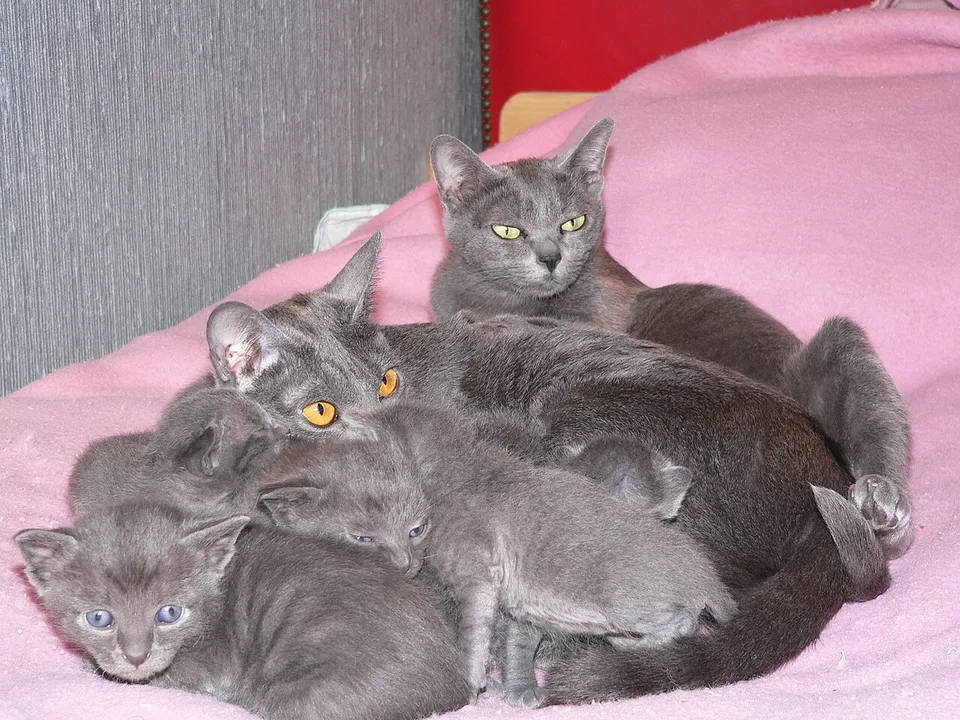
The Korat comes from Thailand and has a silver-blue coat, with striking green eyes in mature cats. Seen from the front, the face has a distinctive heart-shaped outline.
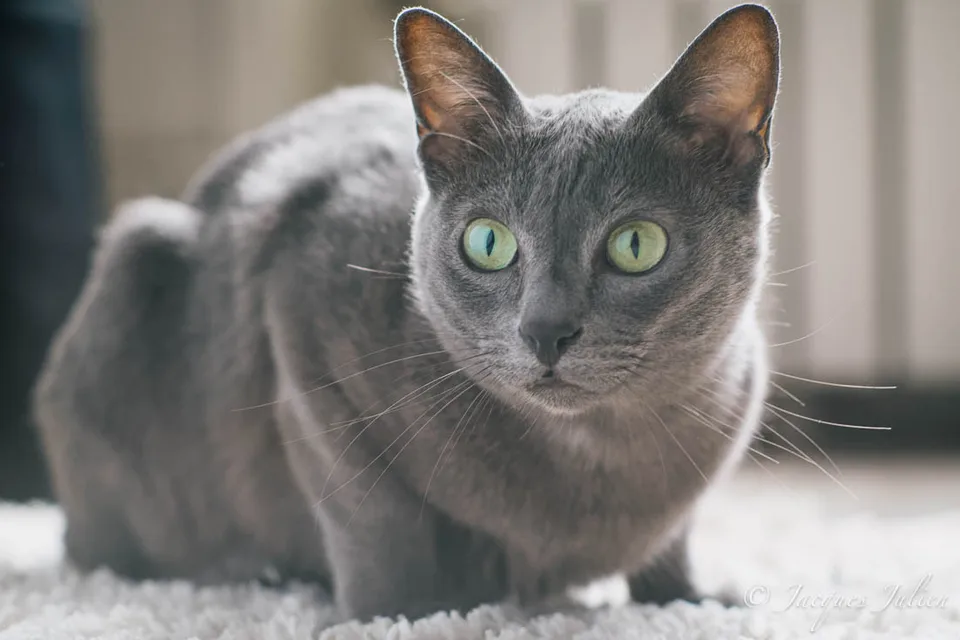
Korats have long been associated with good fortune in Thailand, including a tradition of giving them to newly married couples.
22. Bombay
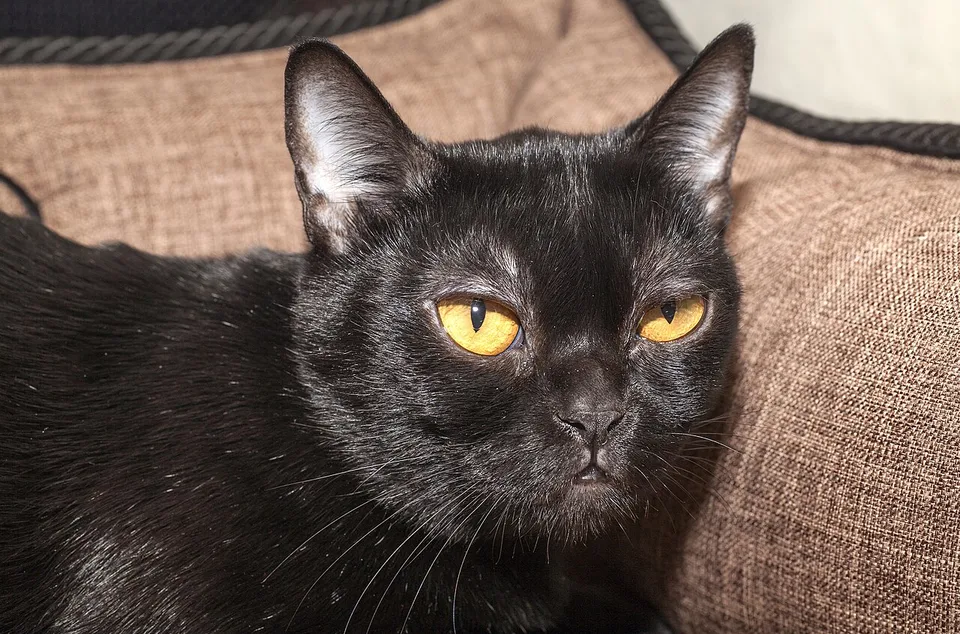
A glossy black coat and gold-to-copper eyes give the Bombay its miniature-panther appearance.
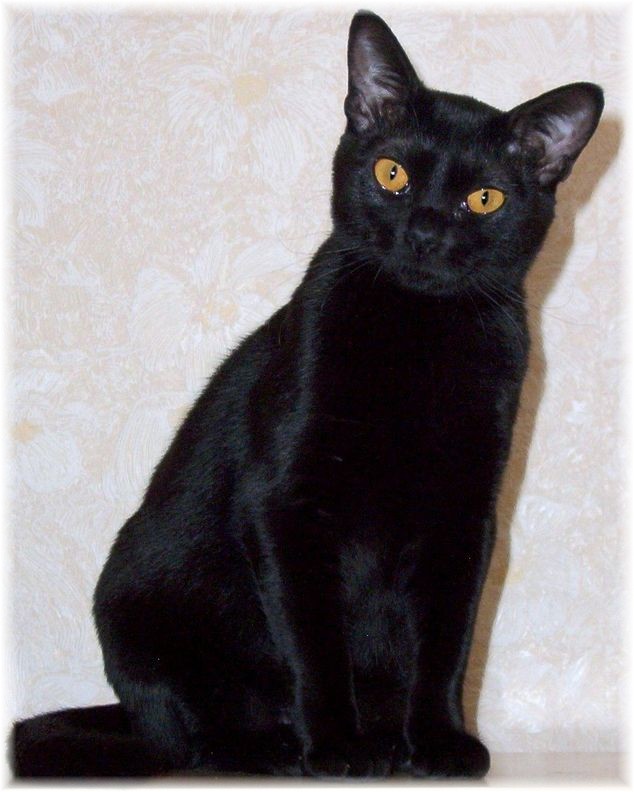
Despite its name, the breed was developed in the United States. Its early ancestry includes black American Shorthairs and Burmese cats.
Spots, rosettes, and ticked coats
23. Bengal
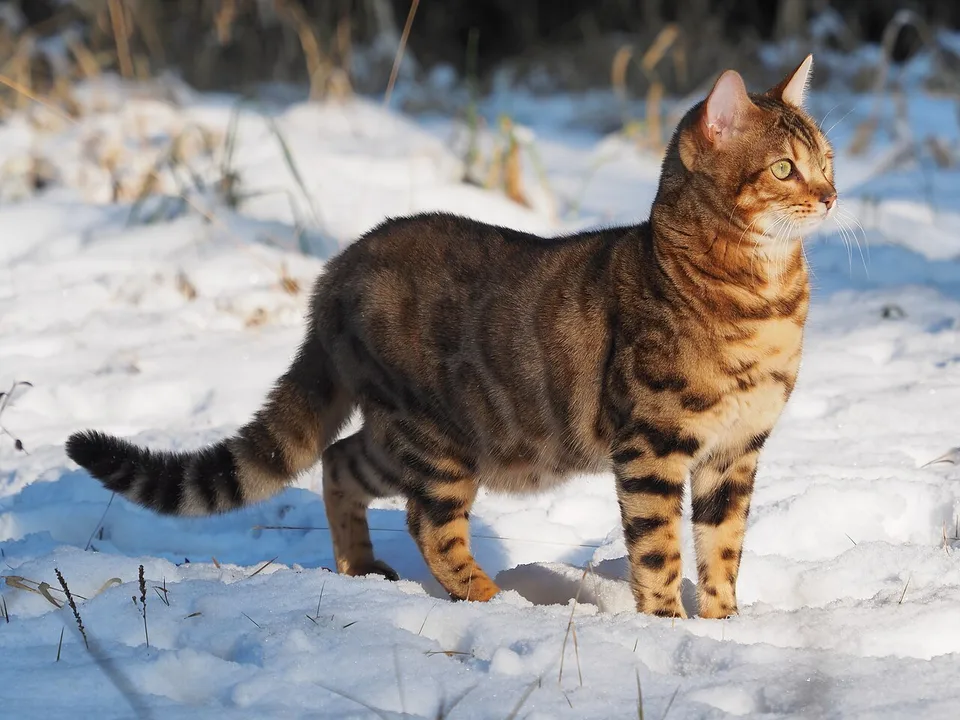
A Bengal's coat often catches the eye first. Rosettes have darker outlines and lighter centers, giving them a leopard-like appearance. Some Bengals have marbled coats instead.
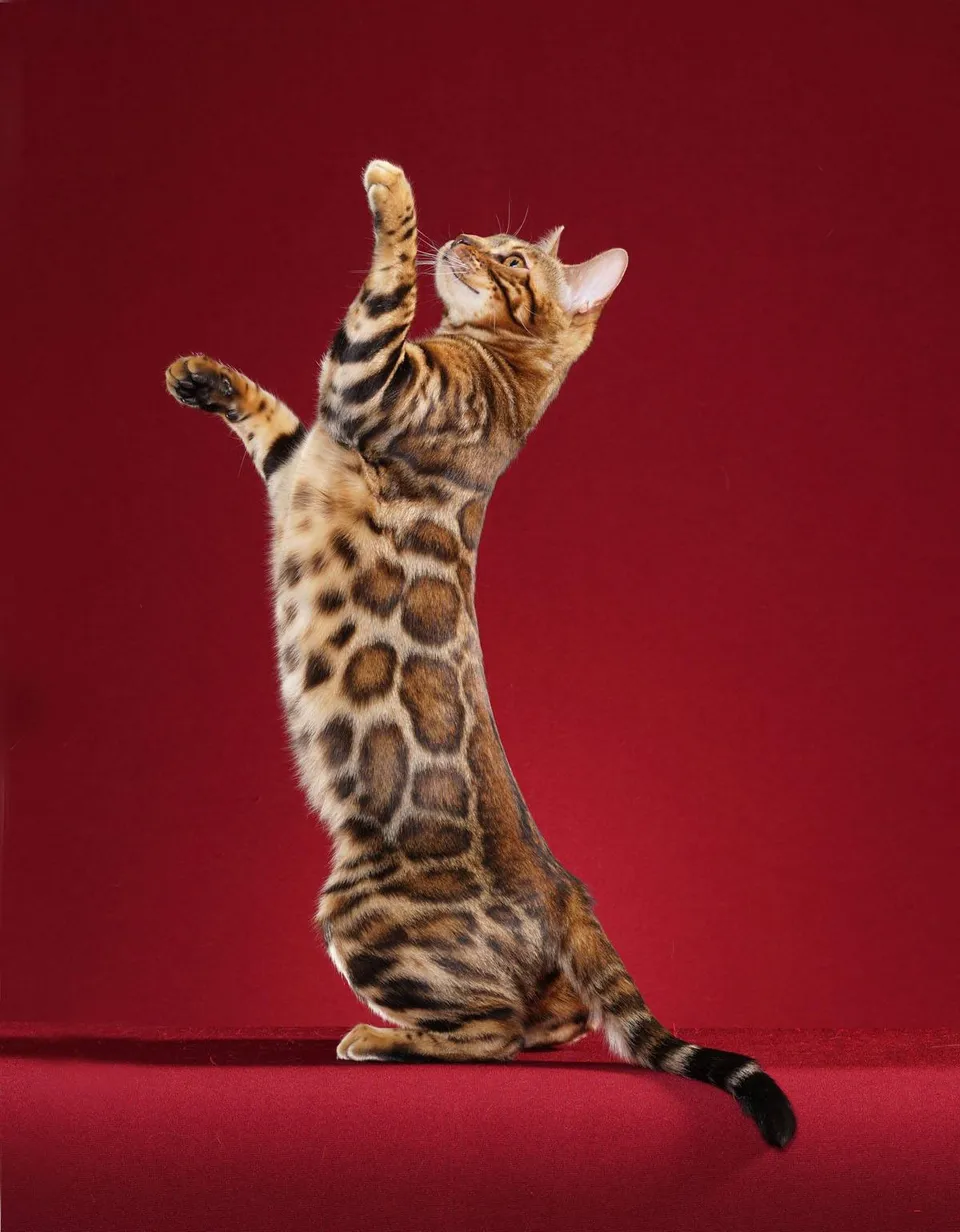
Early development involved crosses between domestic cats and Asian leopard cats, followed by further generations of breeding. A domestic Bengal and a wild Asian leopard cat are not the same animal.
24. Egyptian Mau
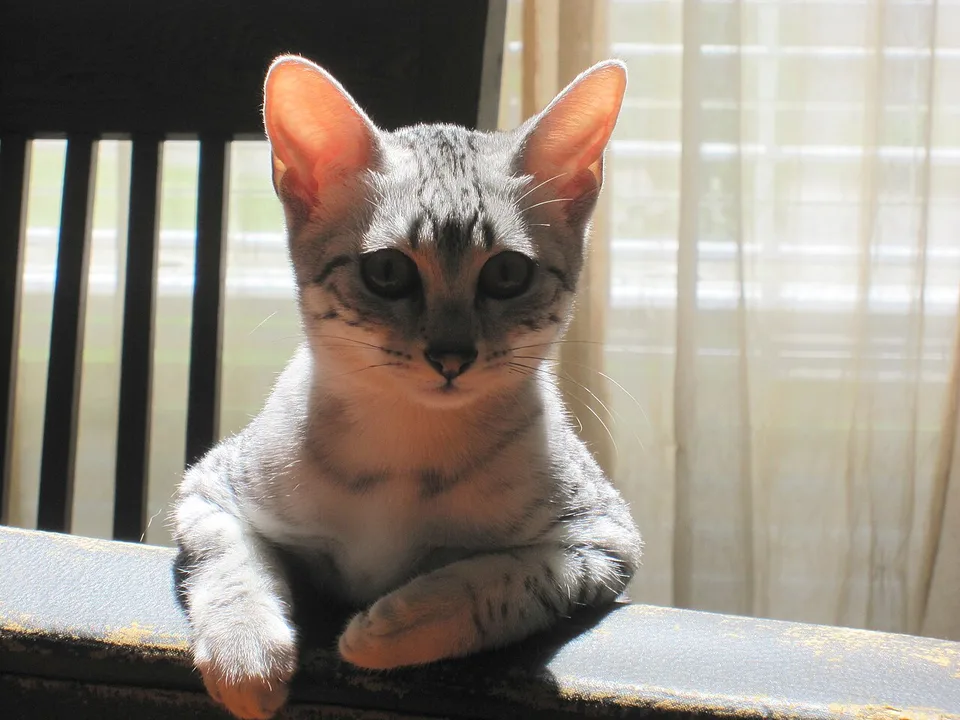
The Egyptian Mau has a short, distinctly spotted coat and an athletic outline. Dark spots against a silver background make a particularly striking combination.
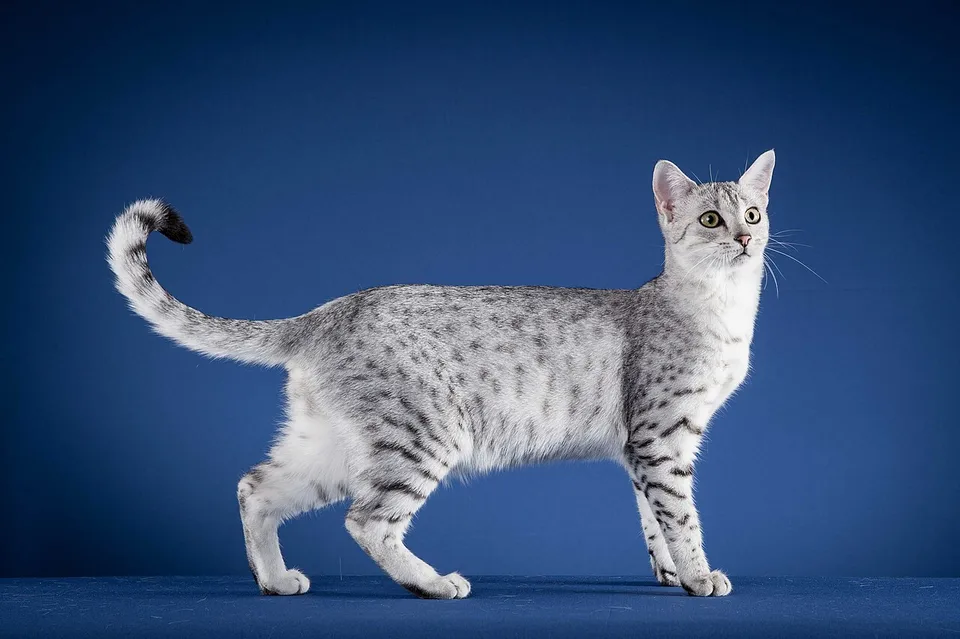
Its spots are separate dark markings. Compare them with the darker outlines and lighter centers of the rosettes often seen on Bengals.
25. Ocicat
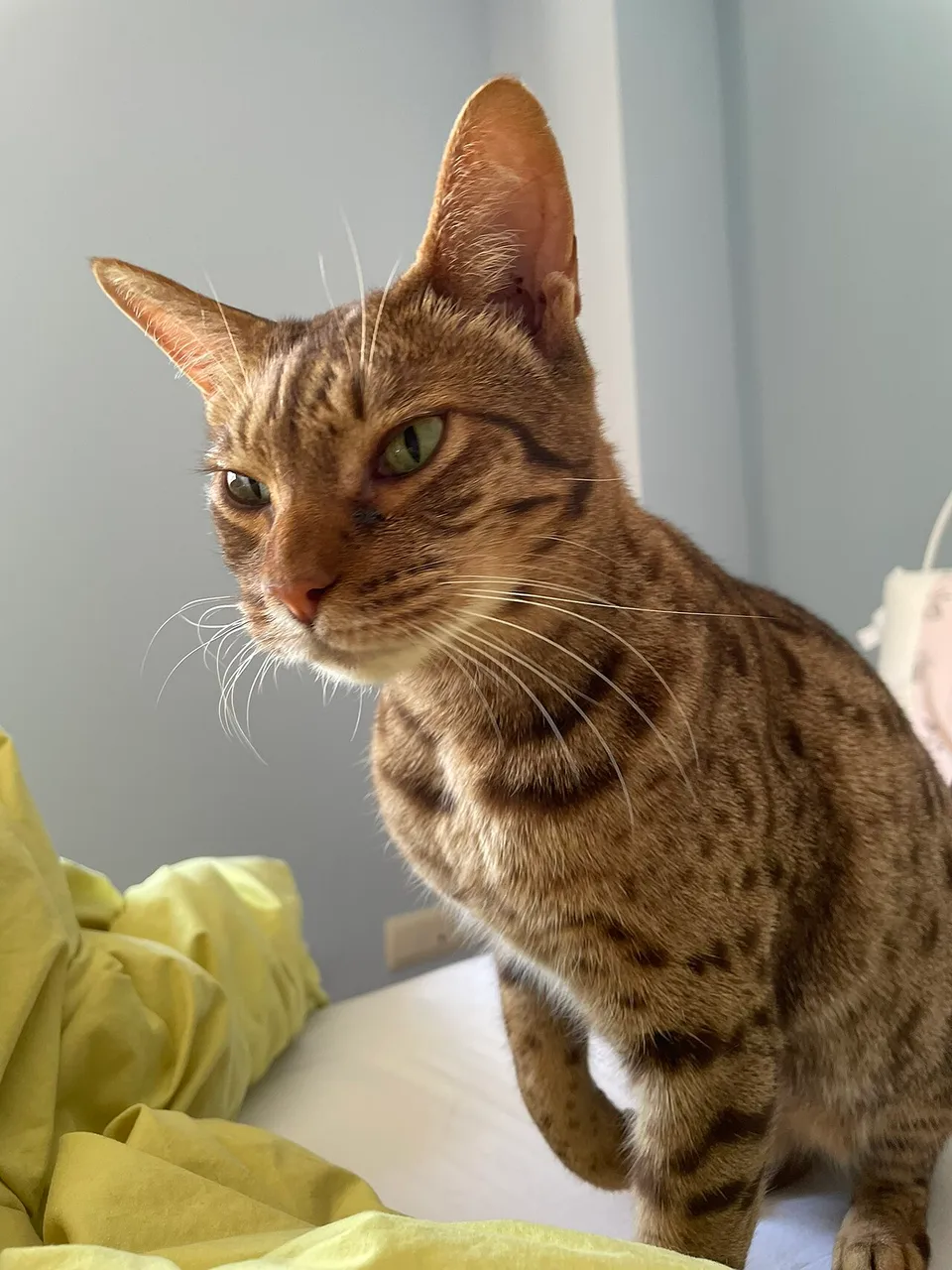
The Ocicat has a muscular body and a spotted coat that can look surprisingly wild.
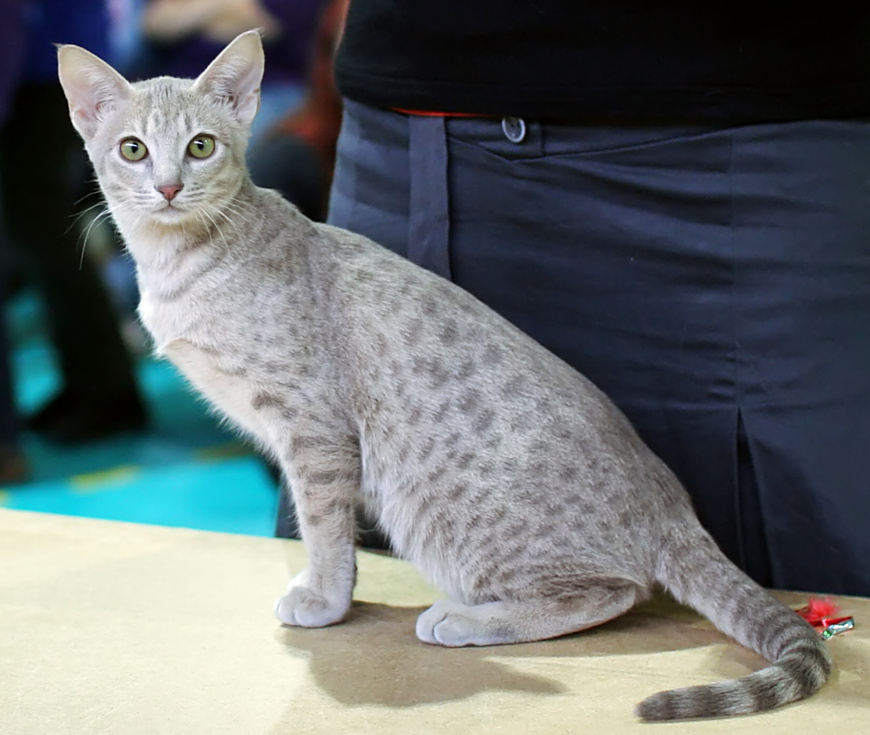
That appearance comes from domestic-cat breeding, including Abyssinian, Siamese, and American Shorthair ancestry. Wild cats were not part of the breed's development.
26. Abyssinian
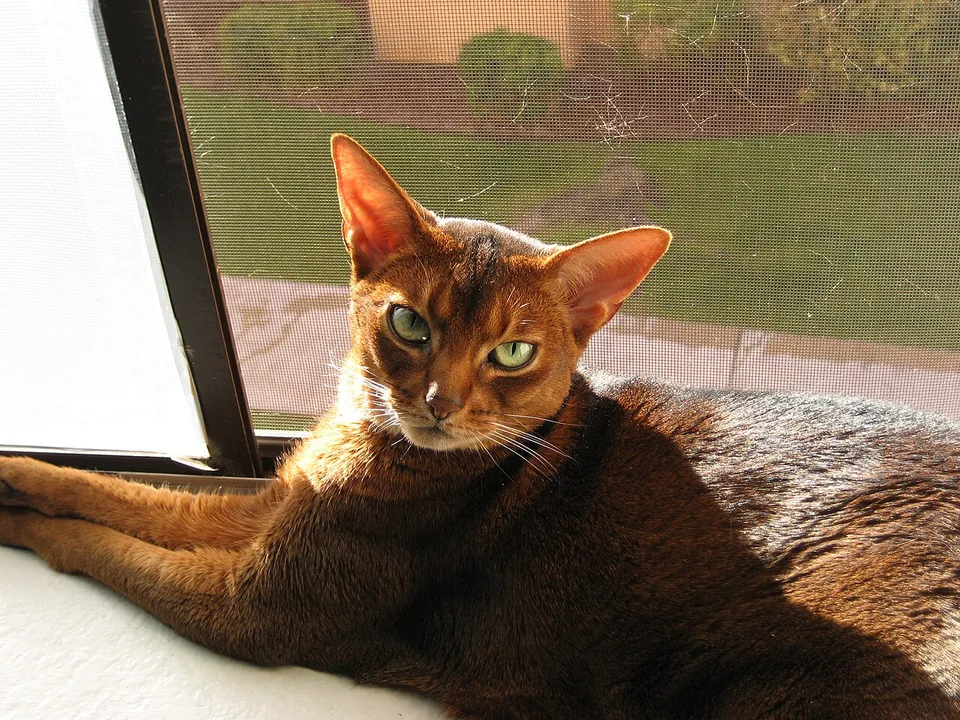
An Abyssinian's coat has depth without the large stripes or swirls of many tabbies. Each hair carries alternating bands of color, producing the effect called a ticked tabby coat.
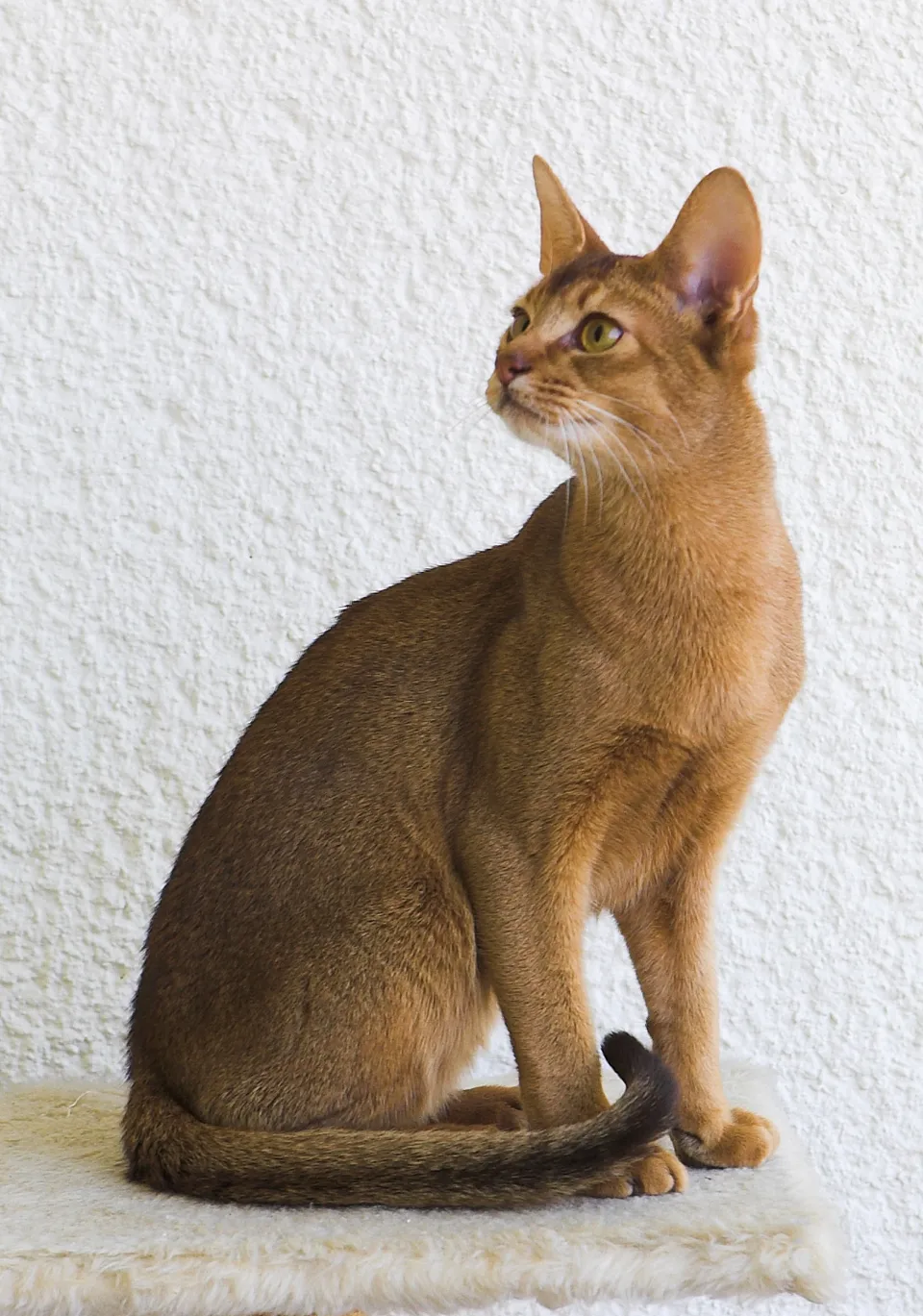
Abyssinians have an athletic build and a reputation for being active explorers. Opportunities to jump, climb, and investigate suit that energetic side.
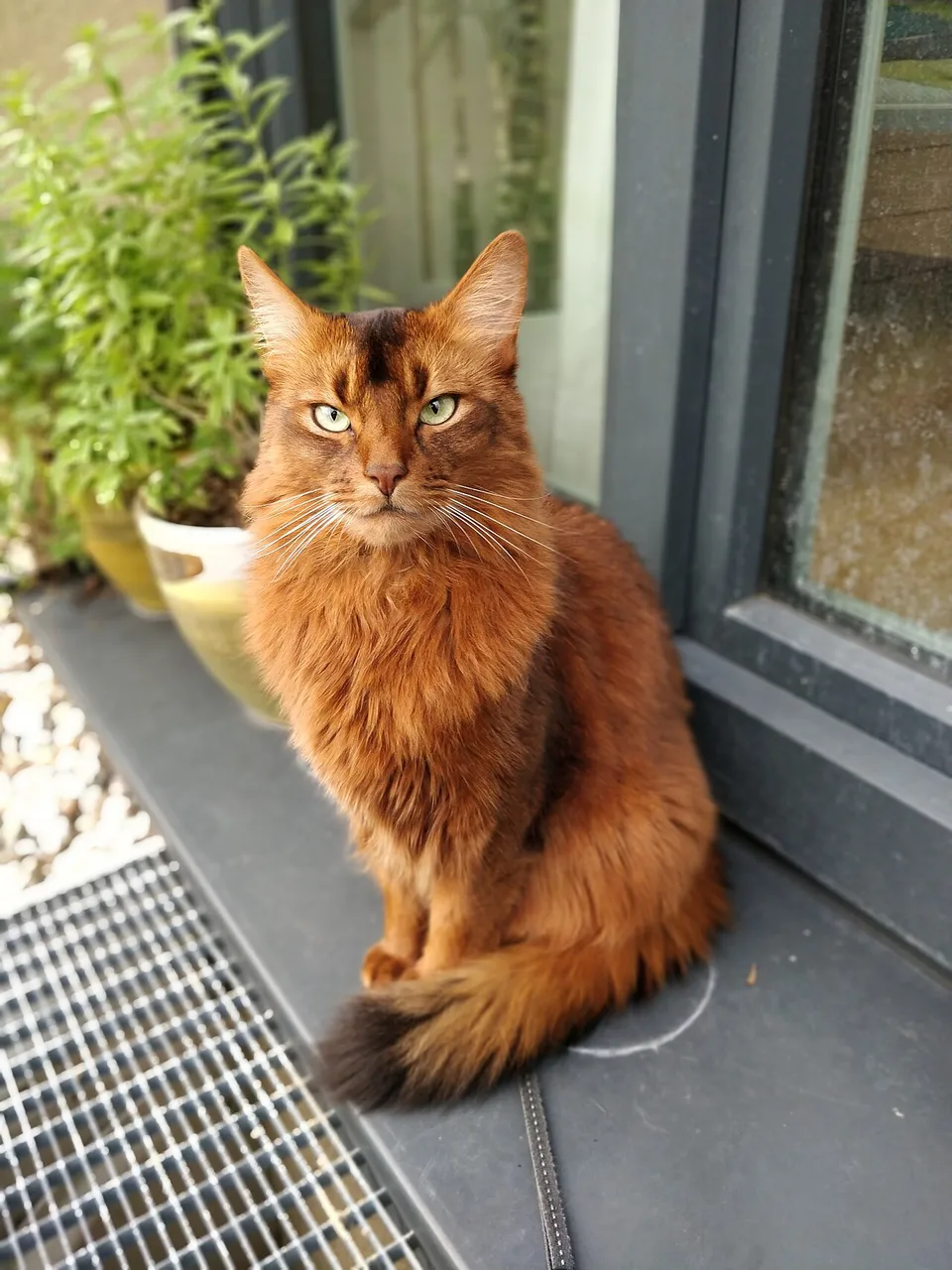
27. Somali
The Somali is closely related to the Abyssinian and has the same banded, ticked hairs.
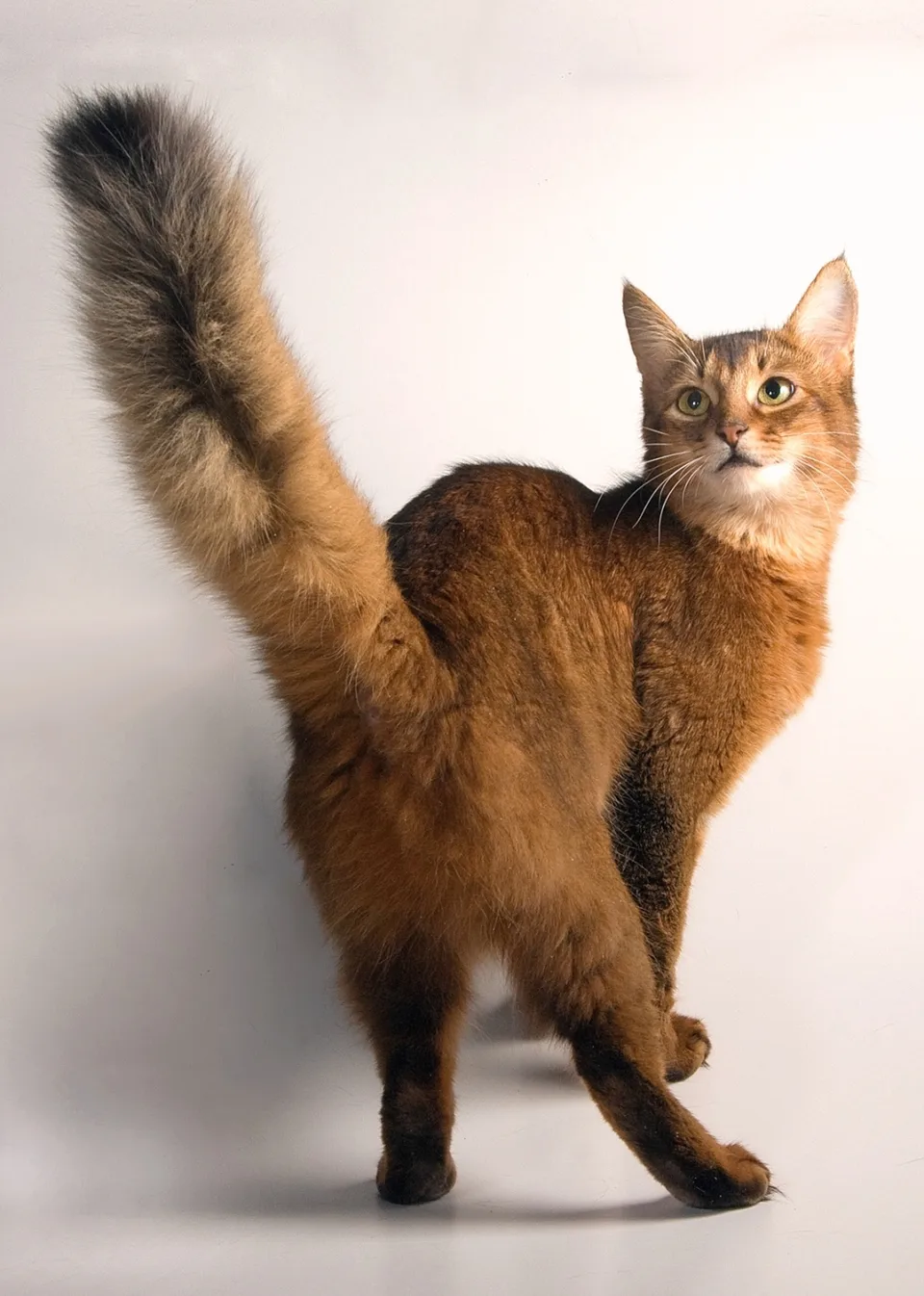
Its longer coat creates a fuller ruff and a particularly bushy tail. A warm-colored Somali can look a little foxlike.
Curled ears, folded ears, short tails, and short legs
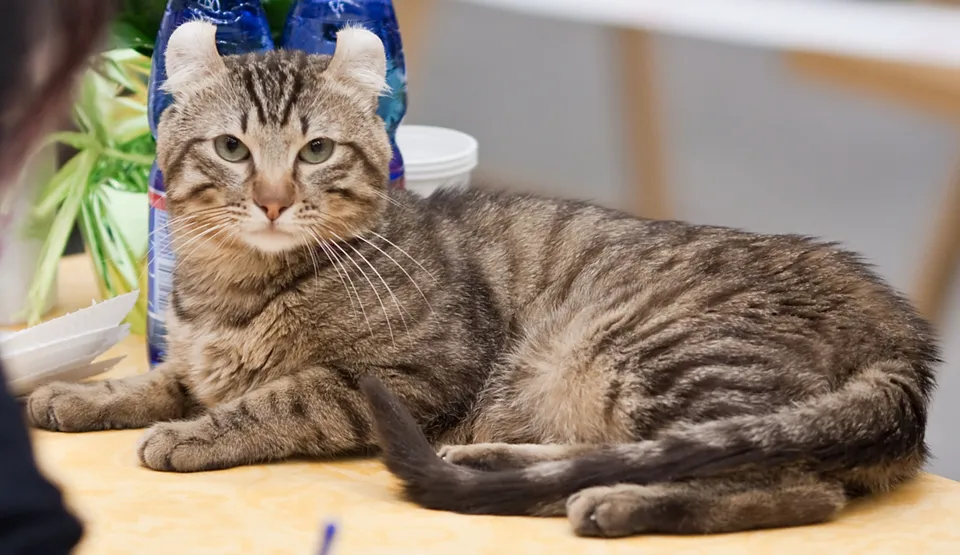
28. American Curl
The American Curl's ear tips curve backward, unlike the forward-folding ears of the Scottish Fold. Both longhaired and shorthaired Curls exist, in many coat colors.
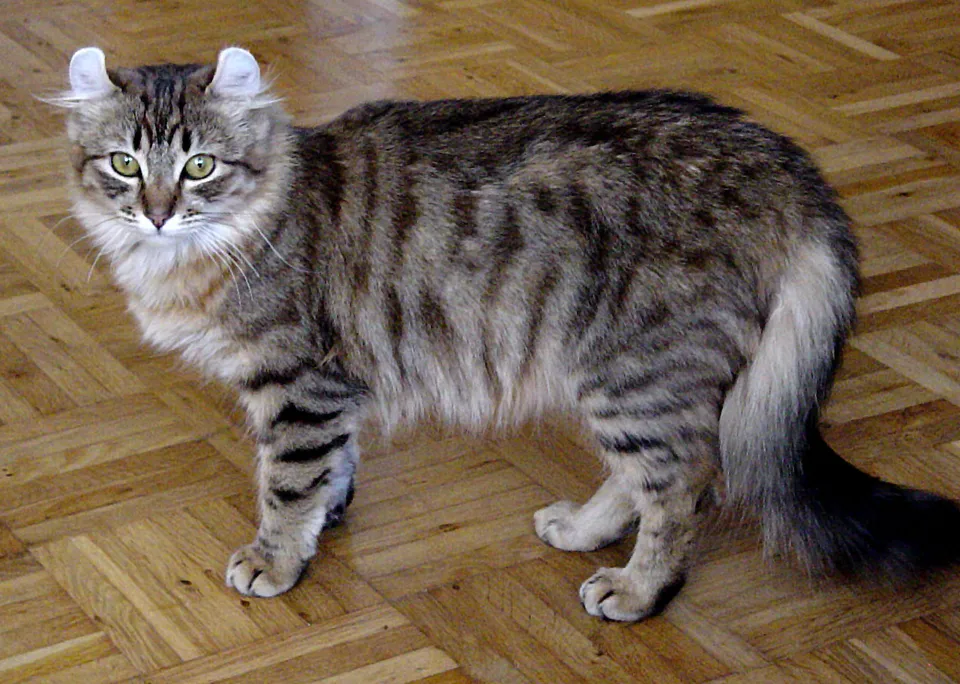
The breed traces back to a naturally curl-eared cat in California. Handle the ears gently during care and never try to straighten them; the cartilage can be injured.
29. Scottish Fold
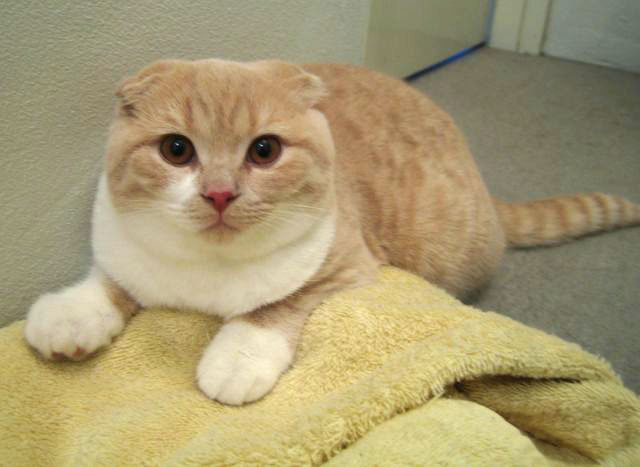
Scottish Folds have ears that fold forward and downward, often emphasizing a rounded face and large eyes. Longhaired Folds also exist. The direction of the ear fold distinguishes them from American Curls.
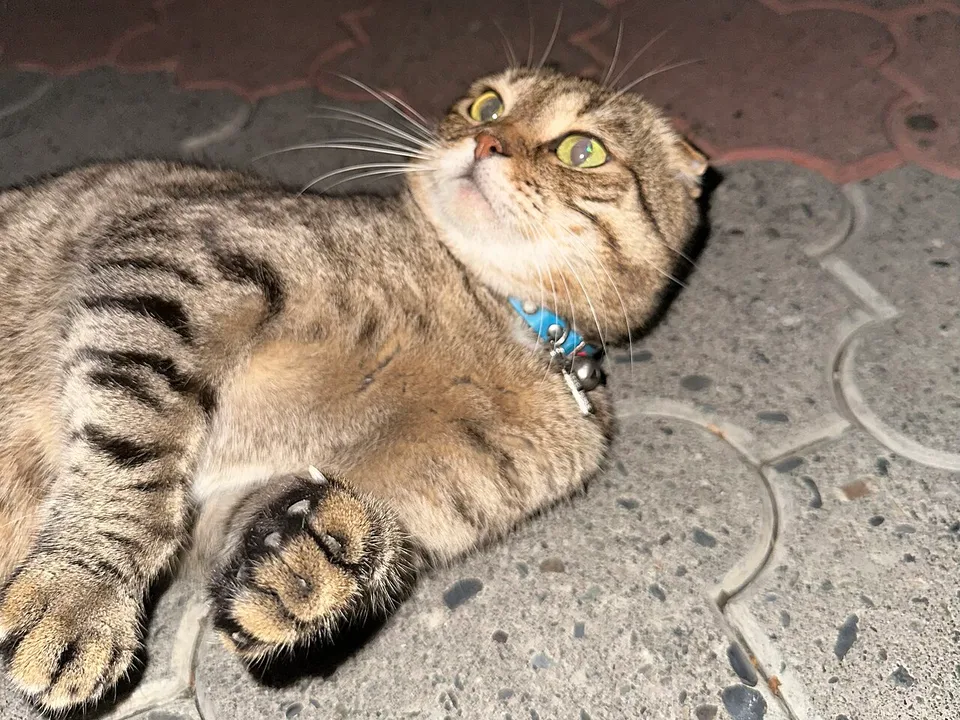
The genetic change behind the folded ears also affects cartilage and bone. It can cause pain, stiff joints, and difficulty moving. A cat already in your care needs veterinary attention to joint health and changes in activity, not encouragement to push through discomfort.
30. Japanese Bobtail
The Japanese Bobtail's naturally short, bent tail can look like a little pom-pom when the fur stands out around it.
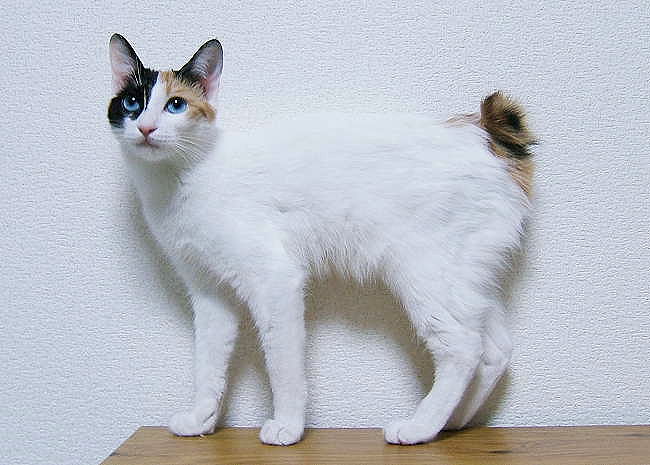
The body is relatively slender, and both longhaired and shorthaired varieties occur. Calico is a well-known color combination, but it is not the only one.
31. Manx
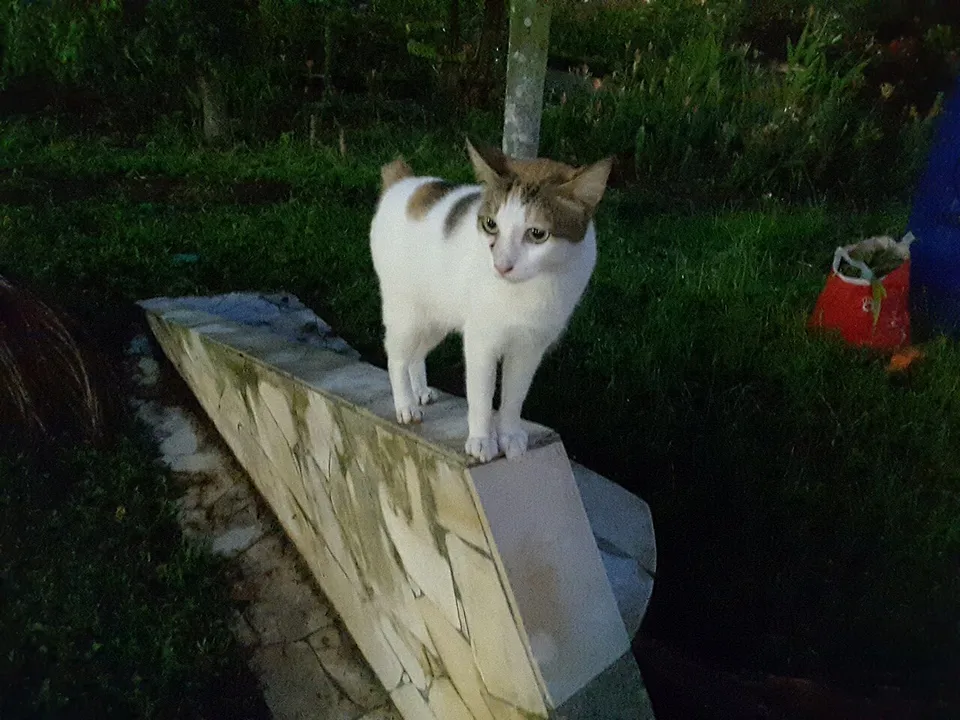
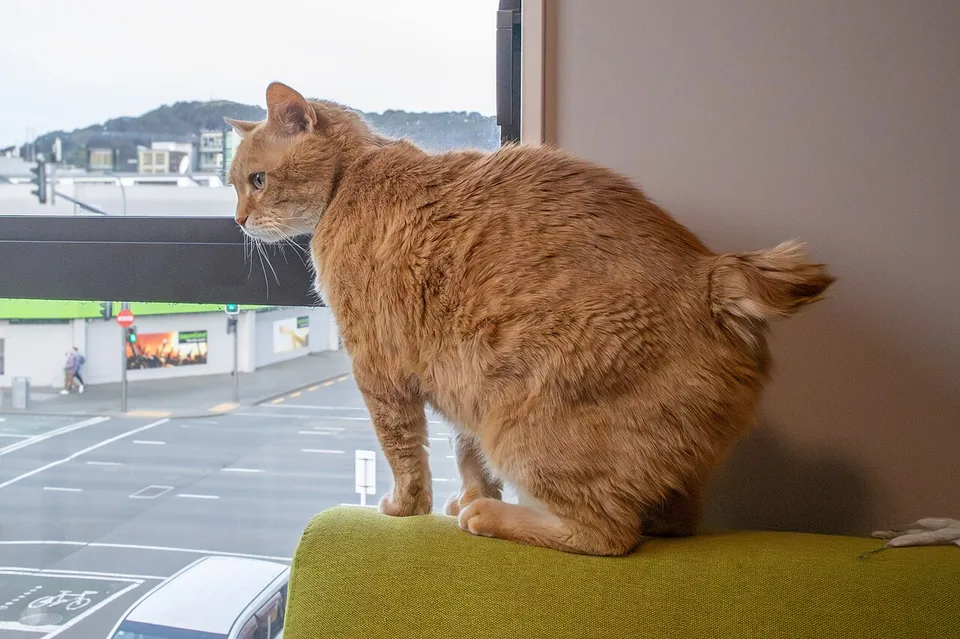
The Manx comes from the Isle of Man in the Irish Sea. It has a rounded, substantial body and is best known for its short or absent tail, although tail length varies and some Manx have full tails.
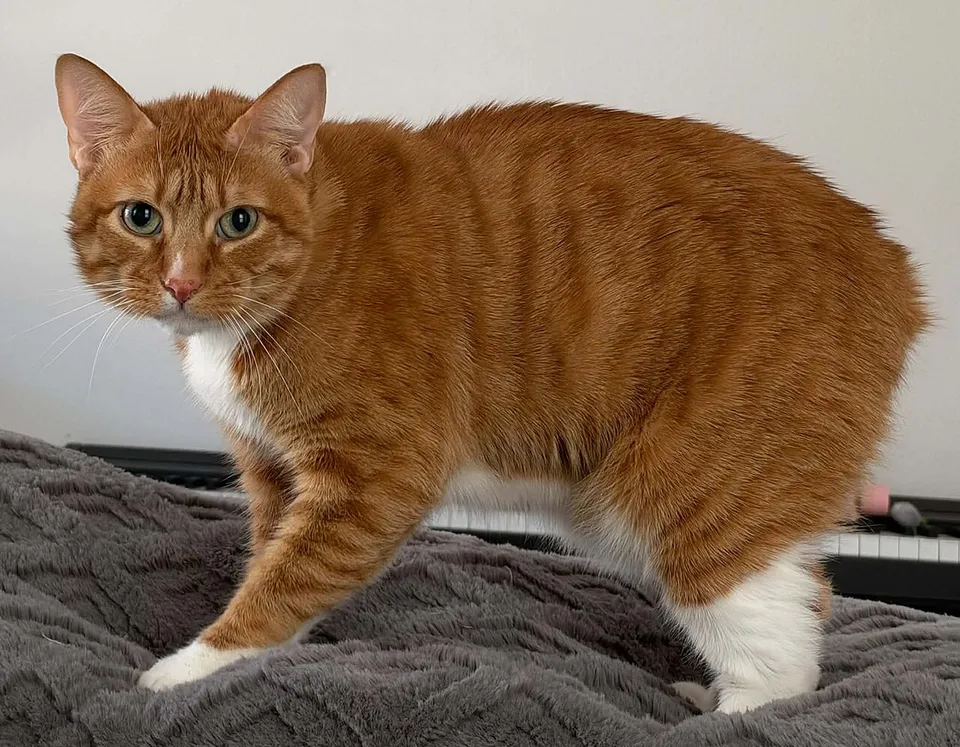
The genetic basis of the shortened tail can also be associated with spinal and neurological problems. A missing tail is not simply a cosmetic detail.
32. Munchkin
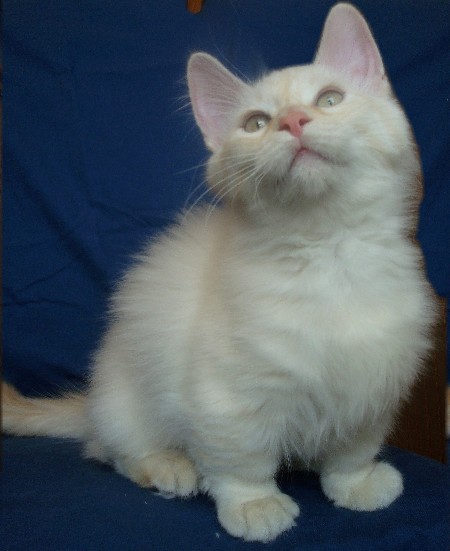
The Munchkin is known for shortened legs. Its coat can be long or short, in many colors and patterns. Not every short-legged cat is a Munchkin.
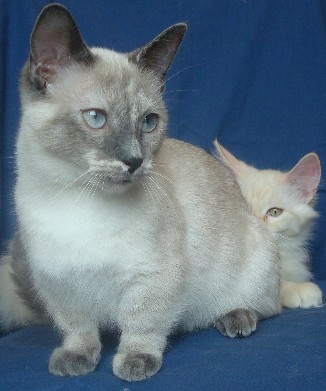
Shortened limbs may make jumping, climbing, and grooming more difficult and can be associated with skeletal or joint problems. Changes in movement call for a veterinary assessment rather than an assumption that awkward movement is normal for the cat.
Rex curls and the nearly hairless Sphynx
33. Devon Rex
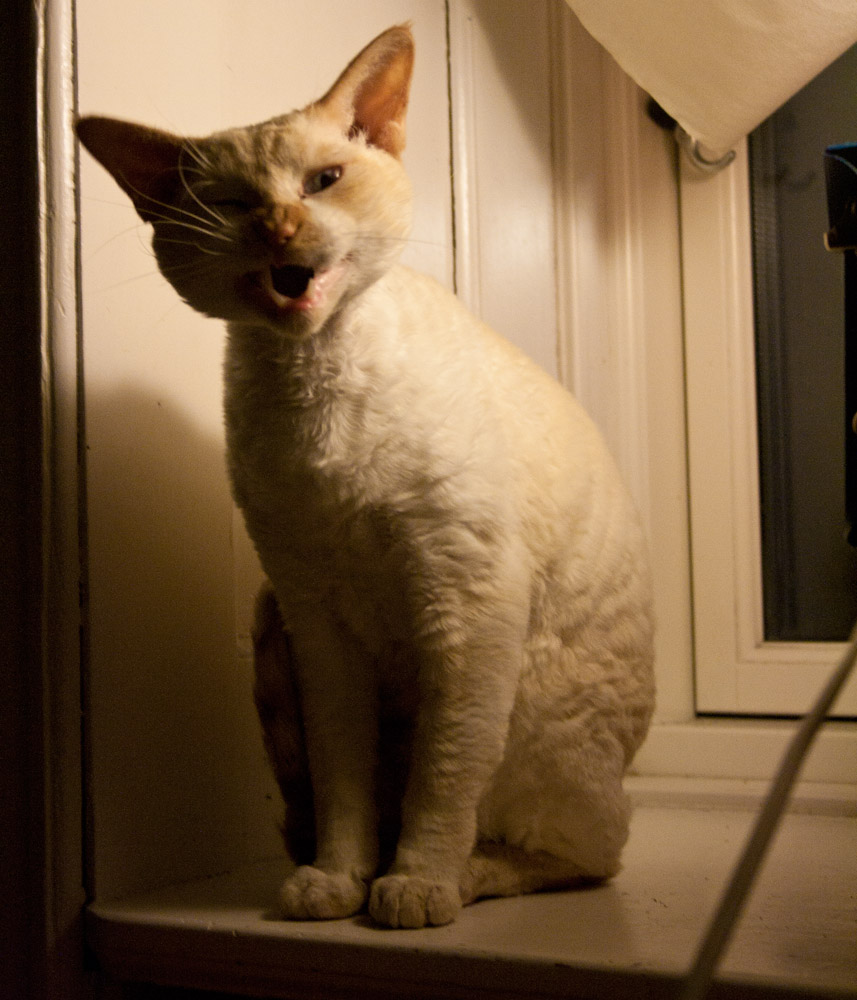
Large ears and eyes set in a small face give the Devon Rex its distinctive look. Its short, soft coat falls in loose waves.
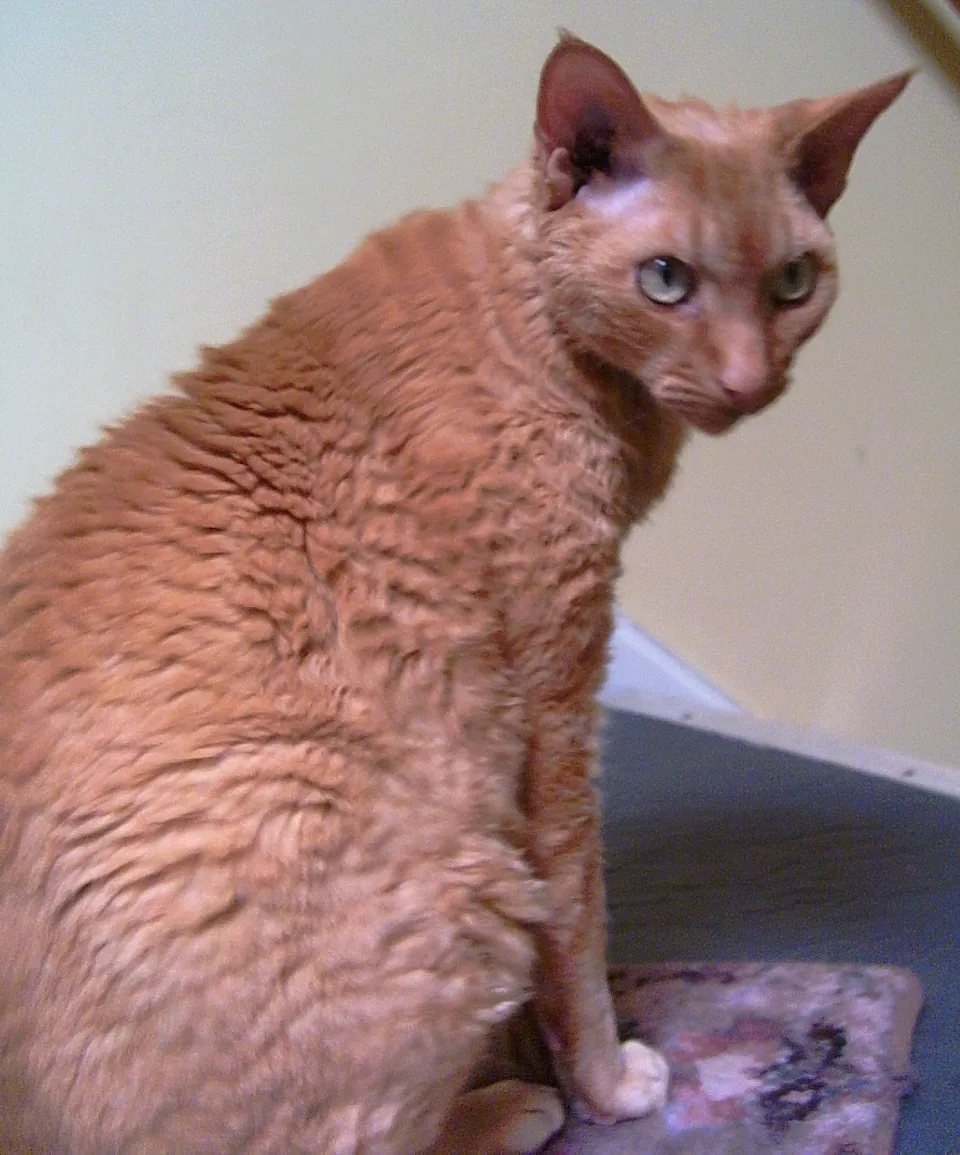
The breed began with a curly-coated cat found in Devon, England. Devons are often described as playful and people-oriented. Their fine coats need a gentle touch during grooming.
34. Cornish Rex
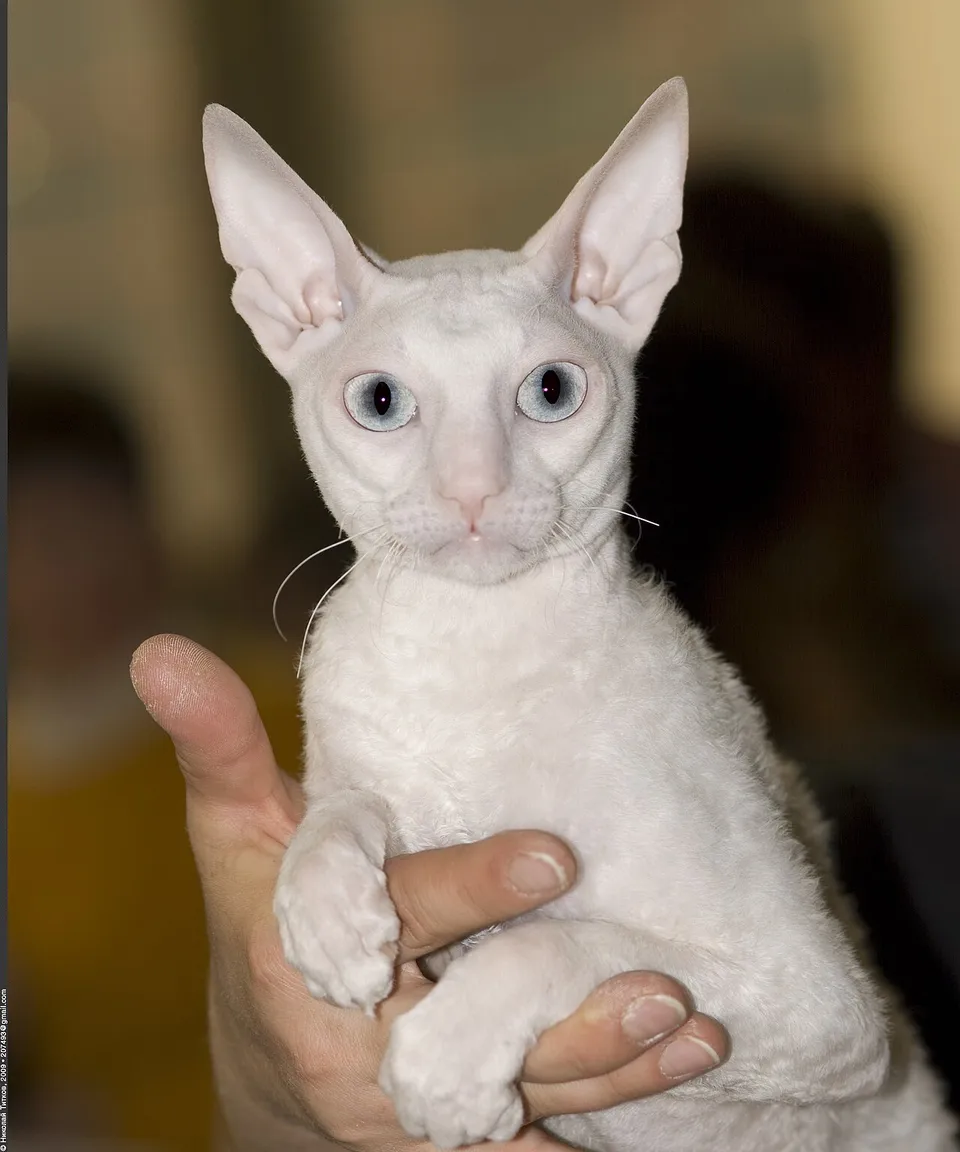
Beside a Devon Rex, the Cornish Rex looks taller and more slender, with long legs and an arched back.
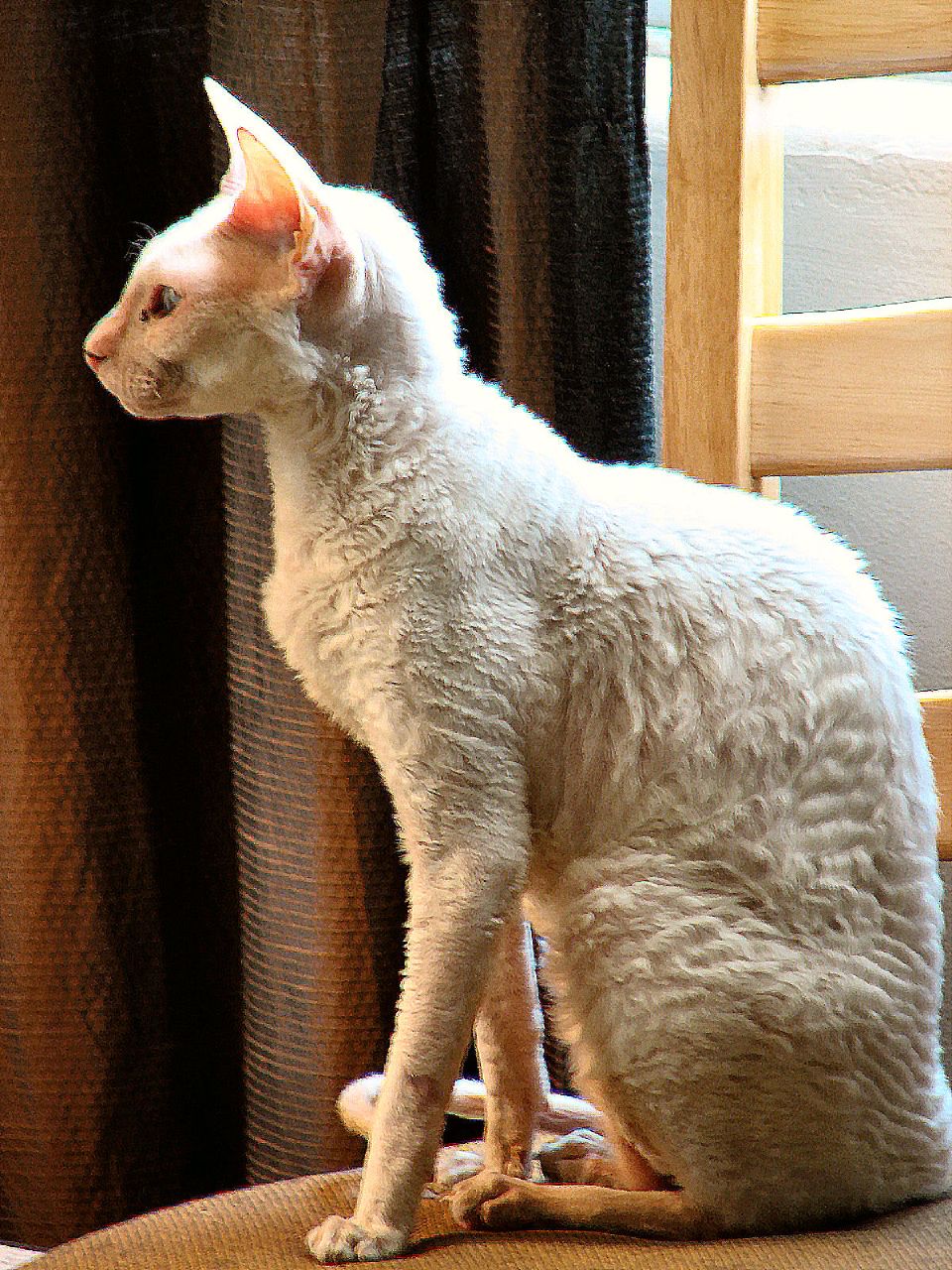
Its short coat lies close to the body in tight, even waves. The body shape and coat texture are useful clues when comparing the two Rex breeds.
35. Selkirk Rex
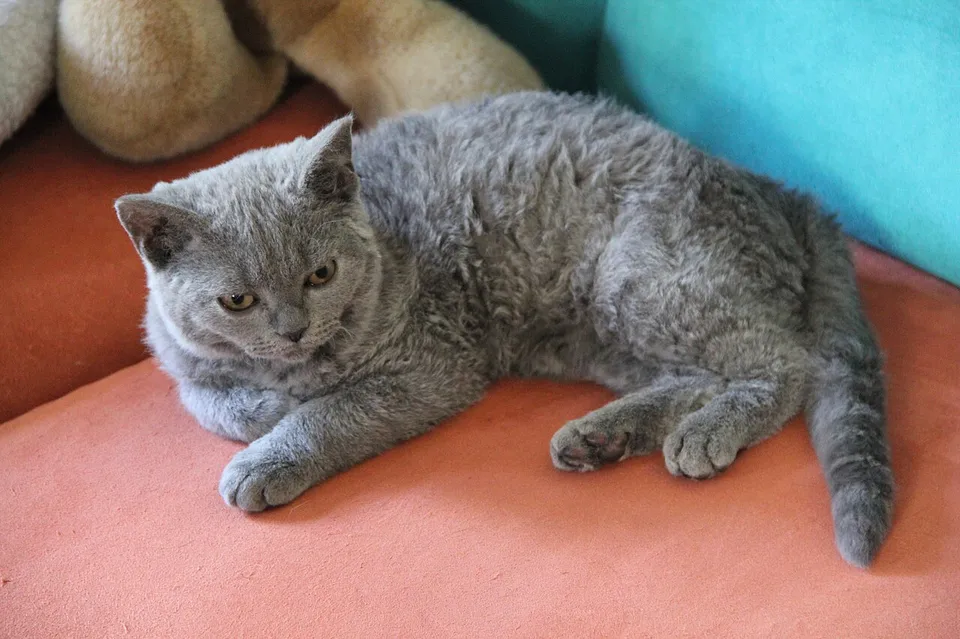
The Selkirk Rex has a substantial, rounded body beneath a plush, curly coat. Longhaired and shorthaired versions exist; either looks quite different from the slim Cornish Rex.
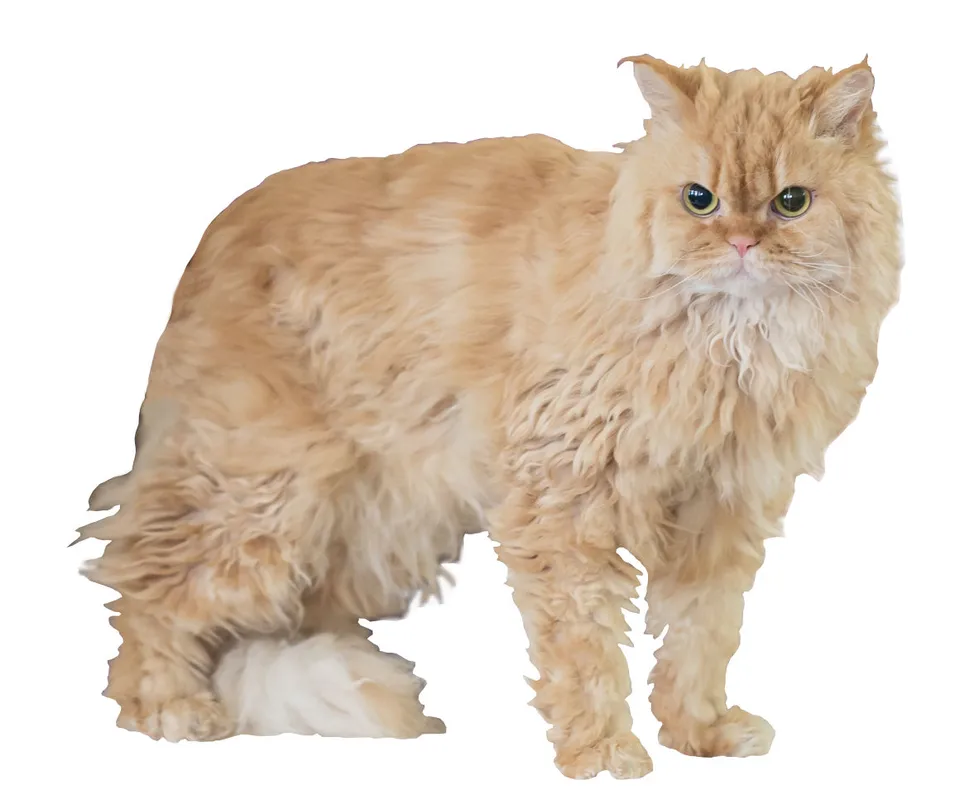
Developed in the United States, the breed traces back to a naturally curly-coated kitten. Its full curls can give it a woolly appearance.
36. Sphynx
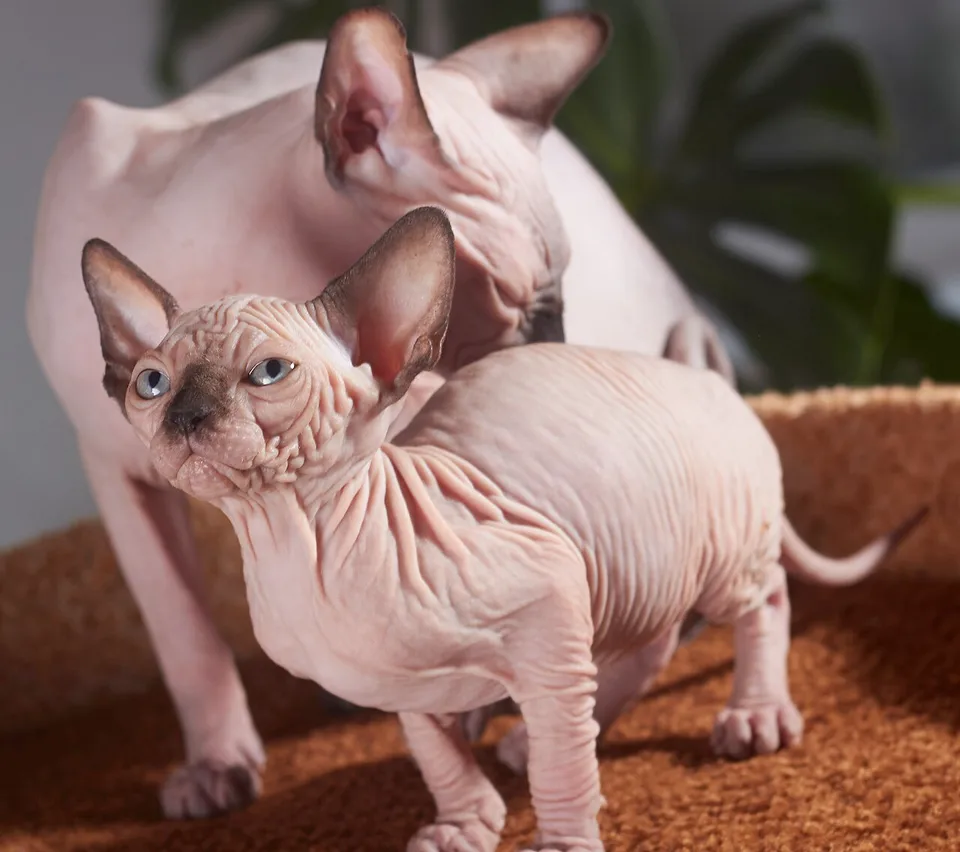
Large ears, visible skin folds, and an almost hairless body make the Sphynx hard to mistake. Look closely and some have a fine covering of down rather than completely bare skin.
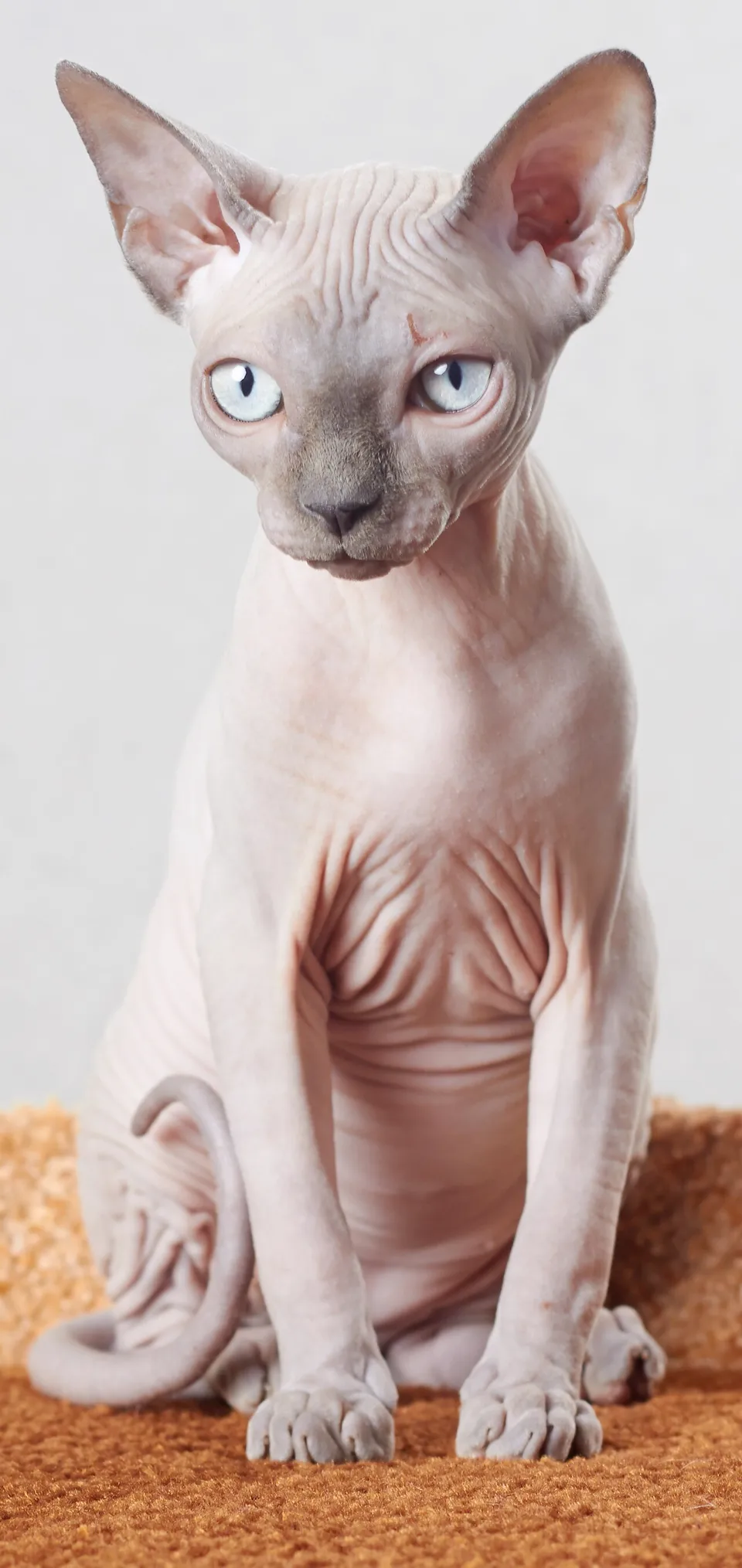
Little fur does not mean little care: skin care and a suitable indoor temperature still matter. Nor does hairlessness guarantee freedom from cat allergies. Allergens can come from saliva and skin as well as collect on the coat.
What about the tabby or calico on your sofa?
Tabby describes a pattern, calico a color combination, and orange or ginger a coat color. None of those labels, on its own, names a breed. They can describe pedigree cats as well as cats without a documented pedigree.
Domestic Shorthair and Domestic Longhair usually describe household cats by coat length rather than a particular breed. Domestic Shorthair is not another name for American Shorthair.
A cat's appearance gives you useful clues, but a photograph cannot confirm its pedigree. And whether it wants a lap, a game, or a quiet corner is something you learn by spending time together.
References and photo credits
Breed descriptions and health references
- British Shorthair
- American Shorthair
- Persian
- Exotic Shorthair
- British Longhair
- Ragdoll
- Birman
- Maine Coon
- Norwegian Forest Cat
- Siberian
- Turkish Angora
- Turkish Van
- Siamese
- Thai
- Balinese
- Oriental Shorthair
- Burmese
- Tonkinese
- Russian Blue
- Chartreux
- Korat
- Bombay
- Bengal
- Egyptian Mau
- Ocicat
- Abyssinian
- Somali
- American Curl
- Scottish Fold
- Japanese Bobtail
- Manx
- Munchkin
- Devon Rex
- Cornish Rex
- Selkirk Rex
- Sphynx
- CFA coat color descriptions
- Persian cats in primary veterinary care: a 2019 study
- ACAAI: pet allergens
- GCCF: Manx and associated health concerns
- Cats Protection: Scottish Fold health
- Cats Protection: dwarfism in cats
Photo credits, in the order the photographs appear. The linked source pages identify the original works and creators; each photograph retains its stated license. Photographs are reused without cropping, with size or file-format changes where recorded in the source package.
- British Shorthair: Rabbi Mendl (CC BY-SA 4.0).
- British Shorthair: Nickolas Titkov from Moscow, Russian Federation (CC BY-SA 2.0).
- American Shorthair: Ocdp (CC BY-SA 3.0).
- American Shorthair: Tomo (CC BY 2.0).
- Persian: The original uploader was Lajoma at Finnish Wikipedia . (CC BY-SA 3.0).
- Persian: 8ortiz4 (CC BY-SA 4.0).
- Exotic Shorthair: Charlyn Wee (CC BY 2.0).
- Exotic Shorthair: Desaix83, d'après le travail d'Heikki Siltala (CC BY 3.0).
- British Longhair: Desaix83, d'après le travail d'Heikki Siltala (CC BY 3.0).
- British Longhair: Felinology (CC BY-SA 4.0).
- Ragdoll: DestinationFearFan (CC BY-SA 4.0).
- Ragdoll: Cgomez766 (CC0).
- Birman: Jon McKnight (CC BY-SA 4.0).
- Birman: Camerawn (CC BY-SA 4.0).
- Maine Coon: Alix devil (CC BY-SA 4.0).
- Maine Coon: Eepiphany (CC0).
- Norwegian Forest Cat: Gangburgondes (CC BY-SA 3.0).
- Norwegian Forest Cat: Die Kaiserin (CC BY-SA 3.0).
- Siberian: TimRudyGit (CC BY-SA 4.0).
- Siberian: Sonneriee (CC BY-SA 4.0).
- Turkish Angora: Ankarakediler (CC BY 3.0).
- Turkish Angora: Ankarakediler (CC BY-SA 3.0).
- Turkish Van: Gelweo (CC BY-SA 4.0).
- Turkish Van: Murasu*PL (Public domain).
- Siamese: Meekahoo (CC BY-SA 3.0).
- Siamese: Eric Sonstroem from California, USA (CC BY 2.0).
- Thai: Talar (CC BY-SA 3.0).
- Thai: Lorenzo Morini (CC BY-SA 3.0).
- Balinese: Mary Desmond (CC BY-SA 3.0).
- Balinese: Pomewgranate (CC BY-SA 4.0).
- Oriental Shorthair: Scottinglis (CC BY 3.0).
- Oriental Shorthair: Heikki Siltala (CC BY 3.0).
- Burmese: Heikkisiltala (CC BY 3.0).
- Burmese: Majormax at English Wikipedia (Public domain).
- Tonkinese: Luigi Leahy (CC BY-SA 4.0).
- Tonkinese: Edenvane (CC BY-SA 3.0).
- Russian Blue: Anna Utekhina http://kidsphoto.ru/ (CC BY-SA 3.0).
- Russian Blue: Cleo Russian Blue (CC BY-SA 4.0).
- Chartreux: Douglas Edwards (CC BY-SA 3.0).
- Chartreux: Douglas Edwards (CC BY-SA 3.0).
- Korat: Jacques Julien Photo (CC BY-SA 4.0).
- Korat: fr:Utilisateur:Epita , Max BOUCHE pour le KORAT CLUB DE FRANCE (CC BY 2.5).
- Bombay: Pititebilette (CC BY-SA 3.0).
- Bombay: Nickolas Titkov from Moscow, Russian Federation (CC BY-SA 2.0).
- Bengal: User:Lightburst (CC BY-SA 4.0).
- Bengal: Thomas Mayer 1968 (CC BY-SA 4.0).
- Egyptian Mau: Achet Aton (CC BY-SA 4.0).
- Egyptian Mau: Drhesslen (CC BY-SA 3.0).
- Ocicat: Heikki Siltala - catza.net (CC BY 3.0).
- Ocicat: Ljhlusko (CC0).
- Abyssinian: Karin Langner-Bahmann (CC BY-SA 3.0).
- Abyssinian: a rancid amoeba (CC BY-SA 2.0).
- Somali: Матвеева Ирина Владимировна (Public domain).
- Somali: AbuDun91919 (CC BY-SA 4.0).
- American Curl: Cljk (CC BY-SA 3.0).
- American Curl: Heikki Siltala (CC BY 3.0).
- Scottish Fold: TheNightmareOfRosguill (CC0).
- Scottish Fold: Ssmats at English Wikipedia (Public domain).
- Japanese Bobtail: ようてい (CC BY-SA 3.0).
- Japanese Bobtail: Linrx81 (CC BY-SA 4.0).
- Manx: Hekl01999 (CC0).
- Manx: ThomasVenelli (CC BY 4.0).
- Munchkin: Sg0668commons (CC BY 3.0).
- Munchkin: Sg0668commons (CC BY 3.0).
- Devon Rex: Peter Mollard at English Wikipedia (Public domain).
- Devon Rex: Angelica Angel (CC BY-SA 3.0).
- Cornish Rex: Paul Lewis (CC BY 2.0).
- Cornish Rex: Nickolas Titkov from Moscow, Russian Federation (CC BY-SA 2.0).
- Selkirk Rex: Desaix83, d'après le travail d'Heikki Siltala (CC BY 3.0).
- Selkirk Rex: Leinwand (CC BY-SA 3.0).
- Sphynx: Dmitry Makeev (CC BY-SA 4.0).
- Sphynx: Dmitry Makeev (CC BY-SA 4.0).